

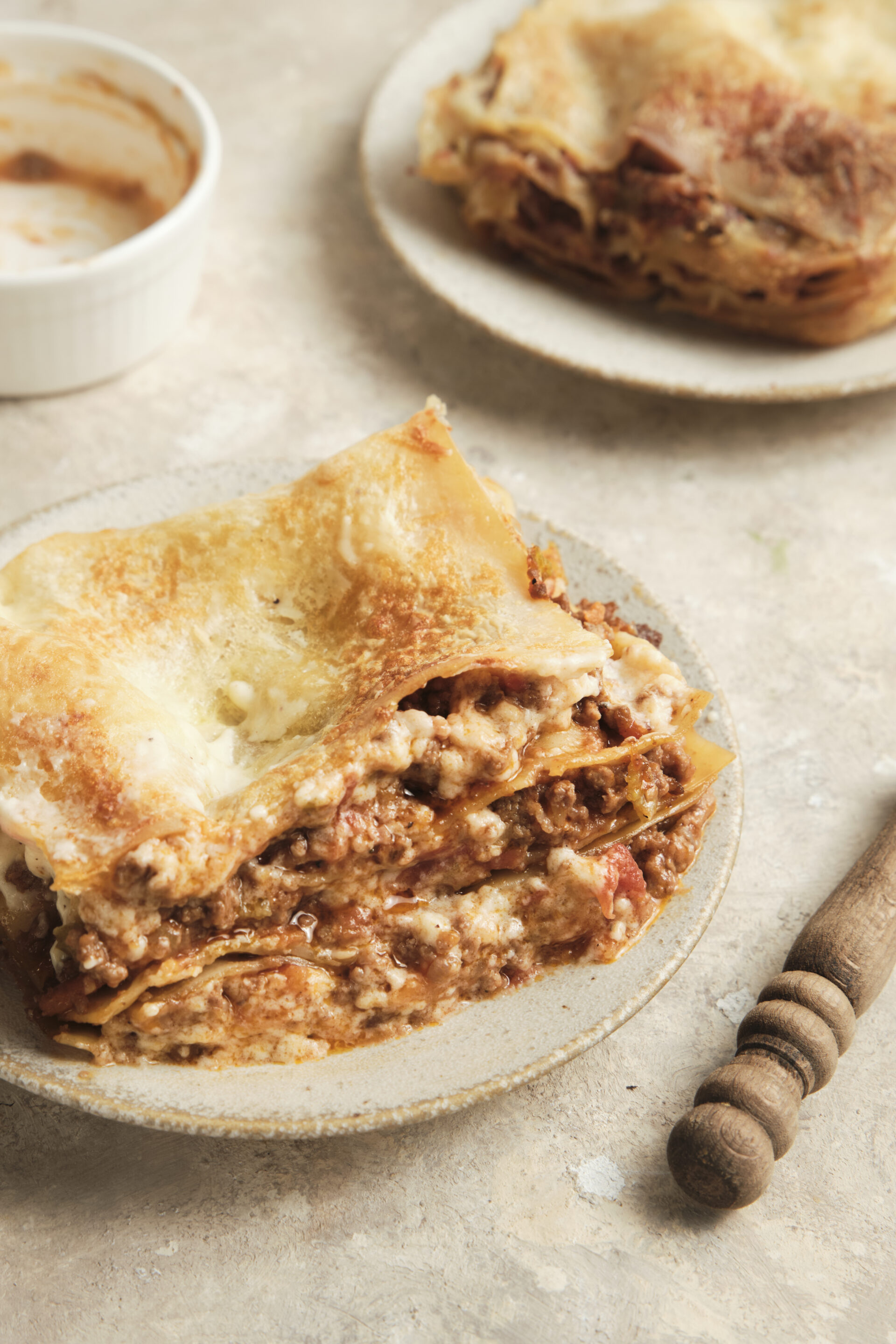
A Classic Italian Comfort Dish
Italian Beef Lasagna is one of those timeless dishes I find myself coming back to again and again. My love for Italian cuisine has always been rooted in its simplicity and depth of flavor, and lasagna captures that beautifully. With its layers of rich meat sauce, delicate pasta sheets, and creamy béchamel, it’s the kind of dish that feels both comforting and a little bit special—perfect for sharing with family or friends around the table.
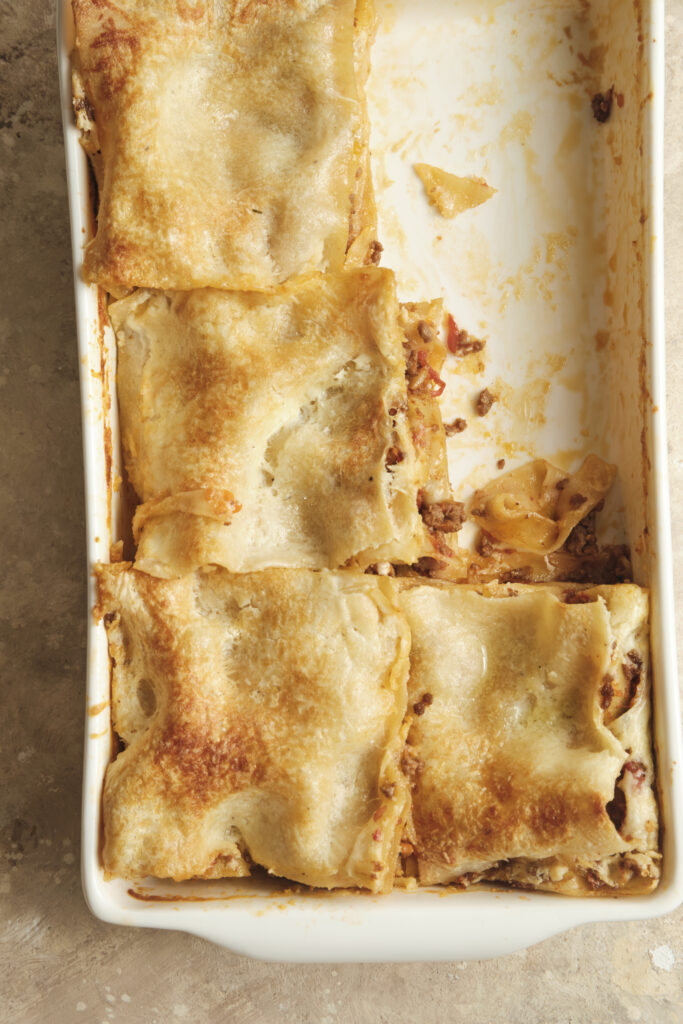
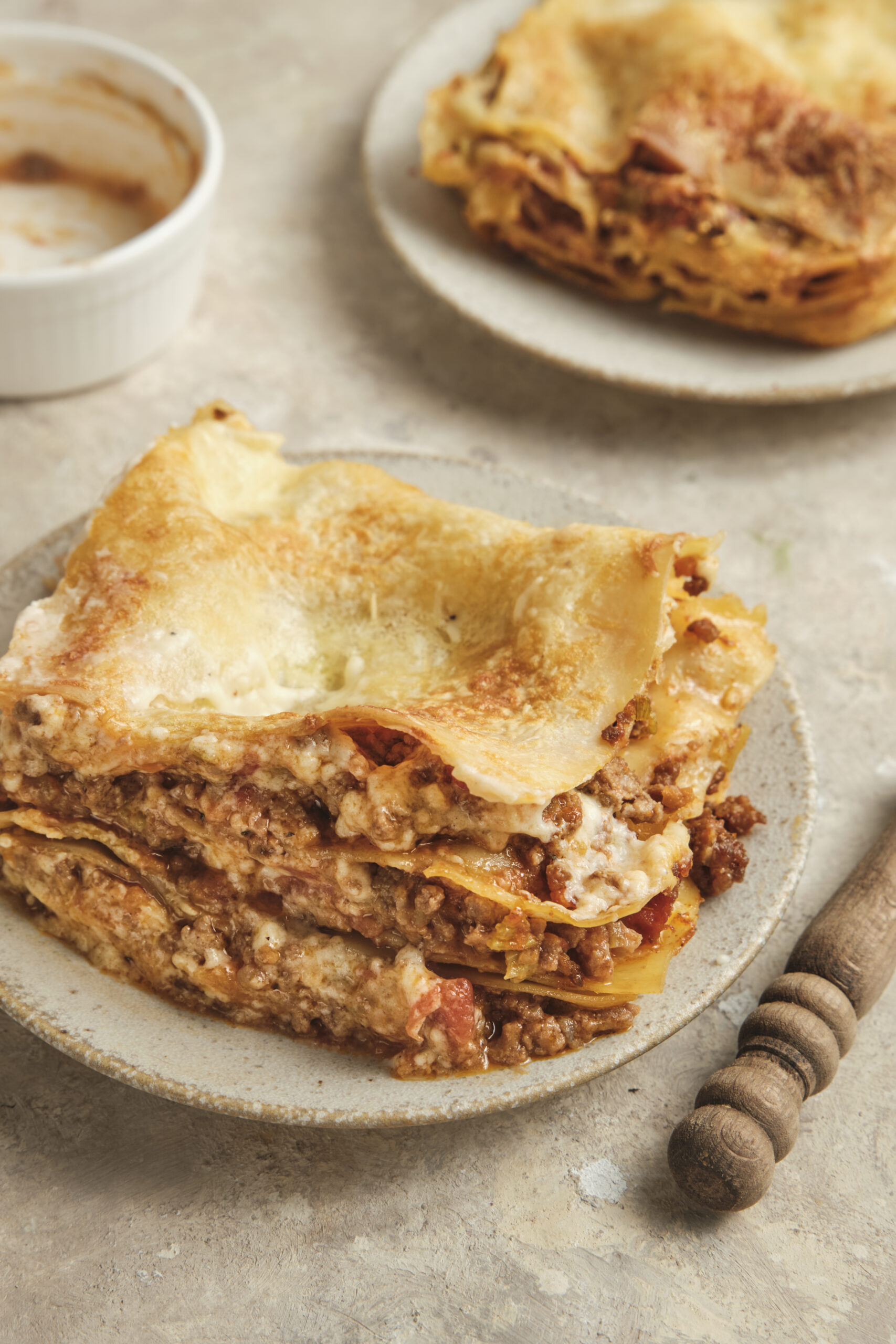
What I love most about lasagna is this wonderful interplay of textures and flavors. A slowly simmered Bolognese brings that deep, savory richness I adore, while the béchamel adds a gentle creaminess that softens and balances everything. As it bakes, the layers come together into something truly irresistible—golden on top, bubbling at the edges, and filled with that unmistakable aroma that instantly makes the kitchen feel warm and inviting.
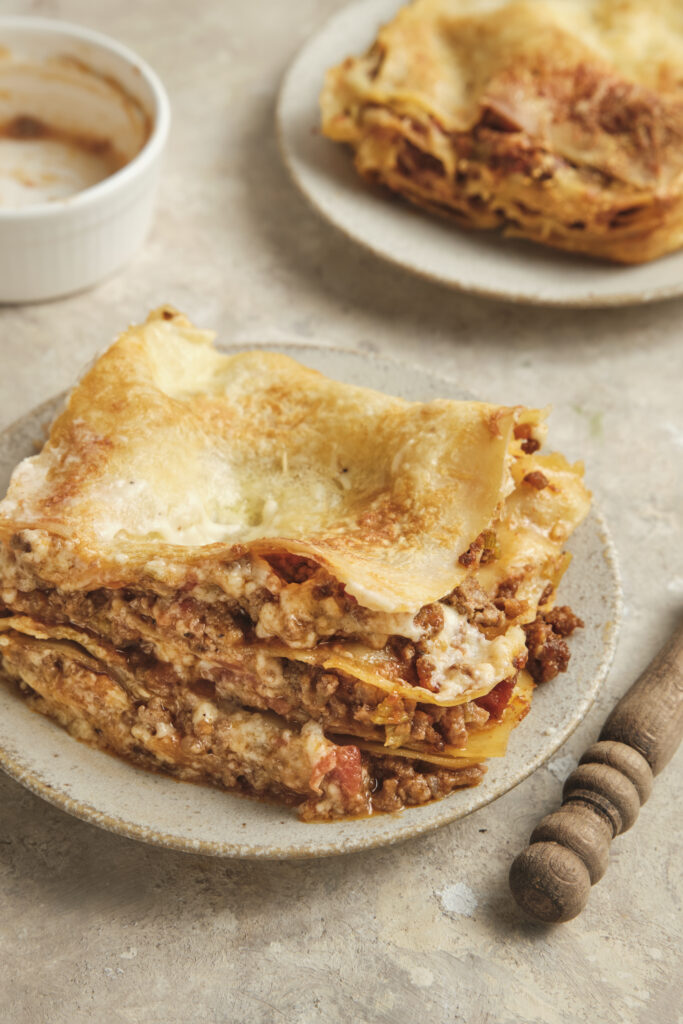
The Key to Great Lasagna
For me, a truly good lasagna always begins with the sauces. That’s where the soul of the dish lies. I take my time with the Bolognese, letting it simmer gently until it develops that deep, rich flavor that reminds me so much of Italian home cooking. The béchamel, on the other hand, brings a soft creaminess that rounds everything out and gives the lasagna its signature texture.
When it comes to assembling, I like to be a bit meticulous. Layer by layer, I build it so that every slice has the perfect balance of pasta, meat sauce, and béchamel. It’s a small detail, but it makes all the difference in the end. And of course, I never skip a generous finishing layer of Parmesan on top—once baked, it turns beautifully golden with just a slight crispness, which I find absolutely irresistible.
Simple Ingredients, Incredible Flavor
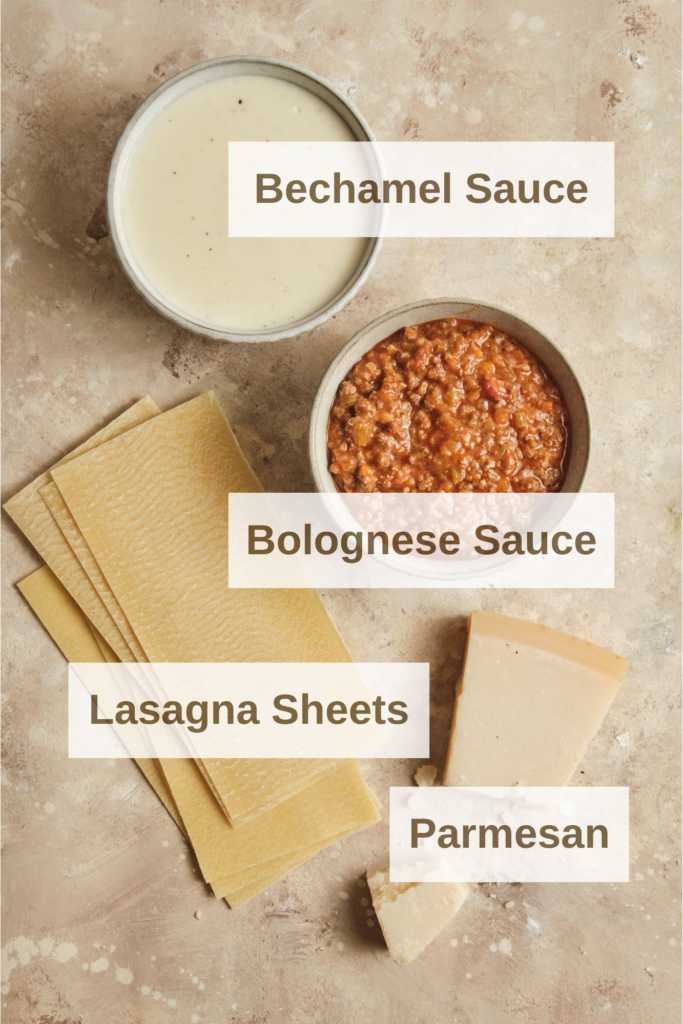
This lasagna recipe is built from three essential components that come together to create a rich, comforting, and perfectly layered dish.
Bolognese Sauce
The heart of the lasagna is the Bolognese sauce. This slow-cooked meat sauce is rich, savory, and full of flavor. It is typically made with ground beef, aromatic vegetables like onion, carrot, and celery, tomatoes, and a splash of milk for a smooth and balanced taste. As the sauce simmers, the flavors deepen and develop, creating the perfect base for a classic lasagna. You can find the full recipe for the Bolognese sauce here: Authentic Bolognese Sauce.
Béchamel Sauce
Béchamel is a creamy white sauce that adds richness and softness to the lasagna. Made with butter, flour, and milk, it creates a smooth and velvety layer between the pasta and meat sauce. This sauce balances the richness of the ragù and helps bind the layers together while baking.
Lasagna Pasta Sheets
Lasagna sheets form the structure of the dish. These wide, flat pasta layers are stacked with the sauces to create the classic layered texture. As the lasagna bakes in the oven, the pasta softens and absorbs the flavors from the sauces, resulting in a tender and satisfying final dish.
A Dish Worth Taking Your Time For
Lasagna is not a dish you rush—and honestly, that’s exactly what I love about it. It takes a bit of time, a bit of patience, but the reward is something truly special. The slow-simmered Bolognese, the delicate layers of pasta, the creamy béchamel, and that golden cheese crust all come together in a way that feels both comforting and almost celebratory.
For me, Italian beef lasagna is more than just a meal—it’s a moment. As it bakes, the kitchen fills with these warm, inviting aromas that instantly make everything feel a little cozier. It’s the kind of dish I love to serve when people gather around the table, but also one I happily make just for myself on a quiet evening. Simple ingredients, a bit of care, and suddenly you have something that brings real warmth—not just to the table, but to the whole home.
A visual walk-through of the recipe
Take a look at the step-by-step photos below for a visual guide to the process. You’ll find the complete written recipe along with helpful tips in the recipe card further down the page.
First, start by preparing the authentic Bolognese sauce. You can find the full recipe here, or simply follow the steps outlined below.
Cook the Soffritto – Heat a little olive oil in a large pot over medium heat. Add the chopped onion, carrot, celery, chopped pancetta and cook them slowly for about 5 minutes. Stir occasionally and allow the vegetables to soften without browning. This gentle cooking process helps release their natural sweetness and creates the flavorful base for the sauce (photo 1).
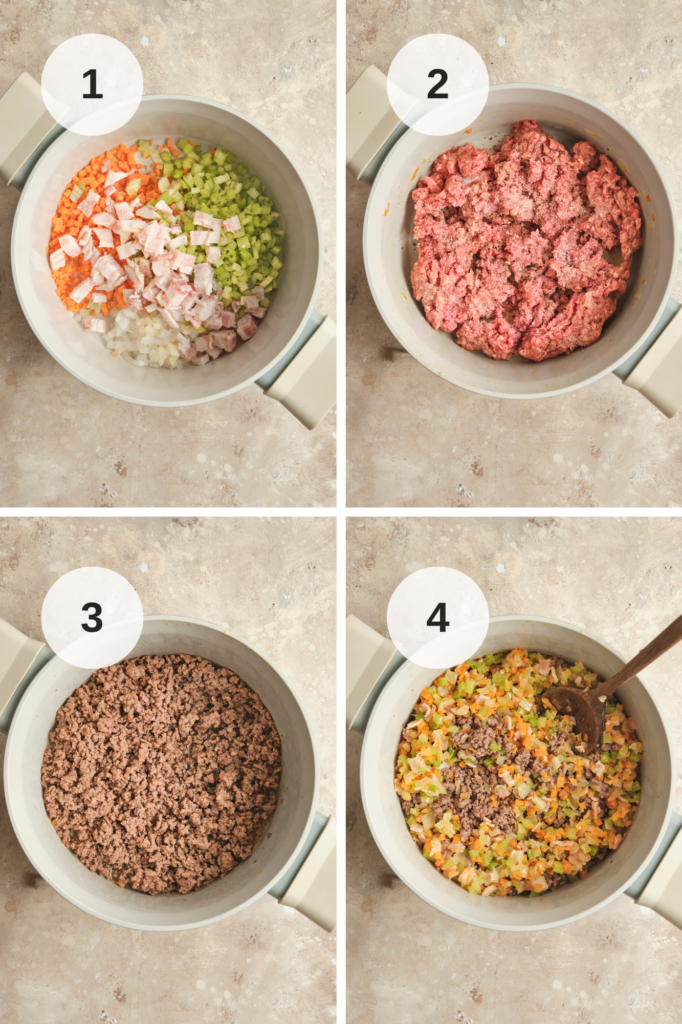
Add the Meat – Once the vegetables are soft, remove from the pot and set aside. Add the ground meat to the same pot. Use a spoon or spatula to break it apart as it cooks. Cook the meat until it is fully browned and no longer pink. Return the cooked vegetables to the pot with the browned meat (photos 2- 4).
Next, pour a splash of wine into the pot and stir well. The wine helps lift the flavorful bits from the bottom of the pan and adds depth to the sauce. Allow the wine to simmer for a few minutes until most of the liquid has reduced.
Now, add the tomatoes and stir everything together. Bring the sauce to a gentle simmer.Lower the heat and allow the sauce to simmer slowly for at least 1 to 2 hours. Stir occasionally and let the flavors develop naturally. The longer it simmers, the deeper and more complex the taste becomes (photos 5- 8).
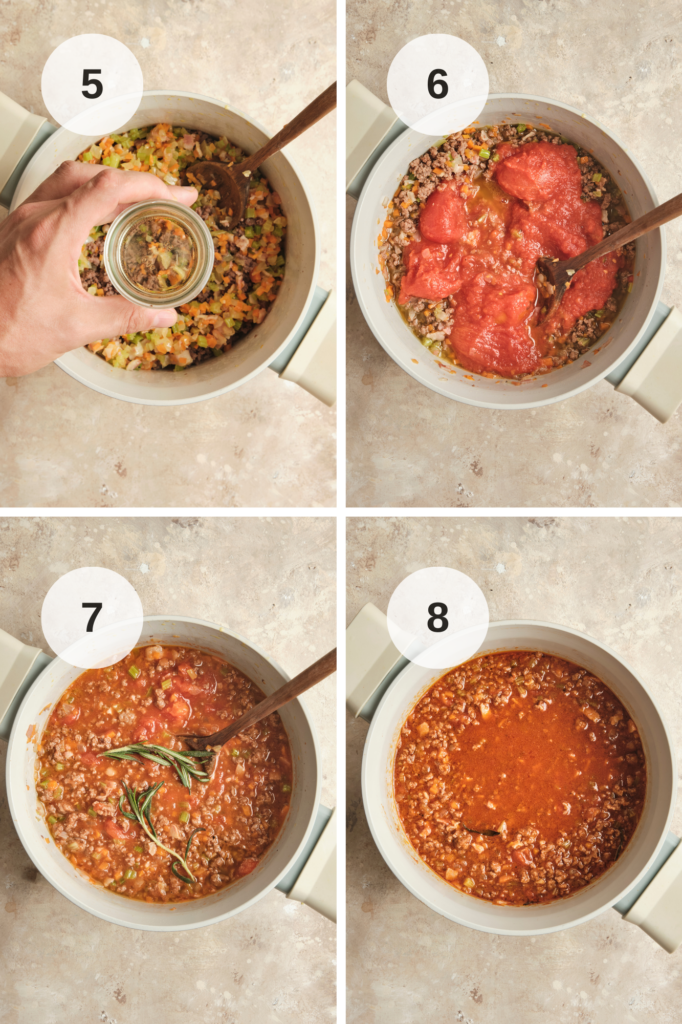
Add the Milk- After the ragù has simmered for 1–2 hours, add the milk and stir it into the sauce. The milk helps soften the acidity of the tomatoes and gives the Bolognese its signature smooth and balanced flavor. Allow the sauce to cook for another 20–30 minutes, letting everything blend beautifully.
Ready to use – Once the sauce has reached a thick, rich consistency, it’s ready to use for the Lasagna.
How to Make Béchamel Sauce
Béchamel sauce is a classic creamy white sauce that adds richness and smooth texture to dishes like lasagna. It’s simple to prepare and requires only a few basic ingredients.
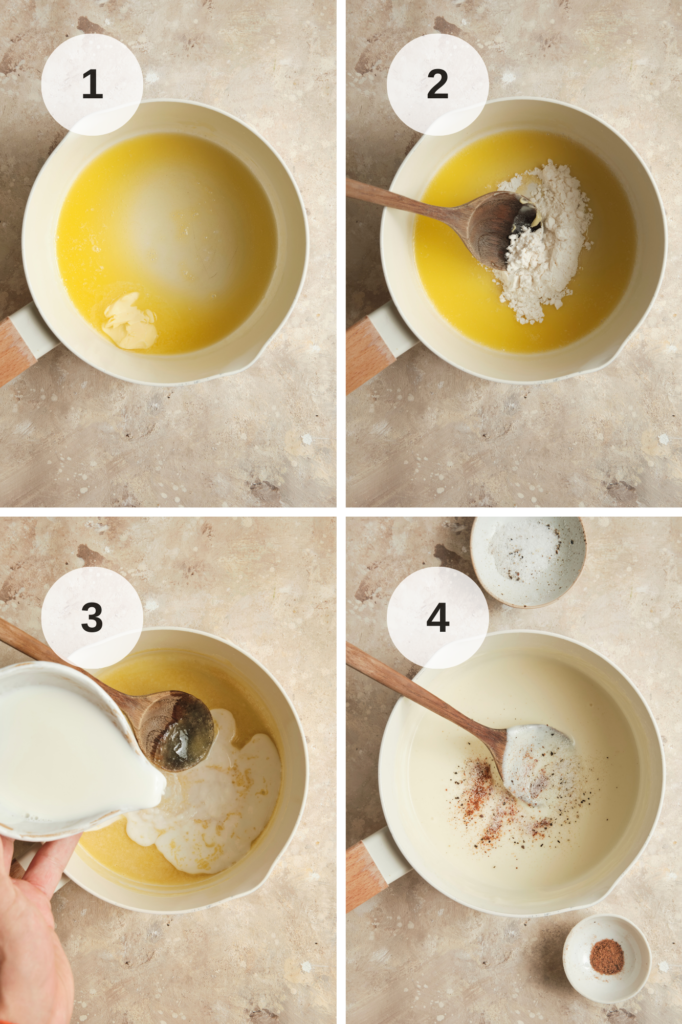
Start by melting the butter in a saucepan over medium heat. Once melted, add the flour and stir continuously to form a smooth paste. Cook this mixture for about 1 minute to remove the raw flour taste.
Slowly whisk in the milk, starting with about half and stirring constantly to keep the sauce smooth. Once it begins to thicken, add the remaining milk along with a pinch of salt, pepper, and a little nutmeg.
Continue cooking the sauce while stirring until it thickens enough to coat the back of a spoon. Remove from the heat and it’s ready to use (photos 1- 4).
It’s time to assemble the Lasagna
Once the Bolognese sauce and the béchamel are ready, it’s time for one of the most satisfying parts of the recipe—assembling the lasagna. This is where all the components come together to create the classic layers that make this dish so comforting and delicious.
Start by spreading a thin layer of Bechamel sauce on the bottom of your baking dish. This prevents the pasta from sticking and creates a flavorful base. Next, place a layer of lasagna sheets over the sauce, cutting them if needed so they fit nicely in the dish (photos 1- 2).
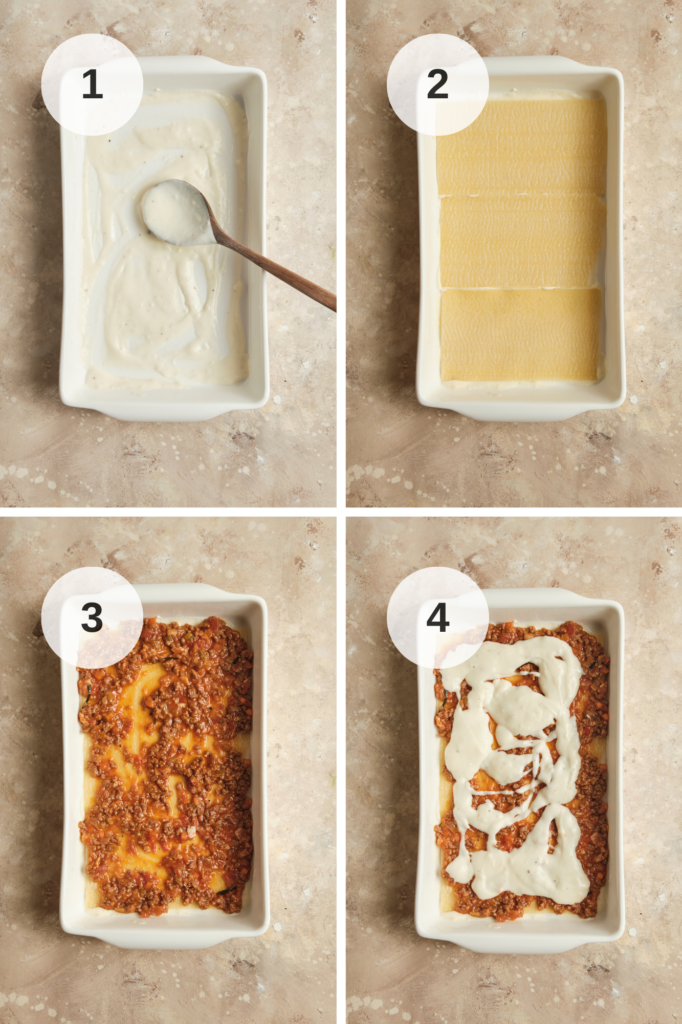
Spoon Bolognese sauce over the pasta, making sure it is evenly covered, and then add a few ladles of creamy béchamel sauce. Spread it gently so it covers the layer completely.
Continue building the lasagna by repeating the layers of pasta, Bolognese, and béchamel. Try to keep the layers even so every slice has a good balance of pasta and sauce. Depending on the size of your dish, you should end up with about four to five layers (photos 3- 4).
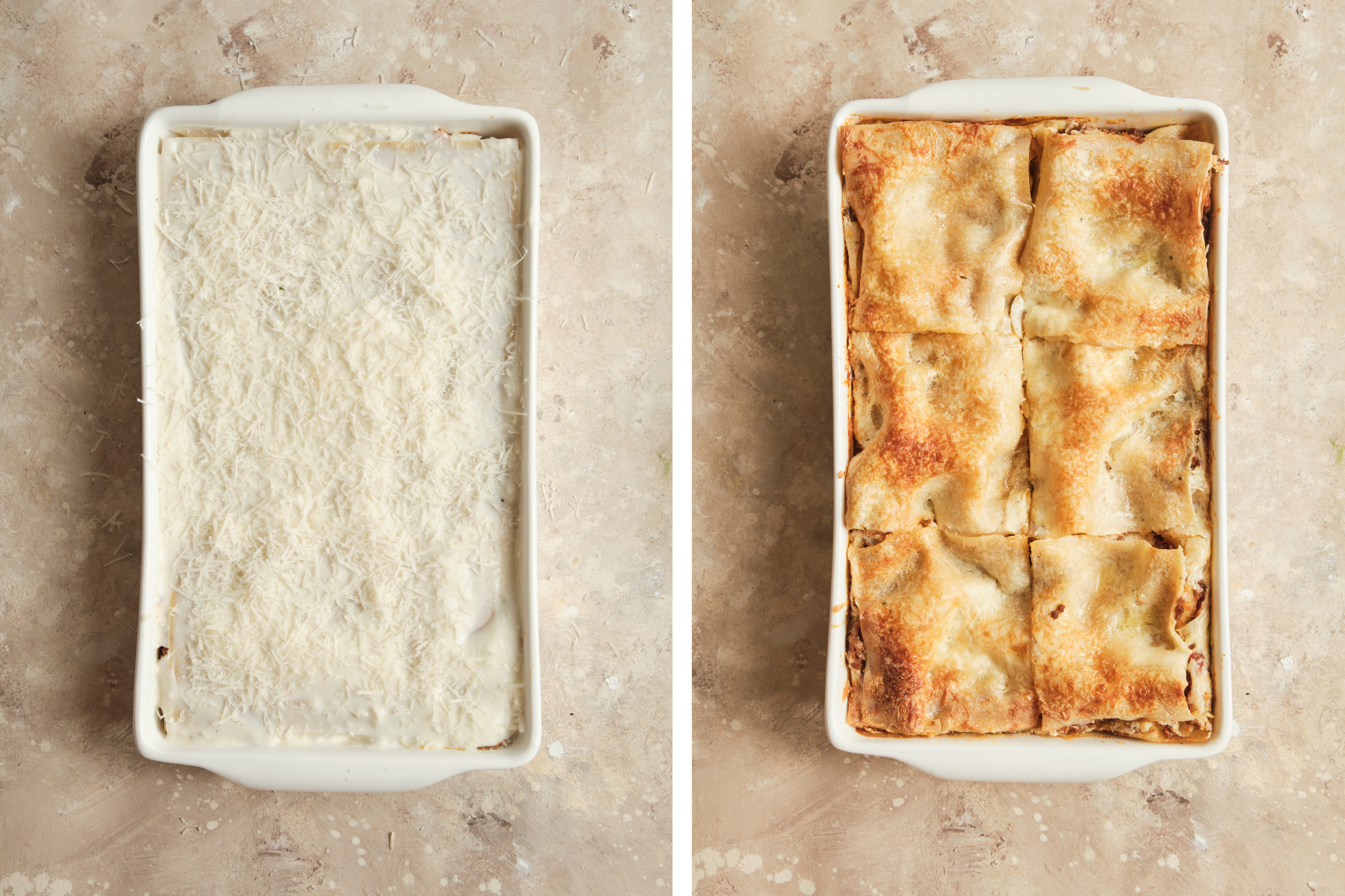
For the final layer, spread the remaining béchamel sauce over the top and finish with grated Parmesan cheese. This will create that beautiful golden, bubbly crust once the lasagna is baked in the oven.
FROM MY KITCHEN (CHEF’S NOTE)
On building flavor
For me, the heart of a good lasagna is always the Bolognese. I like to let it simmer slowly until it becomes rich and deeply flavorful—this is not a step I rush.
Balance is everything
The béchamel should be smooth and light, not too thick. It’s there to bring everything together and soften the richness of the meat sauce.
Layering with intention
When assembling, I try to keep the layers even and not overly thick. It makes a big difference when you cut into it—you want every bite to have the perfect balance.
Pasta texture
If you’re using dried sheets, make sure they have enough moisture from the sauces to cook properly in the oven. The final texture should be tender, never dry.
That golden top
I always finish with a generous layer of Parmesan. It creates that beautifully golden, slightly crisp top that I personally love.
Ingredients
Equipment
Method
- Heat 1/2 tbsp extra-virgin olive oil in a large pot over medium heat. Add the onion, carrot, and celery and cook for about 5 minutes until the vegetables are soft and fragrant.
- Add 1 lb ground beef and cook, breaking it apart with a spoon, until it is fully browned.
- Pour in 1/2 cup dry white wine and stir well, scraping up any browned bits from the bottom of the pan. Let it simmer for a few minutes until the liquid has mostly evaporated.
- Stir in 1 cup whole tomatoes with juice, sprig rosemary, and bring the sauce to a gentle simmer.
- Reduce the heat to low and let the sauce cook slowly for 1 to 2 hours, stirring occasionally, until thick and flavorful.
- Stir in 1 cup milk and continue cooking for another 20–30 minutes until the sauce becomes rich and creamy.
- Season with salt and black pepper to taste.
- Melt 4 tbsp butter in a saucepan over medium heat until it begins to bubble. Add 4 tbsp flour and stir well to form a smooth paste, cooking it for about 1 minute to remove the raw flour taste.
- Gradually pour in about half of the milk while whisking continuously to keep the sauce smooth and lump-free. Once the mixture begins to thicken, add the remaining milk along with 1/2 tsp nutmeg, and a pinch of salt and black pepper.
- Keep stirring the sauce over gentle heat until it becomes thick enough to coat the back of a wooden spoon. Remove the saucepan from the heat and set the sauce aside until ready to use.
- Preheat the oven to 350°F (180°C).
- To assemble the lasagna, start by spreading a small layer of bechamel sauce on the bottom of a baking dish. Place a layer of lasagna sheets on top, cutting them if needed so they fit the dish.
- Spoon more ragù over the pasta so it is evenly covered, then add about two ladles of béchamel sauce and 2 tbsp of parmesan cheese on top.
- Continue layering the pasta, ragù, béchamel and parmesan until all the ingredients are used, making sure to reserve enough béchamel for the final layer. You should end up with about 4–5 layers of pasta.
- Spread the remaining béchamel over the top and finish with the parmesan cheese.
- Bake the lasagna for about 45 minutes, or until the top is golden and the sauce is bubbling. Let the lasagna rest for 5–10 minutes before slicing and serving.
Notes
Try to spread the sauces evenly across each layer. Balanced layers ensure that every bite contains pasta, meat sauce, and creamy béchamel. Finish with cheese on top
Adding mozzarella or parmesan on the final layer helps create a golden, bubbly crust that makes the lasagna even more delicious. Let the lasagna rest before slicing
After baking, let the lasagna sit for about 10 minutes before cutting into it. This allows the layers to set and makes it much easier to serve neat portions. Lasagna tastes even better the next day
Like many slow-cooked dishes, lasagna often tastes even better the following day because the flavors have had more time to develop.