

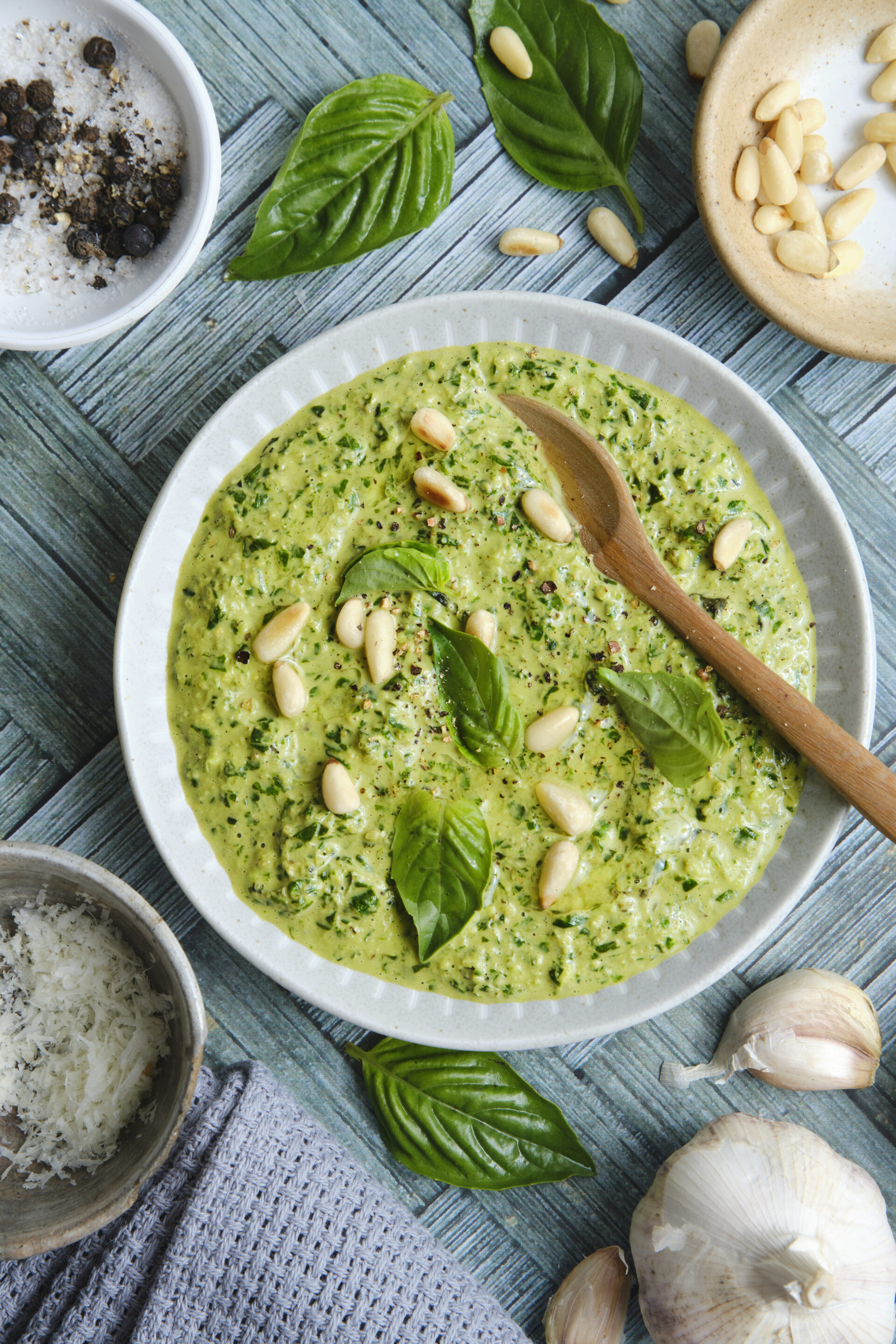
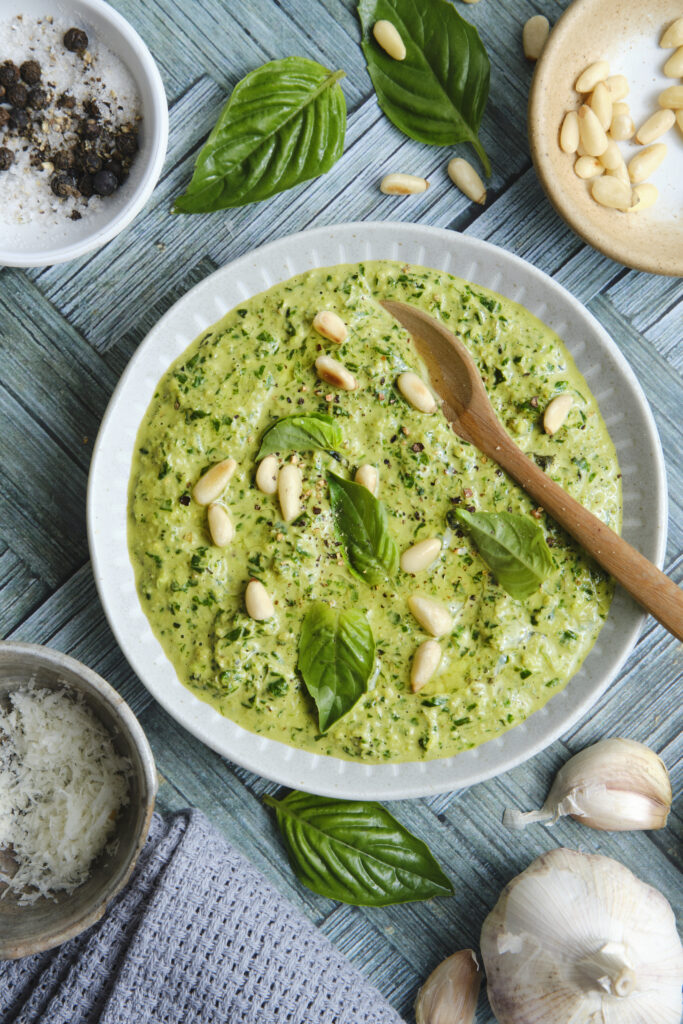
A Small Story: From Garden to Jar
The first time I made basil pesto, it wasn’t planned. I had a small pot of basil on my windowsill that had grown wild and unruly, practically begging to be harvested. With a handful of pine nuts in the pantry, a wedge of Parmesan in the fridge, and a few cloves of garlic lying around, the decision was made.
I didn’t expect much—just a quick blend of herbs and oil—but the result was astonishing. One spoonful and I was transported: bright, peppery basil, the nutty crunch of pine nuts, a silky stream of olive oil, and the salty bite of cheese—all in harmony. It was my first taste of how a few honest ingredients could come together to create something unforgettable.
Why You’ll Love This Recipe
- It’s quick and easy to make, yet bursting with flavor.
- Uses fresh, high-quality ingredients for a truly vibrant taste.
- Perfect for pasta, pizza, sandwiches, or as a dip.
- Keeps well in the fridge or freezer for later use.
- You control the flavor—more garlic, more cheese, more pine nuts—it’s all up to you.
Key Ingredients
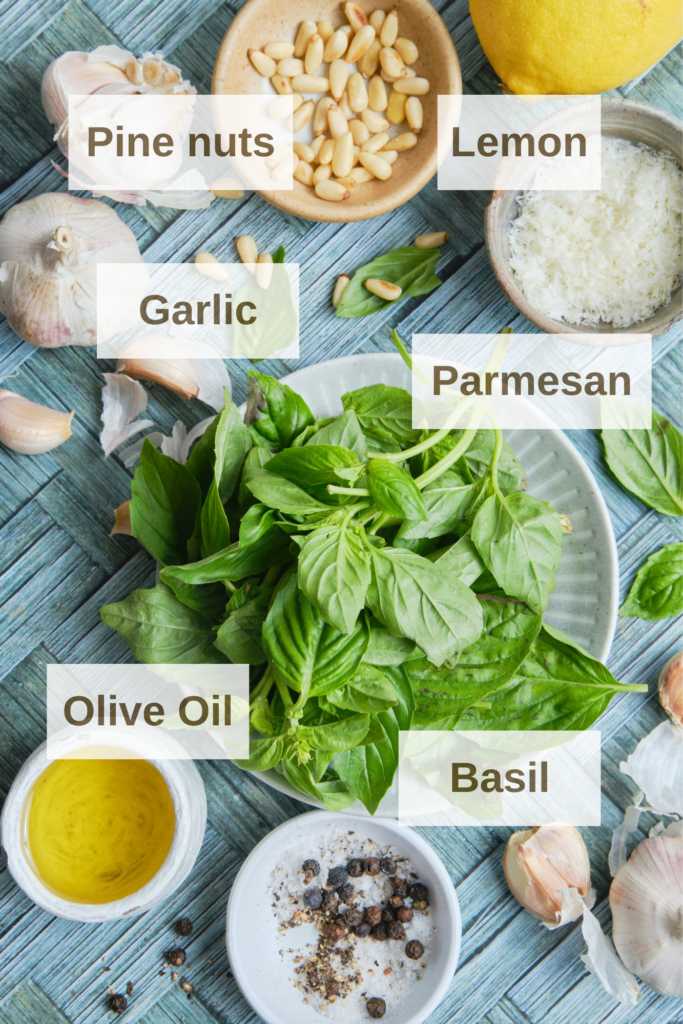
- Fresh basil leaves – Use the freshest, firmest basil leaves you can find, as they are the heart of this pesto; their bright green color and aromatic flavor are what give the sauce its signature freshness.
- Garlic – A few cloves of garlic add a punchy, savory depth to the pesto, giving it that classic Italian bite; you can adjust the amount depending on how garlicky you like your sauce.
- Pine nuts – Lightly toasted pine nuts bring a rich, nutty aroma and a subtle crunch that balances the freshness of the basil, enhancing the overall texture and flavor of the pesto.
- Parmesan cheese – Freshly grated Parmesan adds a salty, savory richness that binds the ingredients together and gives the pesto its characteristic depth and umami flavor.
- Extra virgin olive oil – Using a high-quality extra virgin olive oil is essential for achieving a smooth, silky texture and a full-bodied taste that complements the herbs and cheese perfectly.
- Fresh lemon juice – A squeeze of lemon juice brightens the pesto, adding freshness and a hint of tang, while helping to preserve its vibrant green color.
A visual walk-through of the recipe
Take a look at the step-by-step photos below for a visual guide to the process. You’ll find the complete written recipe along with helpful tips in the recipe card further down the page.
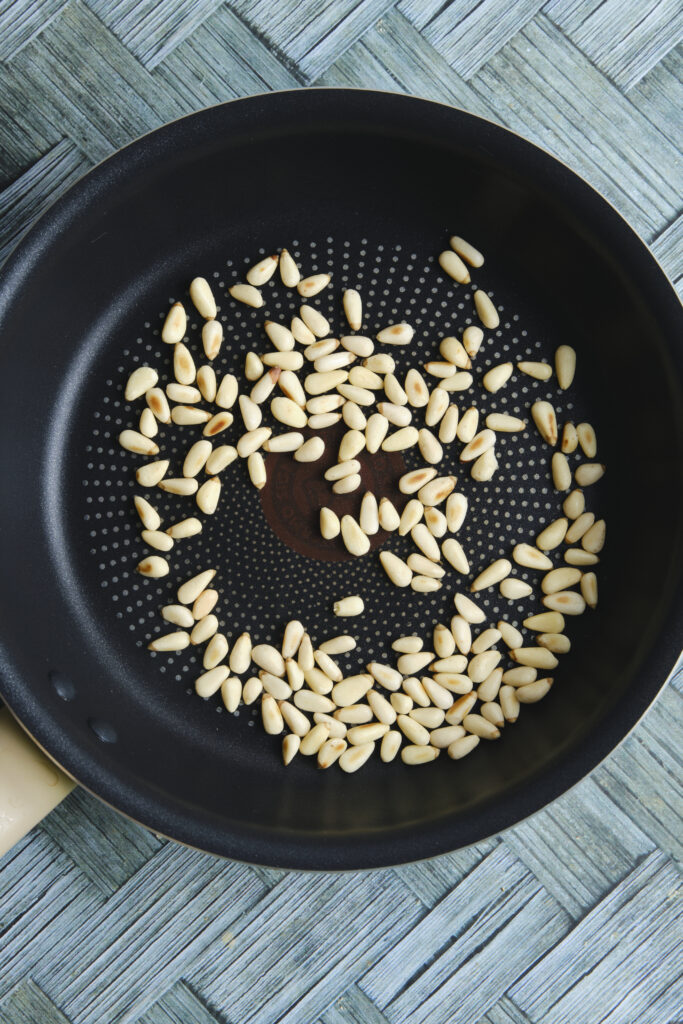
Toast the pine nuts – Place a medium skillet over medium heat and lightly toast the pine nuts for about a minute, or until they turn golden brown. Remove them from the pan and let them cool.
Blend on high – Add the toasted pine nuts, fresh basil leaves, lemon juice, garlic, salt, and pepper to a food processor. Blend on high until the ingredients are well mixed.
While the processor is running, slowly pour in the olive oil until everything is fully blended. Finally, add the grated Parmesan cheese and pulse a few more times until everything is incorporated.
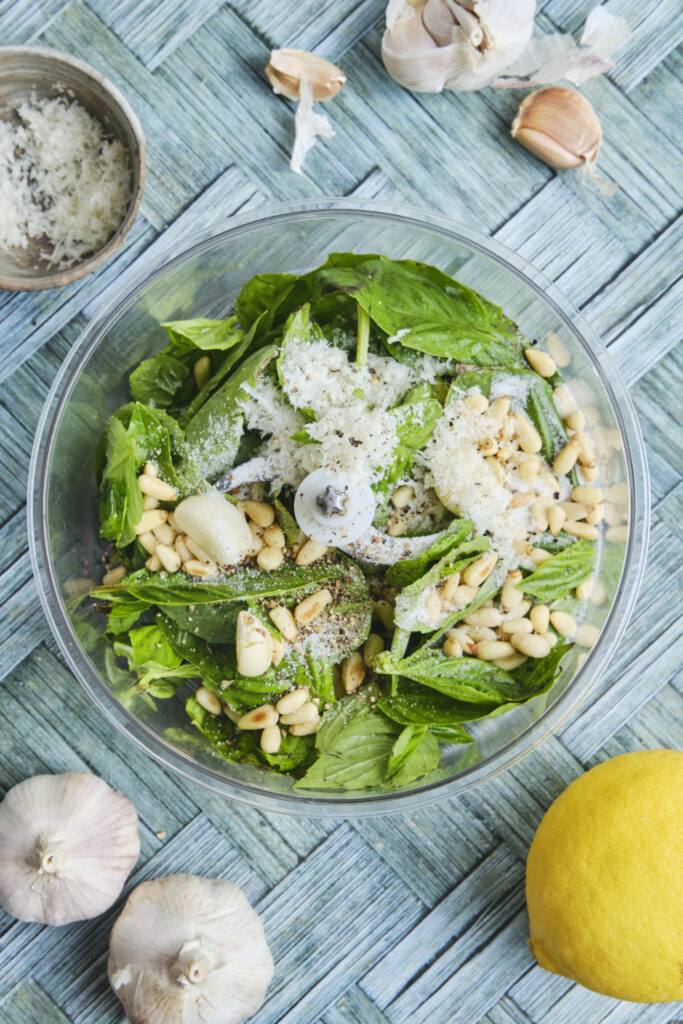
Taste and adjust – Transfer the pesto to a bowl and taste, then adjust the seasoning with more salt, pepper, or lemon juice if needed. If the pesto is too thick, stir in a little extra olive oil until it reaches your desired consistency.
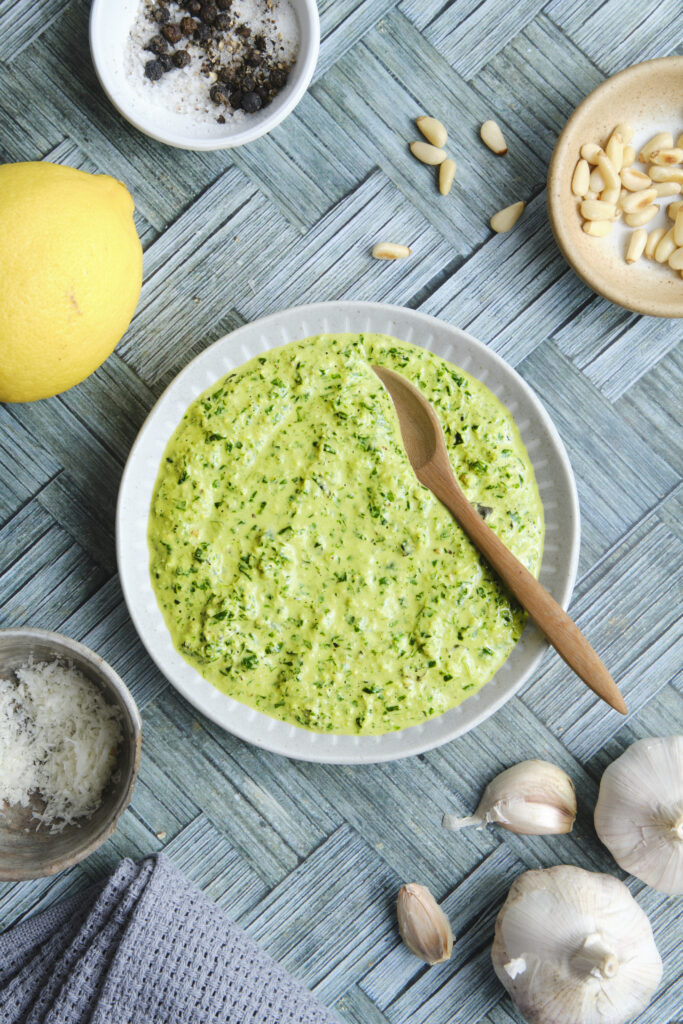
Use the pesto immediately with pasta, sandwiches, or roasted vegetables, or store it in an airtight container in the refrigerator. To keep the vibrant green color, drizzle a thin layer of olive oil over the top before sealing.
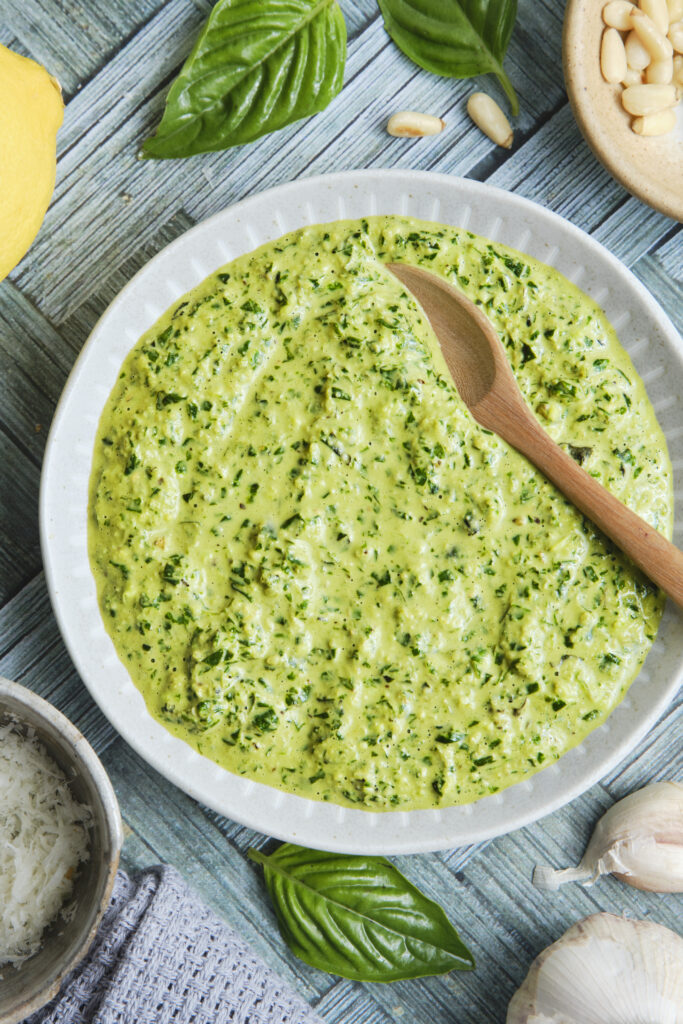
From my Kitchen (Chef’s Notes)
- Freshness is everything: Since pesto relies on just a few ingredients, each one must be high-quality and fresh for maximum flavor.
- Toast the nuts lightly: Pine nuts develop their flavor when toasted but avoid browning too much, as they can become bitter.
- Olive oil matters: A good extra virgin olive oil makes a noticeable difference in flavor and texture.
- Blender vs. mortar: Using a mortar and pestle gives a slightly chunkier, traditional texture, while a food processor produces a smooth, modern pesto.
- Freezing tip: To preserve color and flavor, drizzle a thin layer of olive oil on top before freezing pesto in containers or ice cube trays.
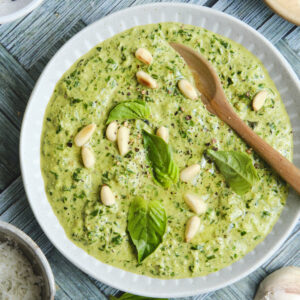
Homemade Basil Pesto
Ingredients
- 1/4 cup pine nuts toasted
- 1 tbsp fresh lemon juice
- 3 cloves garlic
- sea salt and black pepper
- 2 cups basil leabes
- 1/4 cup extra-virgin olive oil
- 1/4 cup parmesan cheese freshly grated
Instructions
- Place a medium skillet over medium heat and lightly toast the pine nuts for about a minute, or until they turn golden brown. Remove them from the pan and let them cool
- Add the toasted pine nuts, fresh basil leaves, lemon juice, garlic, salt, and pepper to a food processor. Blend on high until the ingredients are well mixed.
- While the processor is running, slowly pour in the olive oil until everything is fully blended. Finally, add the grated Parmesan cheese and pulse a few more times until everything is incorporated.
Notes
- Use Fresh, Bright Green Basil: Freshly picked basil gives the best flavor. If your basil leaves are wilting or dark, the pesto might taste bitter.
- Toast Pine Nuts Carefully: They burn quickly! Keep an eye on them and stir constantly for even browning.
- Chill the Blade: If you’re worried about basil discoloring, chill your food processor blade in the freezer beforehand to reduce heat during blending.
- Olive Oil Quality Matters: Use a good-quality extra virgin olive oil—it adds richness and depth.
- Balance the Garlic: Start with one small clove if you’re unsure—raw garlic can overpower the pesto if too much is used.
- Lemon Juice = Brightness: A splash of lemon juice not only brightens the flavor but helps preserve the green color.
- Texture Preference: Blend longer for a smooth pesto, or pulse just a few times if you like it chunkier and rustic.
- Storing Tips: Store in an airtight container in the fridge for up to 5 days. Pour a thin layer of olive oil on top to help prevent browning. For longer storage, freeze in ice cube trays, then transfer to a zip-top bag for up to 3 months.
- Cheese Substitutes: For a dairy-free version, omit the cheese or replace with nutritional yeast.
Easy quick side salad! Keep making this over and over.