

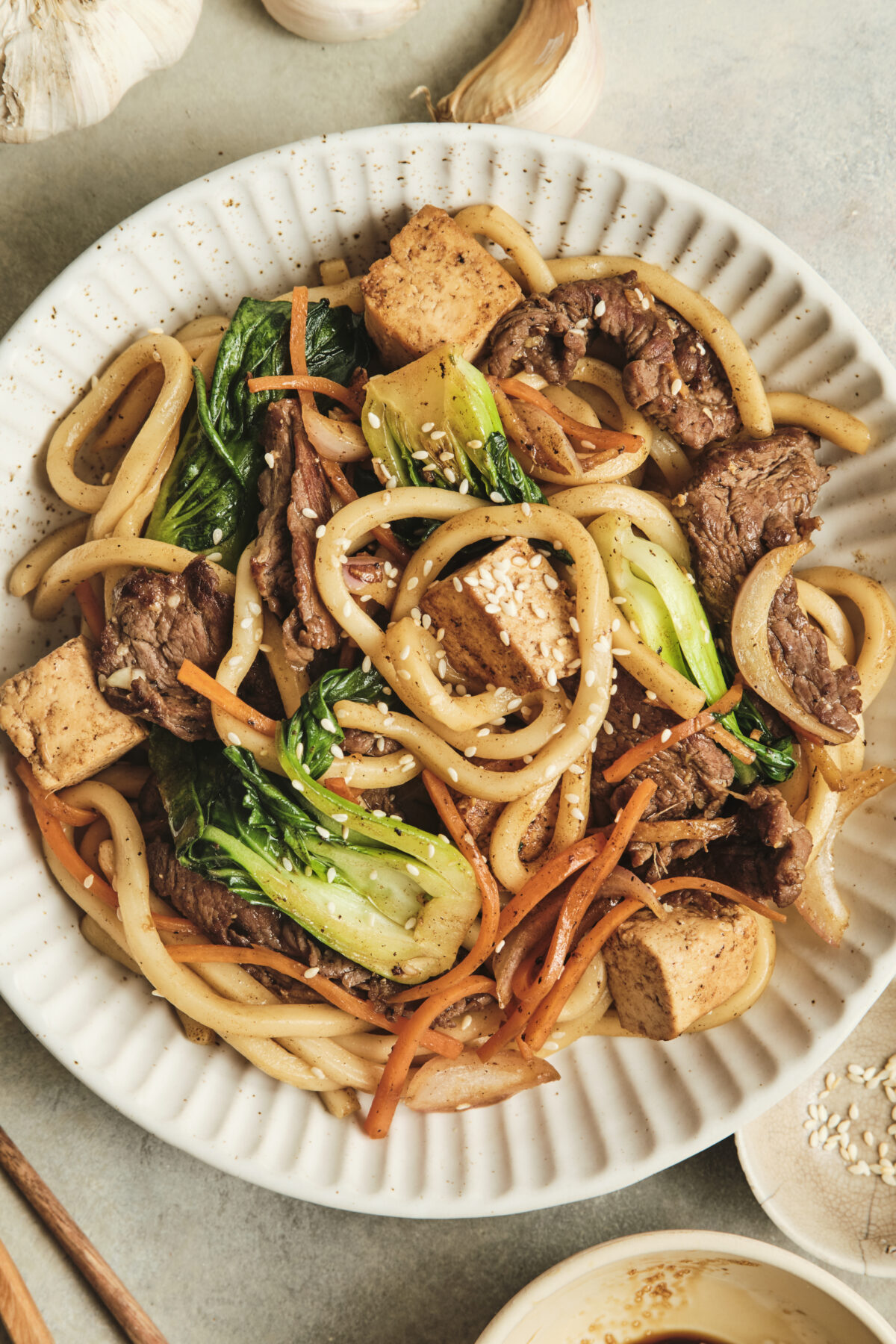
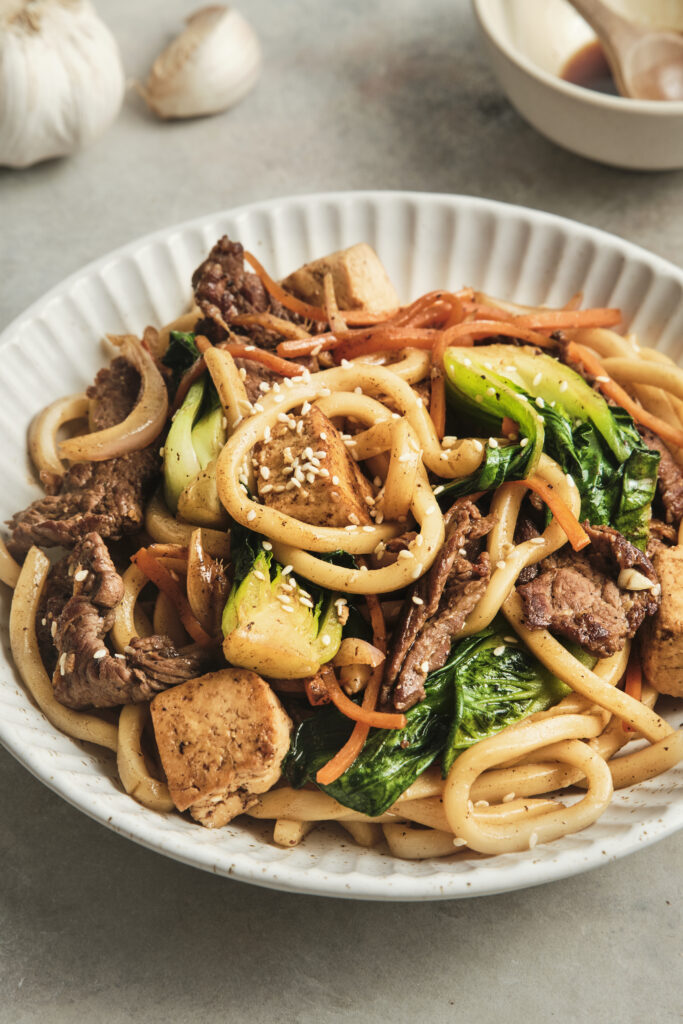
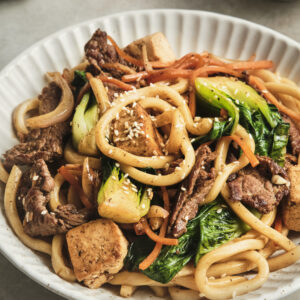
This beef udon noodles stir fry is the kind of dish I often come back to after a long day in the kitchen—quick to make, but deeply satisfying. Working as a chef in Asia, I’ve learned how powerful simple stir-fry techniques can be when you respect heat, timing, and balance. It’s about letting each ingredient shine while building layers of flavor in the pan. This recipe brings that approach together in a way that feels effortless, yet full of character—comforting, bold, and perfect for any day of the week.
Why you’ll love this Easy Beef Udon Noodle Recipe
- It comes together quickly, making it perfect for busy evenings without sacrificing flavor.
- The combination of tender beef and chewy udon noodles creates a deeply satisfying texture.
- You learn key stir-fry techniques that you can apply to many other dishes.
- The sauce is bold, balanced, and easy to adjust to your taste.
- It’s a flexible recipe—use what you have and make it your own.
Key Ingredients
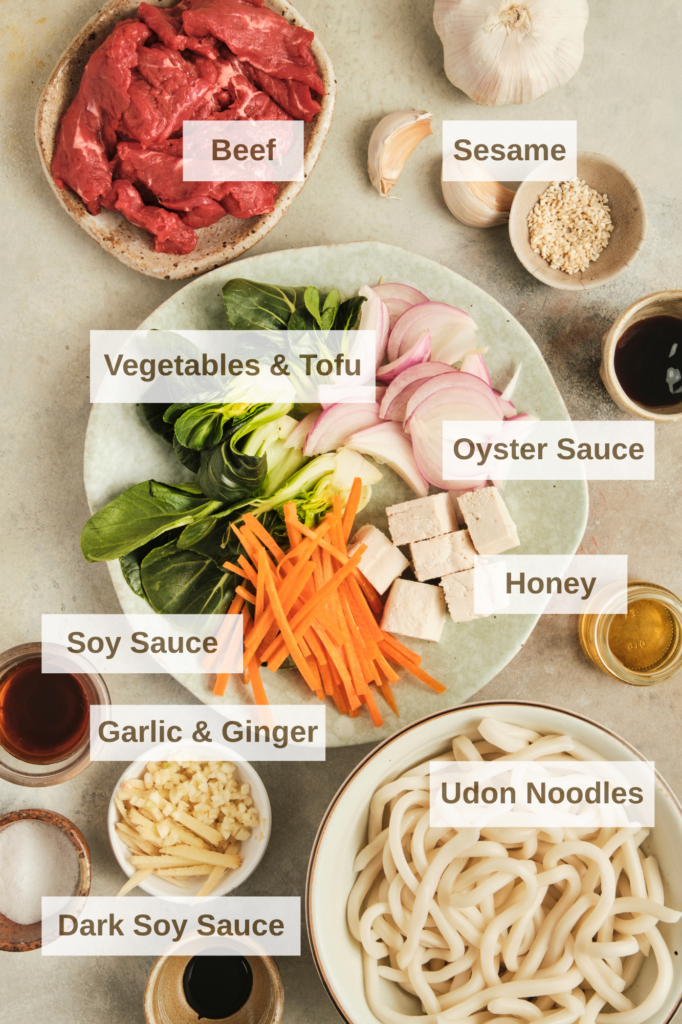
- Beef: I like to use thinly sliced beef for quick cooking—tender cuts like sirloin or ribeye work best and stay juicy when cooked properly.
- Udon noodles: Thick, chewy, and perfect for absorbing sauce—these noodles give the dish its comforting character. Fresh or vacuum-packed udon both work well.
- Garlic & ginger: This is your aromatic base—garlic for depth, ginger for freshness and a gentle heat. Slice the ginger thinly so it blends smoothly into the dish.
- Red onion: Adds a mild sweetness and a bit of texture when lightly stir-fried.
- Bok choy & carrots: Fresh, crisp vegetables that bring balance, color, and a slight crunch to the dish.
- Tofu cubes: A great addition for texture—lightly crisped, they soak up the sauce and complement the beef.
- Soy sauce & dark soy sauce: The combination gives both saltiness and color—dark soy adds depth and that rich, glossy finish.
- Oyster sauce & honey: Oyster sauce brings umami richness, while honey adds a gentle sweetness to balance everything.
- Sesame oil: Used at the end for a nutty, aromatic finish that lifts the entire dish.
Why This Beef Udon Noodles Stir Fry Works
- Fast, high-heat cooking keeps the ingredients fresh, vibrant, and full of texture without overcooking
- Udon noodles bring a chewy, satisfying bite that holds up well to the rich sauce
- The sauce is well-balanced—salty, slightly sweet, and full of umami, coating everything evenly
- Thinly sliced beef cooks quickly while staying tender and juicy, adding depth and richness
- The combination of textures and flavors creates a dish that feels both comforting and dynamic
How to make Beef Udon Noodles Stir fry
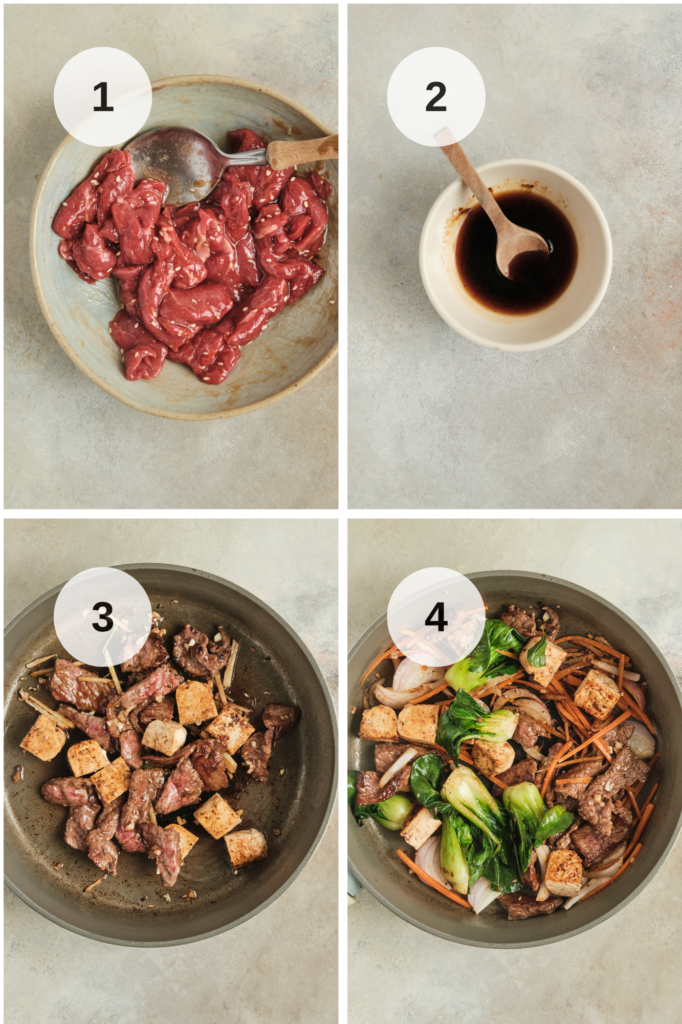
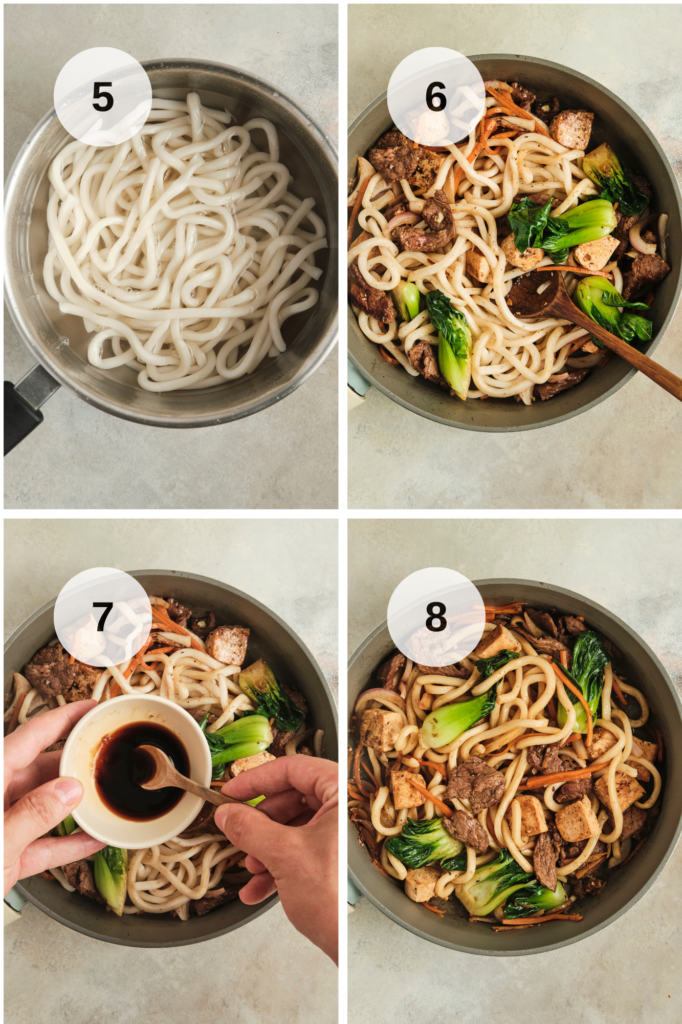
Take a look at the step-by-step photos below for a visual guide to the process. You’ll find the complete written recipe along with helpful tips in the recipe card further down the page.
Prepare Everything First
Slice the beef thinly against the grain for tenderness. Marinate the sliced beef with the soy sauce for at least 15 minutes. Cut the tofu into even cubes. Chop the vegetables, slice the ginger, and finely chop the garlic. Stir-frying is fast—having everything ready is essential. Prepare the stir- fry sauce by combining the oyster sauce, dark soy sauce, and honey.
Crisp the Tofu
Heat a large pan or wok over medium-high heat with a little neutral oil. Add the tofu cubes and let them cook undisturbed at first to develop a light golden crust. Turn gently and cook until lightly crisp on all sides. Remove and set aside.
Sear the Beef
Increase the heat to high and add a bit more oil if needed. Add the beef in a single layer and let it sear without moving for about 1 minute. Then stir-fry briefly until just cooked. Remove from the pan to keep it tender.
Build the Aromatic Base
In the same pan, add the red onion and cook for 1–2 minutes until slightly softened. Add the garlic and sliced ginger, stirring briefly until fragrant.
Stir-Fry the Vegetables
Add the carrots and bok choy. Stir-fry over high heat, keeping everything moving so the vegetables stay crisp but tender (Photos 1-4).
Prepare the Noodles
Loosen the udon noodles according to the package instructions, usually by rinsing them in hot water. Drain well and set aside.
Combine and Sauce
Return the beef and tofu to the pan. Add the udon noodles. Pour in the stir-fry sauce you have prepared earlier. Toss everything quickly so the noodles are evenly coated and glossy.
Finish the Dish
Drizzle in the sesame oil and give everything a final toss. Taste and adjust if needed.
Serve
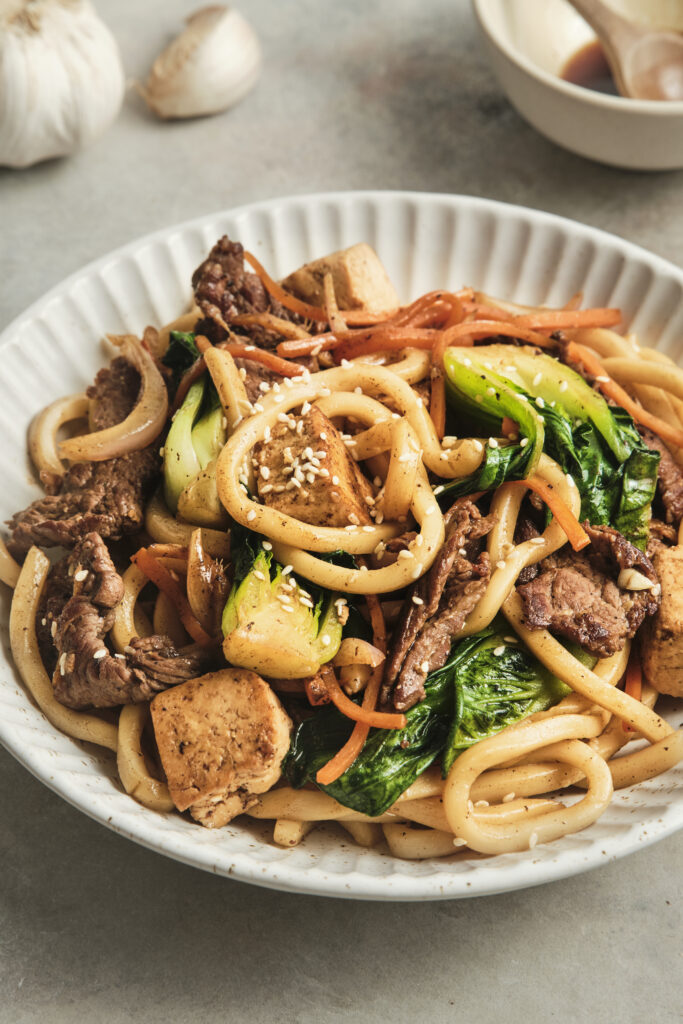
Serve immediately while hot. The noodles should be well-coated, the vegetables vibrant, and the flavors balanced.
Mastering Heat and Timing in Stir Fry (Chef Insight)
A great stir fry is all about timing and control. The heat should be high enough to sear, not steam. That’s why I always cook components separately—especially the beef—to keep textures clean and defined.
The sauce should coat, not drown. Udon noodles naturally absorb flavor, so you want just enough sauce to glaze everything evenly without making it heavy.
Think of the pan as a place to build layers quickly. Each step adds something—aroma, texture, or depth—and when done right, the final dish feels balanced and effortless.
From my Kitchen (Chef’s Notes)
- Slice against the grain: This keeps the beef tender and pleasant to eat.
- Crisp the tofu properly: Let it sit in the pan before turning so it develops texture.
- Use high heat: This is essential for a proper stir-fry and prevents ingredients from steaming.
- Work in stages: Cooking the beef and tofu separately keeps everything perfectly cooked.
- Balance the sauce: Taste and adjust—add a touch more soy sauce or honey if needed.
- Finish with sesame oil: Always at the end to preserve its delicate aroma.
How to Serve
Serve immediately while hot, straight from the pan. Finish with fresh scallions, sesame seeds, or a squeeze of lime for brightness. It works as a complete meal or alongside simple sides like steamed greens.
How to Store
Store leftovers in an airtight container in the refrigerator for up to 2 days. Reheat quickly in a hot pan with a splash of water to loosen the sauce and bring back the texture.
Variations & Substitutions
- Swap beef for chicken, shrimp, or tofu
- Add chili paste or fresh chili for heat
- Use different vegetables like mushrooms, snap peas, or carrots
- Replace udon with rice noodles or egg noodles
- Add a splash of lime or rice vinegar for extra brightness
FAQ
What cut of beef is best for stir-fry?
Tender cuts like flank steak, sirloin, or ribeye are ideal. Always slice thinly against the grain to keep the meat tender.
How do I keep the beef from getting tough?
Cook it quickly over high heat and remove it from the pan once browned. Overcooking is the main reason beef becomes chewy.
Can I make this dish ahead of time?
It’s best enjoyed fresh, but you can prep all ingredients in advance. If reheating, do it quickly in a hot pan to maintain texture.
Can I make this vegetarian?
Absolutely. Swap the beef for tofu or mushrooms and use a vegetarian oyster sauce alternative for a similar depth of flavor.

More Asian Recipes to Try
If you enjoy bold flavors and simple, comforting dishes, you’ll find plenty of inspiration here on my blog. From quick stir-fries to classic street food favorites, these recipes are designed to be approachable, full of flavor, and perfect for any day of the week.
Be sure to check out:
Chicken Teriyaki Stir Fry – Coming Soon.
Thai Basil Beef (Pad Krapow) – Coming Soon.
Vegetable Fried Rice – Coming Soon.
Easy Beef Udon Noodles Stir Fry
Ingredients
- 10 oz udon noodles
- 8 oz beef thinly sliced
- 150 g tofu diced into cubes
- 2 cloves garlic finely chopped
- 1 tsp fresh ginger thinly sliced
- 1 red onion sliced
- 2 bok choy halved
- 1 cup carrots julienned
- 2 tbsp soy sauce
- 1/2 tbsp dark soy sauce
- 1 tbsp oyster sauce
- 1 tsp honey
- 1 tbsp neutral oil
- 1 tsp sesame oil
Instructions
- In a small bowl, combine the dark soy sauce, oyster sauce, and honey. Stir well until the honey is fully dissolved. Set the sauce aside so it’s ready to use—this step keeps your cooking process smooth and controlled.
- Place the thinly sliced beef in a bowl and add the soy sauce. Mix well and let it marinate for about 15 minutes. This step helps season the meat and keeps it tender during cooking.
- Cut the tofu into even cubes. Slice the ginger, finely chop the garlic, and prepare the vegetables. Have everything ready before you start cooking—stir-frying moves quickly.
- Loosen the udon noodles according to the package instructions, usually by rinsing them in hot water. Drain well and set aside.
- Heat a large pan or wok over medium-high heat and add a little neutral oil. Add the tofu cubes in a single layer and let them cook undisturbed to develop a light golden crust. Turn gently and cook until lightly crisp on all sides. Remove and set aside.
- Increase the heat to high and add a bit more oil if needed. Add the marinated beef in a single layer and let it sear without moving for about 1 minute. Then stir-fry briefly until just cooked. Remove from the pan to keep it tender.
- In the same pan, add the red onion and cook for 1–2 minutes until slightly softened. Add the garlic and sliced ginger, stirring briefly until fragrant.
- Add the carrots and bok choy. Stir-fry over high heat, keeping everything moving so the vegetables stay crisp but tender.
- Return the beef and tofu to the pan. Add the udon noodles, then pour in the prepared stir-fry sauce. Toss everything quickly so the noodles are evenly coated and glossy.
- Drizzle in the sesame oil at the end and give everything a final toss. Taste and adjust if needed.
- Serve immediately while hot. The noodles should be glossy, well-coated, and full of balanced flavor.
Notes
- Marinate for tenderness: Even a short 15-minute marinade in soy sauce helps the beef stay juicy and flavorful.
- Slice the beef correctly: Always cut against the grain for a more tender bite.
- Prepare everything in advance: Stir-frying is fast—have all ingredients ready before you start cooking.
- Use high heat: This is key to achieving that classic stir-fry flavor and slight charring without steaming the ingredients.
- Don’t overcrowd the pan: Cook in batches if needed to keep everything searing properly.
- Crisp the tofu properly: Let it sit undisturbed at first so it develops a light golden crust and better texture.
- Control the vegetables: Keep them slightly crisp for contrast and freshness in the final dish.