

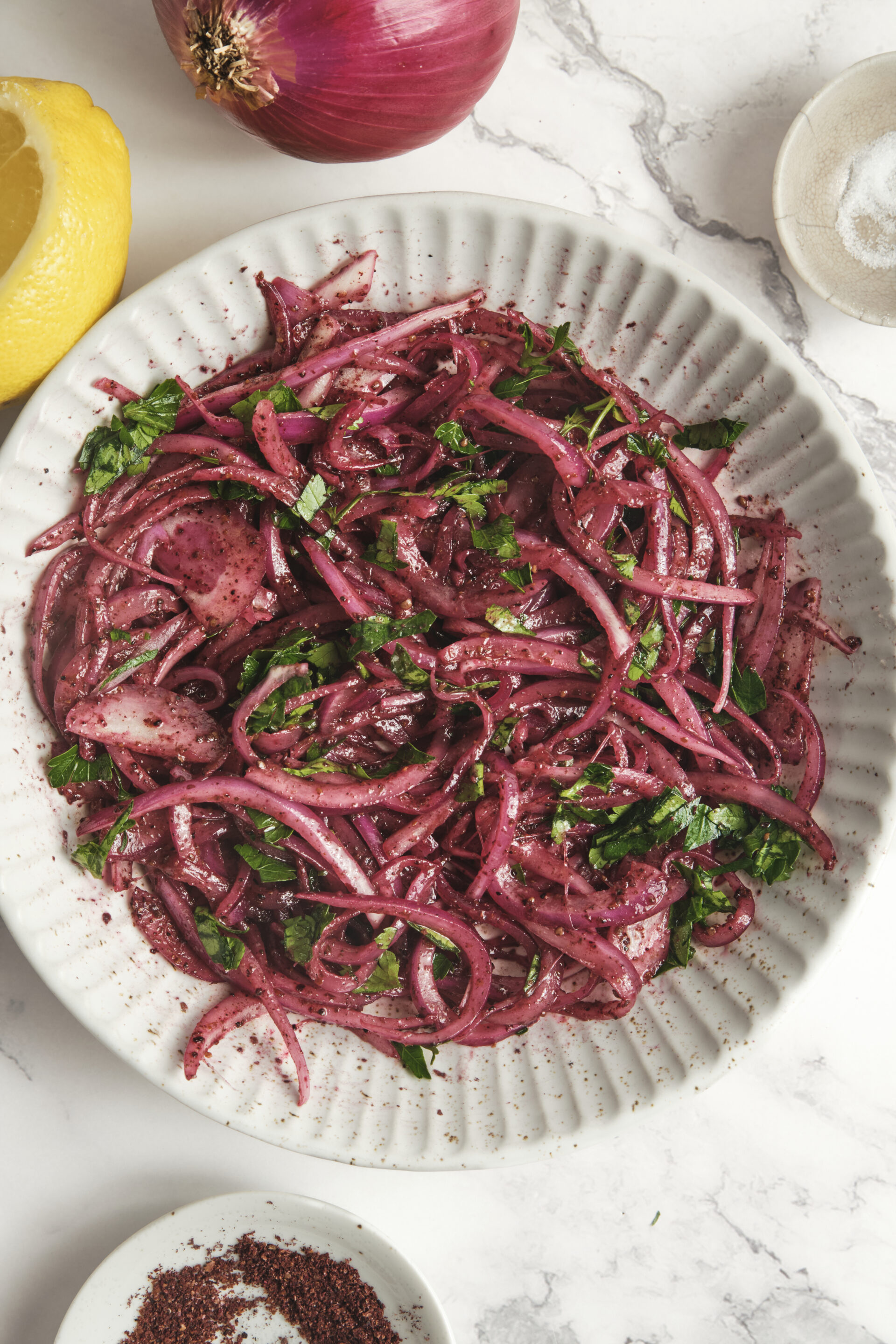
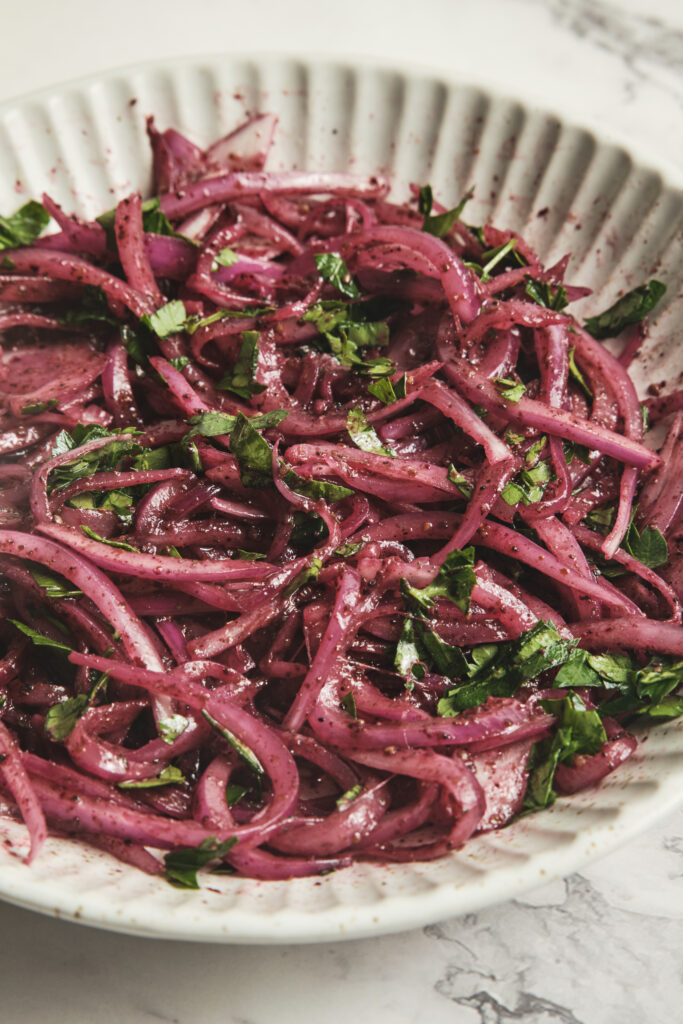
What Are Sumac Onions?
Sumac onions are thinly sliced red onions tossed with sumac and a touch of acidity, creating a fresh, tangy side that balances rich dishes. In case you are wondering what sumac is: Sumac is a deep red spice made from dried and ground berries, known for its bright, tangy, almost lemon-like flavor that adds freshness and acidity to dishes.
I remember sitting outside at a small restaurant during a holiday in Turkey, with a table full of grilled dishes, flatbreads, and salads. Right in the middle was a bowl of what looked like the simplest thing—red onions with sumac. But that bowl kept getting passed around more than anything else. It added freshness, acidity, and a bit of brightness to every bite. That’s the thing about sumac onions—they don’t try to be the star, but once they’re on the table, you notice when they’re missing.
Key Ingredients for Sumac Onions
You only need a handful of simple pantry ingredients to make these sumac onions. You’ll find the full list in the recipe card below.
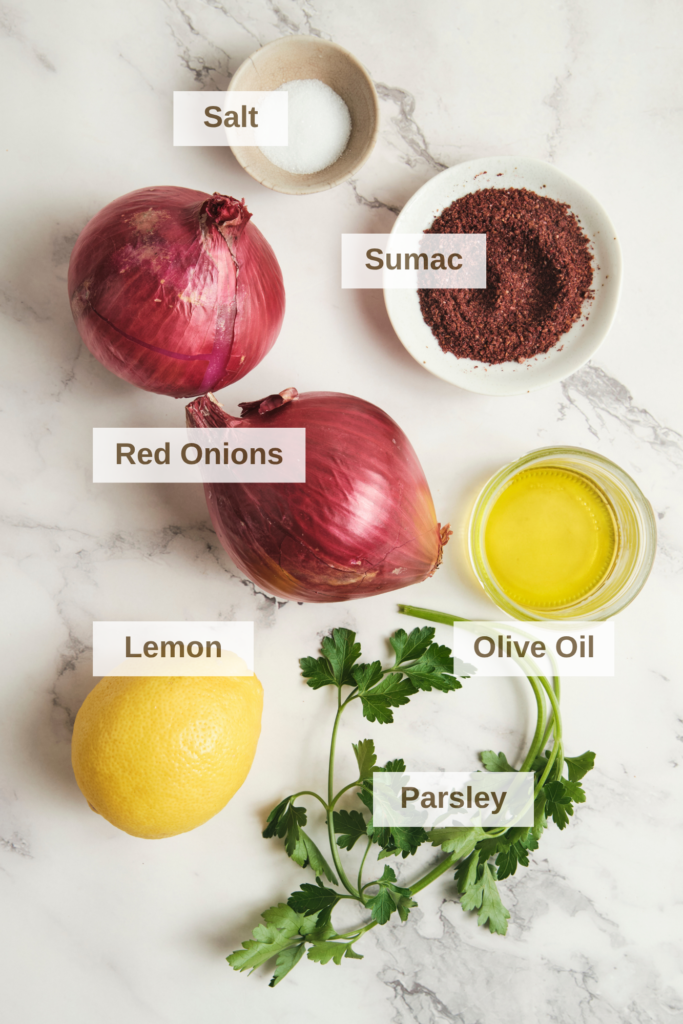
Red Onion: This is the star of the recipe, so go for a fresh, firm red onion and slice it as thinly as you can. In case you don’t have red onions on hand, you can also use white or yellow onions, keep in mind the flavor will be slightly different.
Extra Virgin Olive Oil: I like using a mild, good-quality olive oil so it doesn’t overpower the onions.
Lemon Juice: I grew up using lemon juice—it’s the classic choice in Turkish kitchens. That said, you can swap in apple cider vinegar, red wine vinegar, or even lime juice, but the taste will change significantly.
Sumac: You’ll usually find sumac in the Middle Eastern section of most grocery stores. It’s often labeled as sumac spice or powder. It has a shorter shelf life than most spices, so try to use it within about 6 months for the best flavor, or freeze it!
Fresh Parsley: Finely chopped parsley is the classic finish here. If you want to switch it up, fresh mint is a great option.
How to make Sumac Onions (Step-by-Step Guide)
Take a look at the step-by-step photos below for a visual guide to the process. You’ll find the complete written recipe along with helpful tips in the recipe card further down the page.
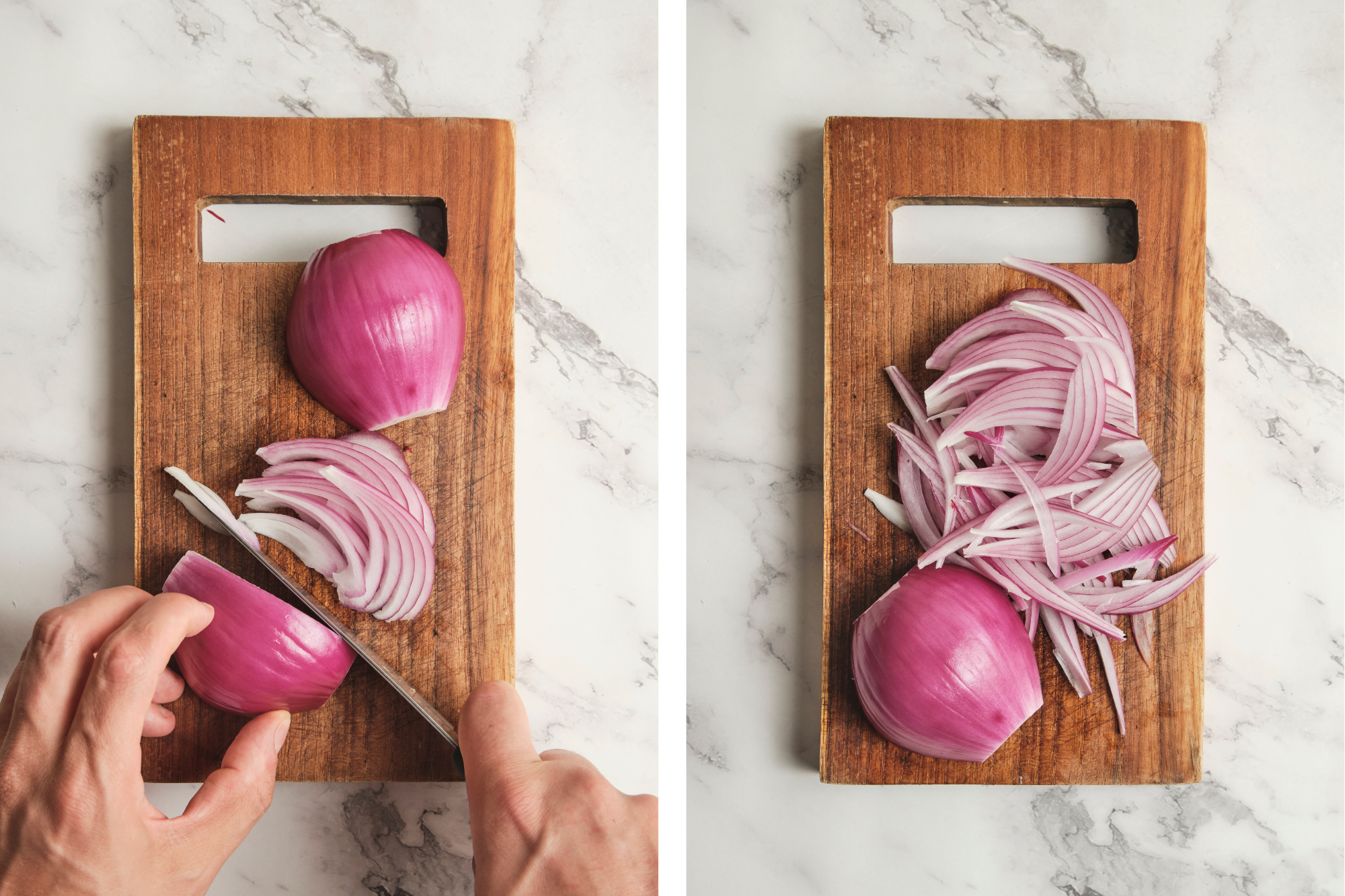
Prep the onions:
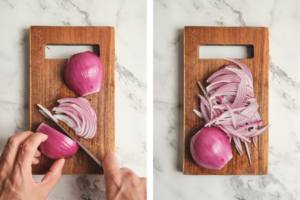
Slice the red onion in half lengthwise, peel, and cut into thin half-moons. A sharp knife works best here—just keep the flat side down on the board for stability.
Build the base:
Transfer the sliced onions to a bowl and add the olive oil, lemon juice, salt, and sumac.
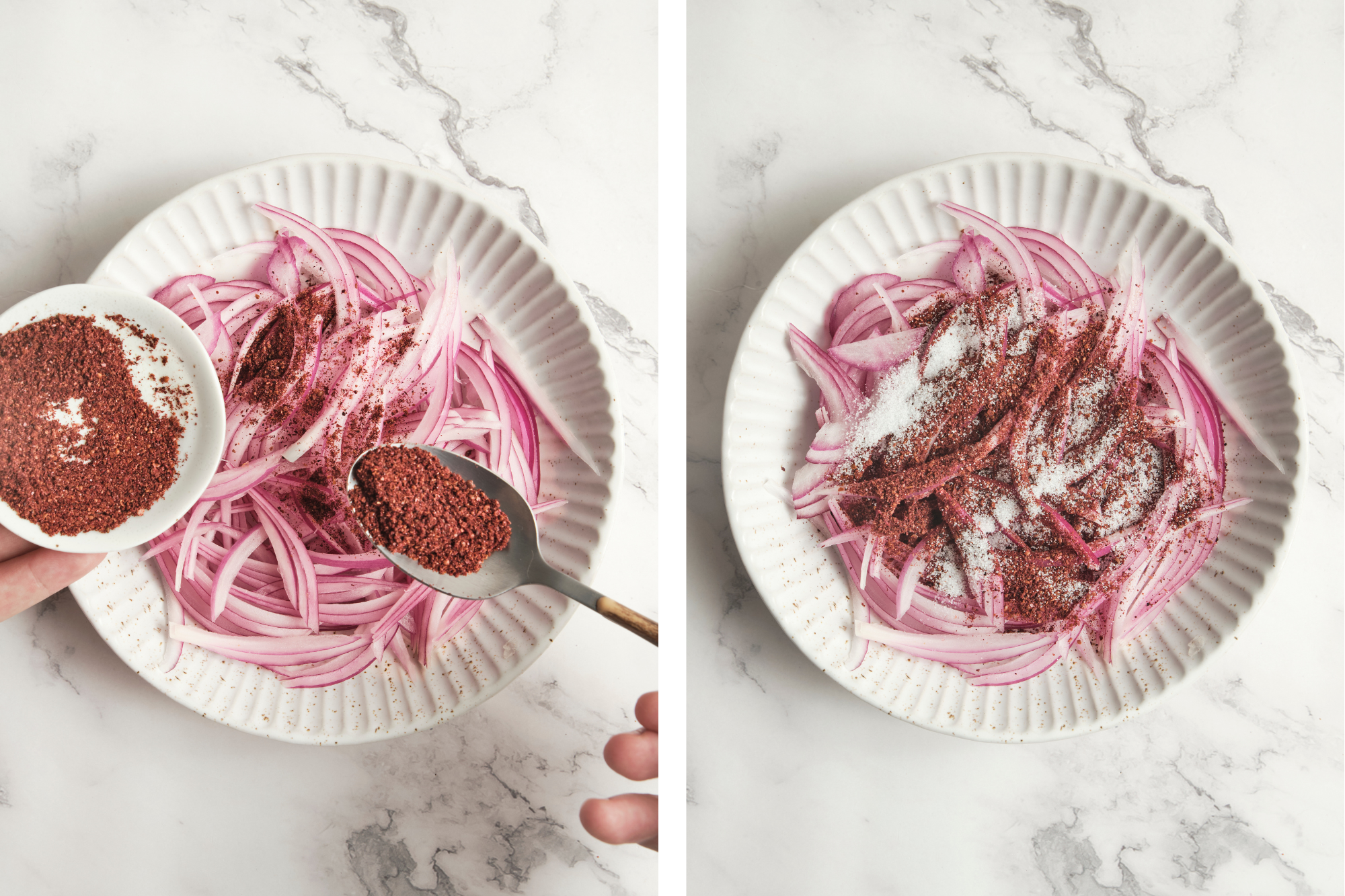
Bring it together:
Using your hands, gently massage everything together for a minute or two. The onions will soften slightly and start to take on all that flavor.
Finish and rest:
Add the chopped parsley and give it a final toss. If you have a few extra minutes, let it sit in the fridge for 10–15 minutes before serving—this really helps the flavors come together.
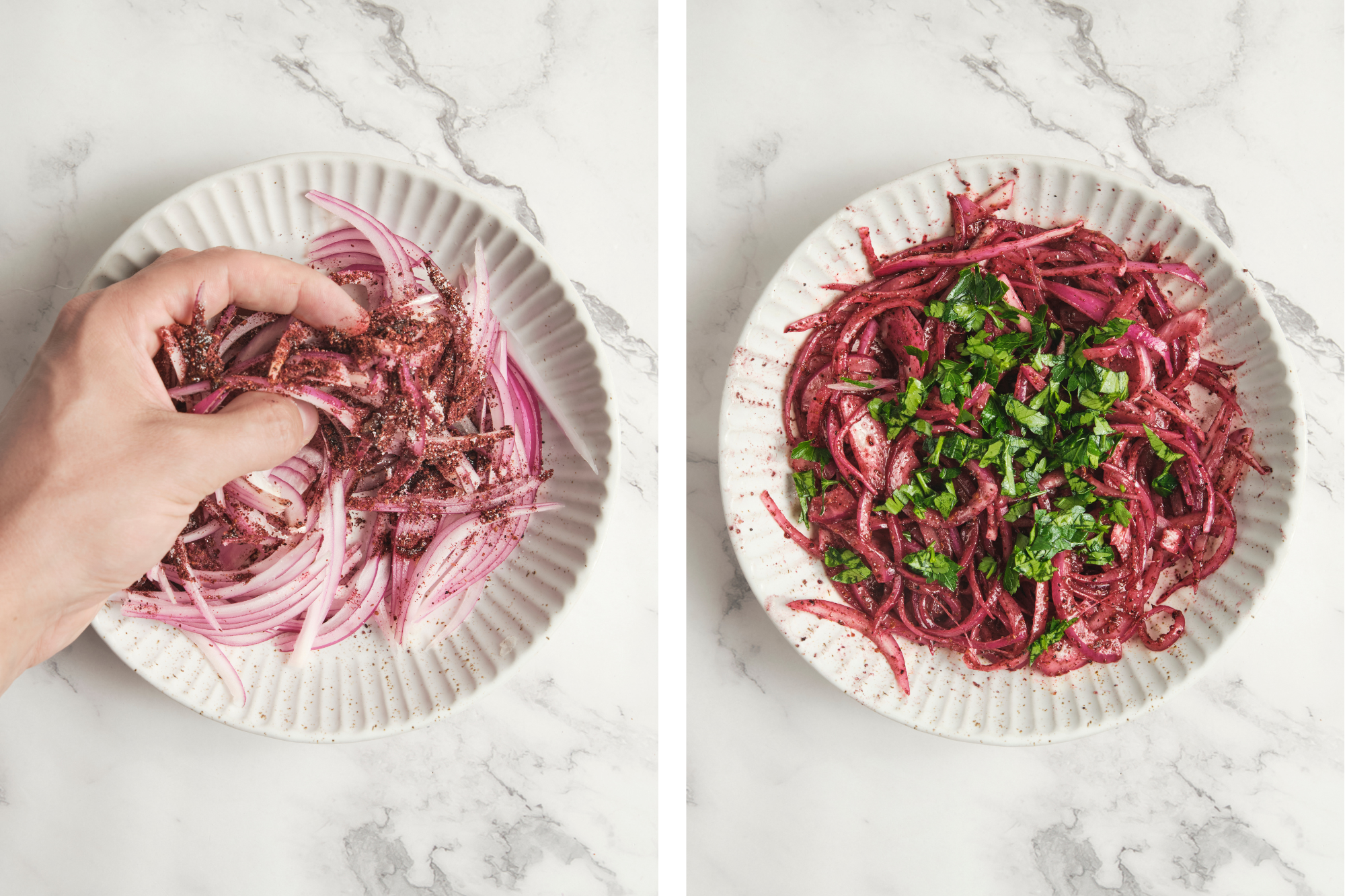
From my Kitchen (Chef’s Tips)
Tone it down if needed: If raw onions feel too strong, soak them in cold salted water for 10 minutes, then drain. Skip this if you’re making them ahead—they mellow on their own in the fridge.
Use fresh sumac: Sumac loses its punch fairly quickly, so make sure it’s fresh. I usually add a bit more than the recipe calls for—taste and adjust as you go.
Slice evenly: Try to keep your slices consistent so everything eats evenly. A mandoline helps, but a sharp knife does the job just fine.
Don’t skip the massage: A quick massage softens the onions and helps them soak up all the flavor.
Serve chilled: They’re good right away, but slightly chilled they’re even better—fresh, crisp, and perfect with rich dishes.
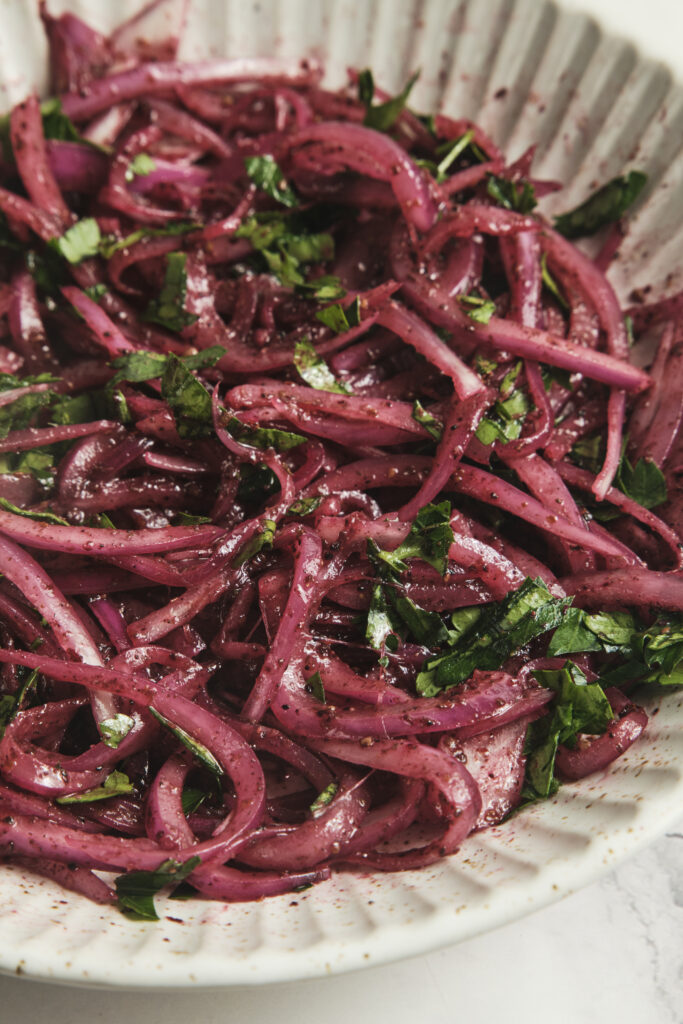
Ways to Serve Sumac Onions
In Middle Eastern cooking, sumac onions are one of those simple sides that quietly elevate everything on the table. I love serving them alongside grilled meats, shawarma, or kebabs—they bring that fresh, tangy contrast that cuts through richness and ties the whole dish together.
- With Shawarma & Bowls:
I love adding sumac onions to my easy shawarma chicken bowl recipe—they cut through the richness of the spiced chicken and bring a fresh, tangy balance that ties everything together. - Alongside Grilled Meats:
Served next to kebabs or grilled lamb, sumac onions add that bright, citrusy contrast that keeps each bite from feeling too heavy. - In Wraps & Pita:
Tuck them into wraps or pita sandwiches—they add crunch, acidity, and a burst of flavor that lifts the whole bite. - Over Salads:
Sprinkle them over simple salads or grain bowls for an instant upgrade—they bring freshness and a subtle zing without needing much else.
FAQs
Sumac onions will keep well in the fridge for about 2 to 3 days when stored in an airtight container.
Over time, they’ll soften more and the flavor will mellow, which can actually be really nice. After a few days, though, they start to lose their freshness and texture—so I like to make them in small batches and enjoy them while they still have that crisp bite.
Yes, you can. Red onions are traditional because they’re slightly sweeter and have a great color, but white or yellow onions will work as well. Just keep in mind they’ll taste a bit sharper and less balanced compared to red onions.
Sumac onions have a bright, tangy, and slightly citrusy flavor. The sumac brings a lemon-like acidity, while the red onions add a bit of sharpness and natural sweetness.
Other Middle Eastern Dishes to Try
If you like these sumac onions, you’ll probably enjoy exploring more Middle Eastern and Mediterranean condiments. Here are a few great ones to try next:
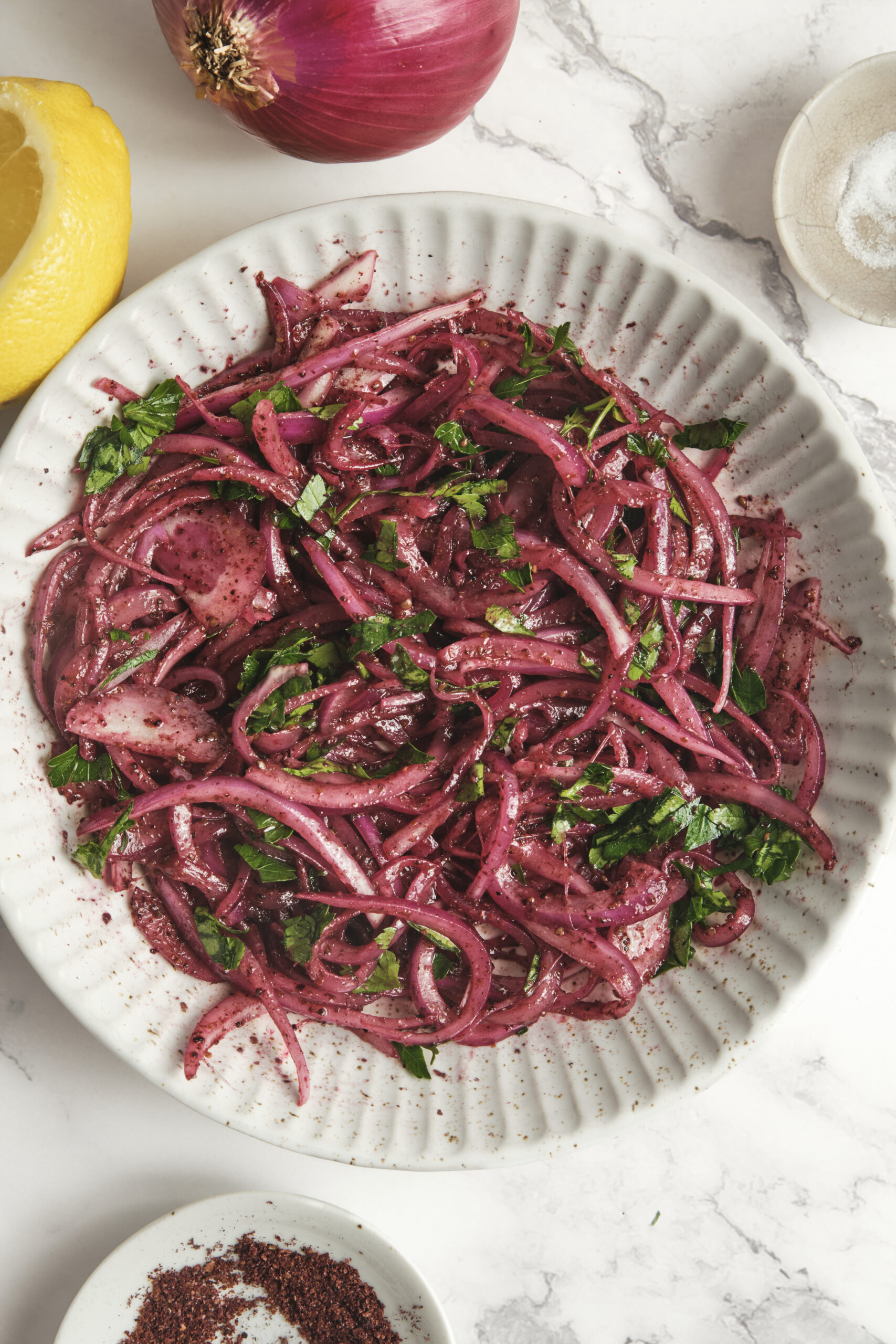
Quick Sumac Onions
Ingredients
Method
- Slice the onions in half lengthwise, peel, and cut into thin half-moons. Transfer them to a medium bowl.
- Add the olive oil, lemon juice, salt, sumac, and Aleppo pepper. Using your hands, gently work everything together for 1–2 minutes until the onions soften slightly and take on the flavors.
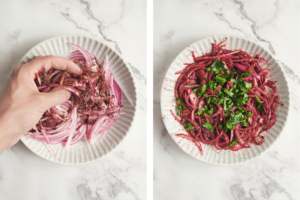
- Finish with the chopped parsley and give it a quick toss to combine.
Notes
- Onions: Red onions are the classic choice here, but you can use white onions if needed. Just expect a slightly sharper flavor.
- Make Ahead & Storage: These actually improve as they sit. You can make them 2–3 days in advance and store them in an airtight container in the fridge. They’ll keep well for up to 4 days—just give them a quick toss before serving.