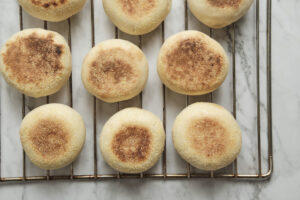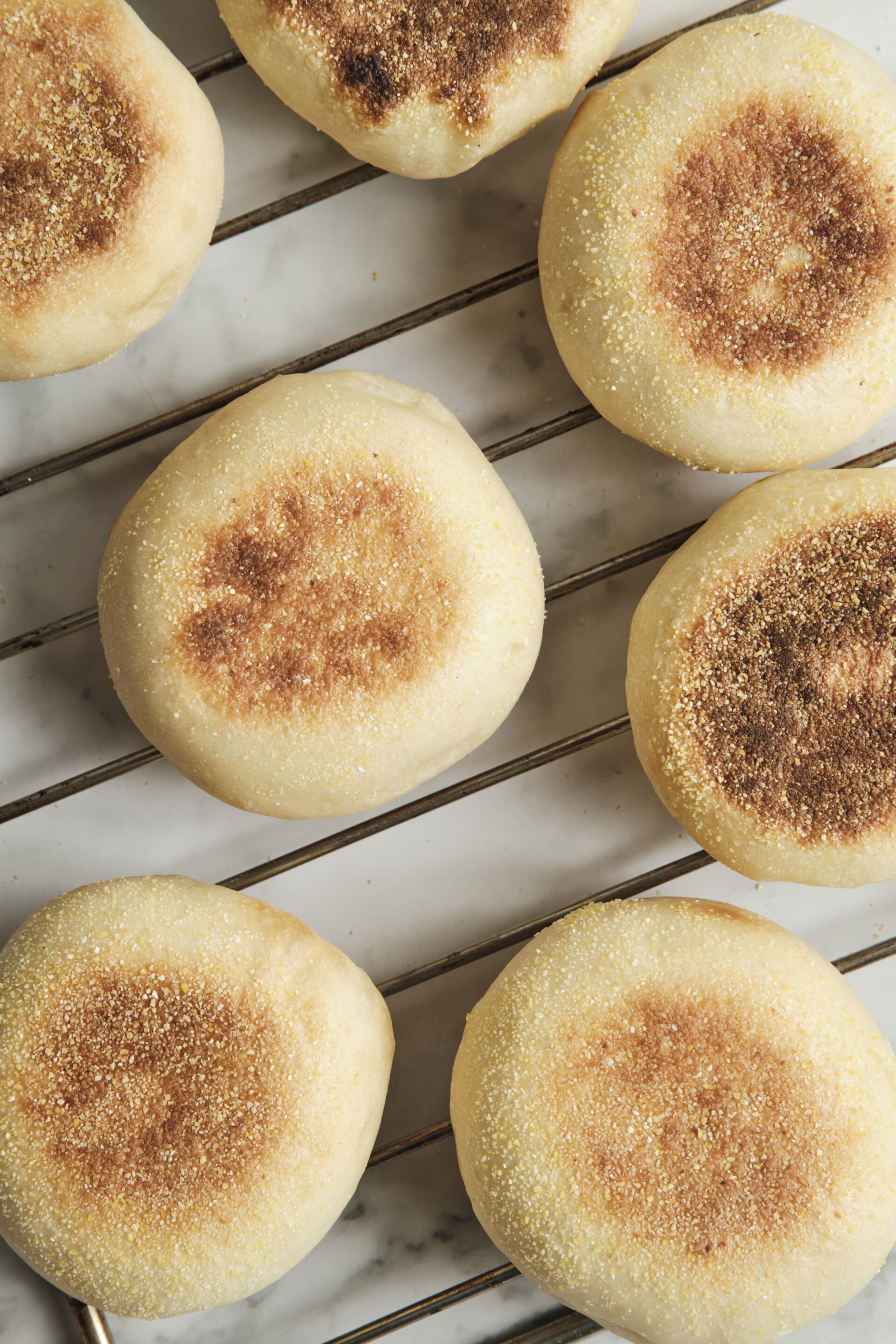
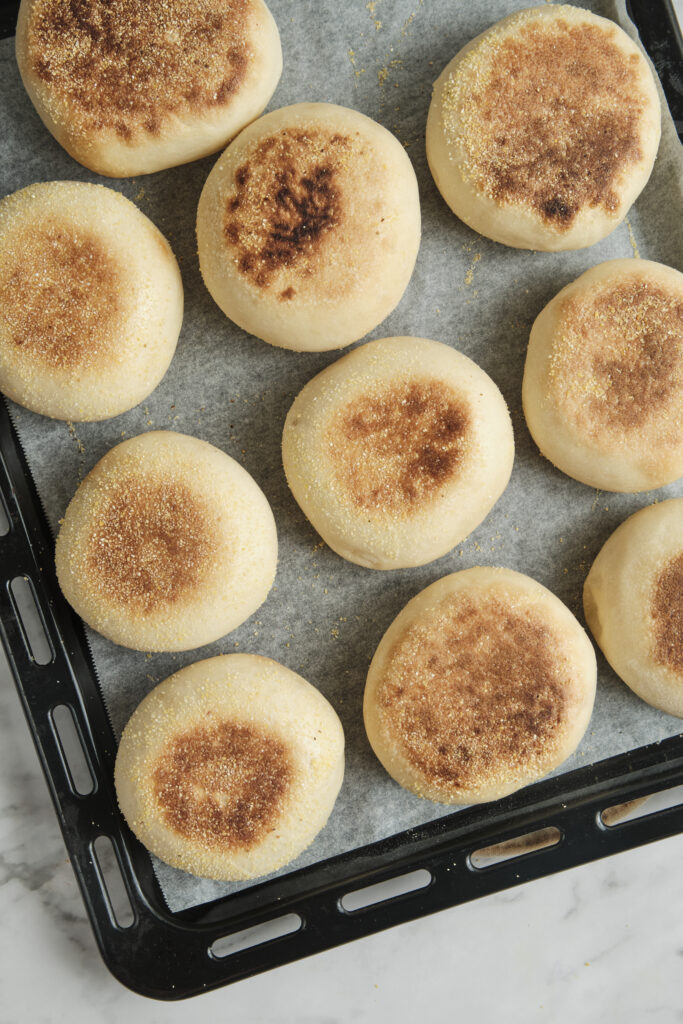
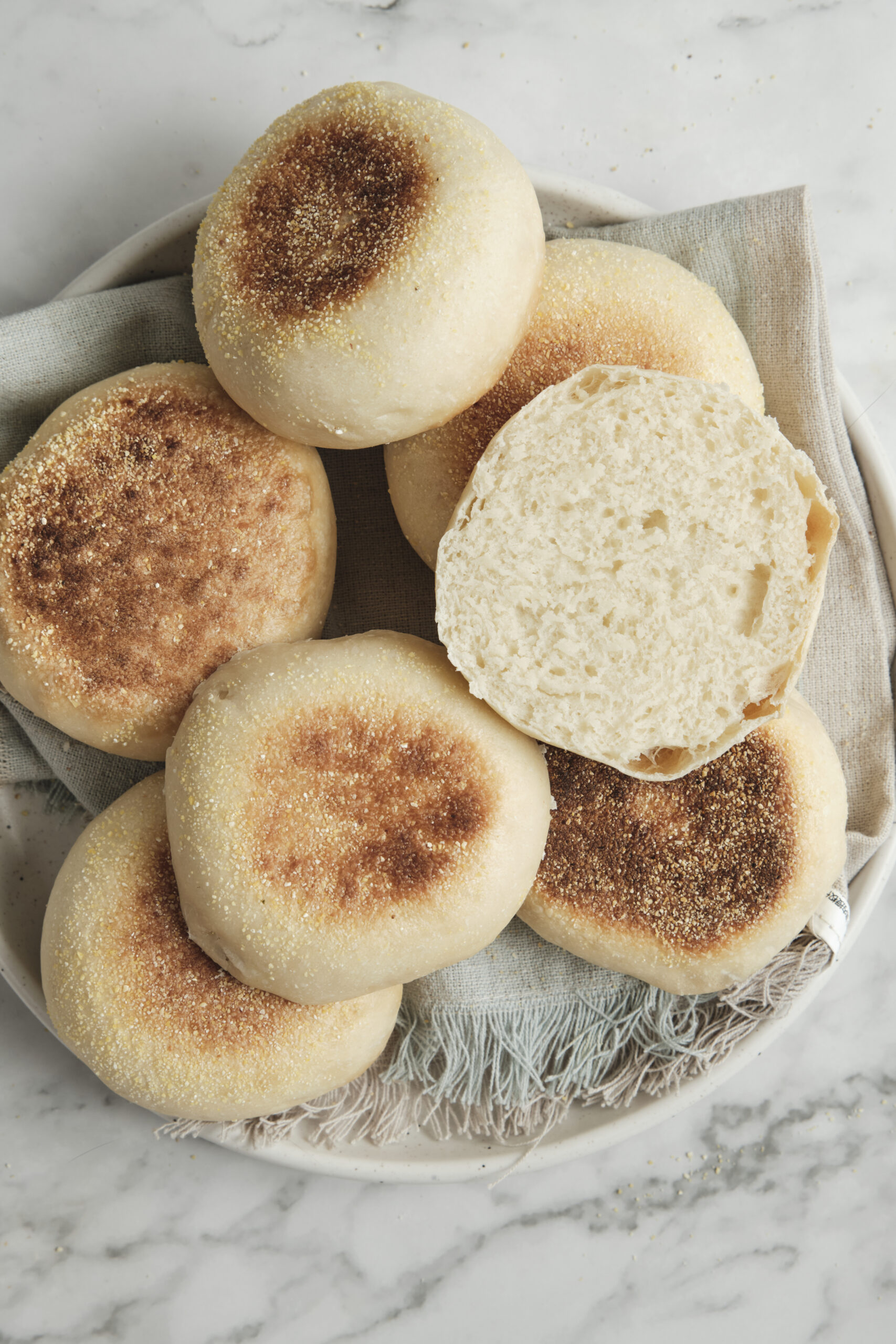
Let’s learn how to make the most delicious, soft, and chewy English Muffins, completely homemade and with simple 8 ingredients! My recipe is super easy and does not require any kneading. Spread them with butter or our favorite jam and add them to your breakfast routine!
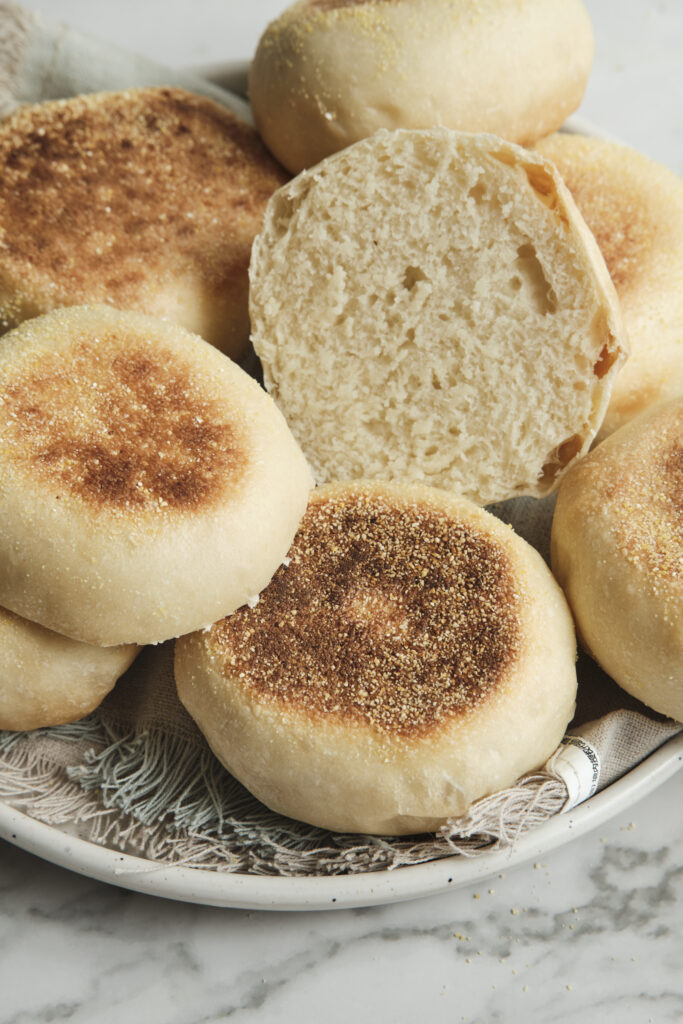
There’s something incredibly comforting about making homemade English muffins from scratch. Watching the dough slowly rise in the kitchen, hearing the gentle sizzle as the muffins cook, and smelling that warm freshly baked aroma instantly makes the whole kitchen feel cozy. I love splitting them open while still warm and seeing all those soft little nooks and crannies inside.
Key Ingredients
There are only 8 ingredients in the dough:
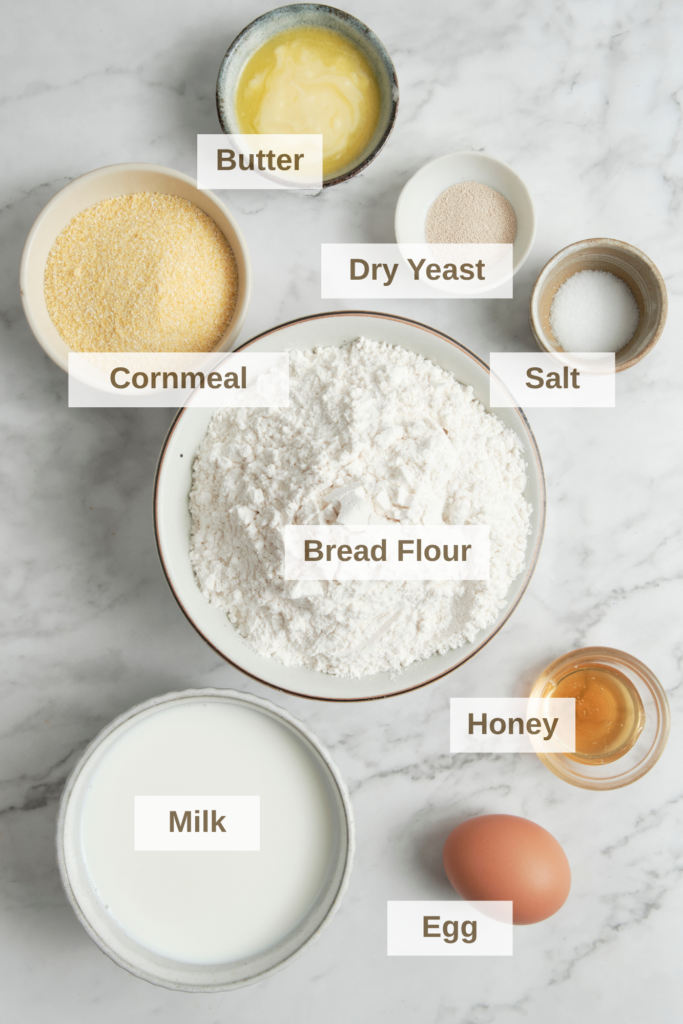
Bread Flour or All-Purpose Flour – Use Bread or All-Purpose Flour for these English muffins.
Milk – While some recipes use a mix of milk and water, I prefer using only milk,. Whole milk gives the best soft texture and richness, but any dairy or non-dairy milk will work well regardless of the fat content.
Honey – Honey adds flavor and sweetness to the muffins. Feel free to replace with granulated sugar, but make sure to reduce it to 2 Tablespoons.
Egg – I don’t recommend leaving out the egg, as it helps give the muffins their structure, softness, and overall flavor.
Cornmeal – You need cornmeal for coating the dough before baking. Don’t use flour for this—you want something coarse that the dough can’t absorb. Plus, the cornmeal adds a lovely crunch to the muffin’s exterior.
Yeast – Use active-dry or instant yeast.
Salt – Regular table salt gives the bread a nice flavor and balances out the sweetness of the honey.
Butter – Melted Butter adds flavor to your English muffins.
How to make English Muffins
Take a look at the step-by-step photos below for a visual guide to the process. You’ll find the complete written recipe along with helpful tips in the recipe card further down the page.
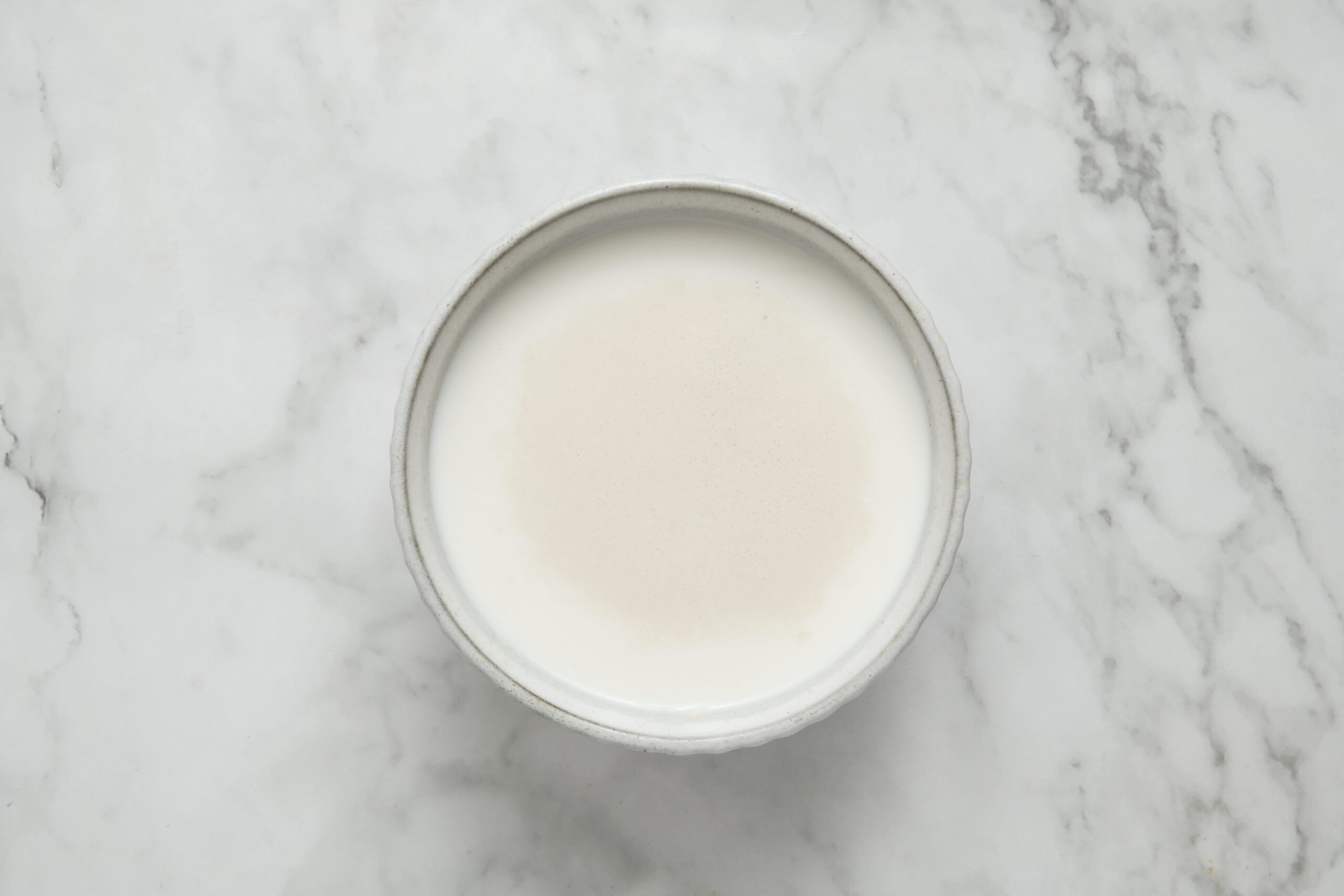
Make the yeast mixture. Warm the milk to about 100°F (38°C). Stir in the honey and dry yeast, then cover and let it sit for 10 minutes until foamy. Preheat your oven to 350°F (177°C).
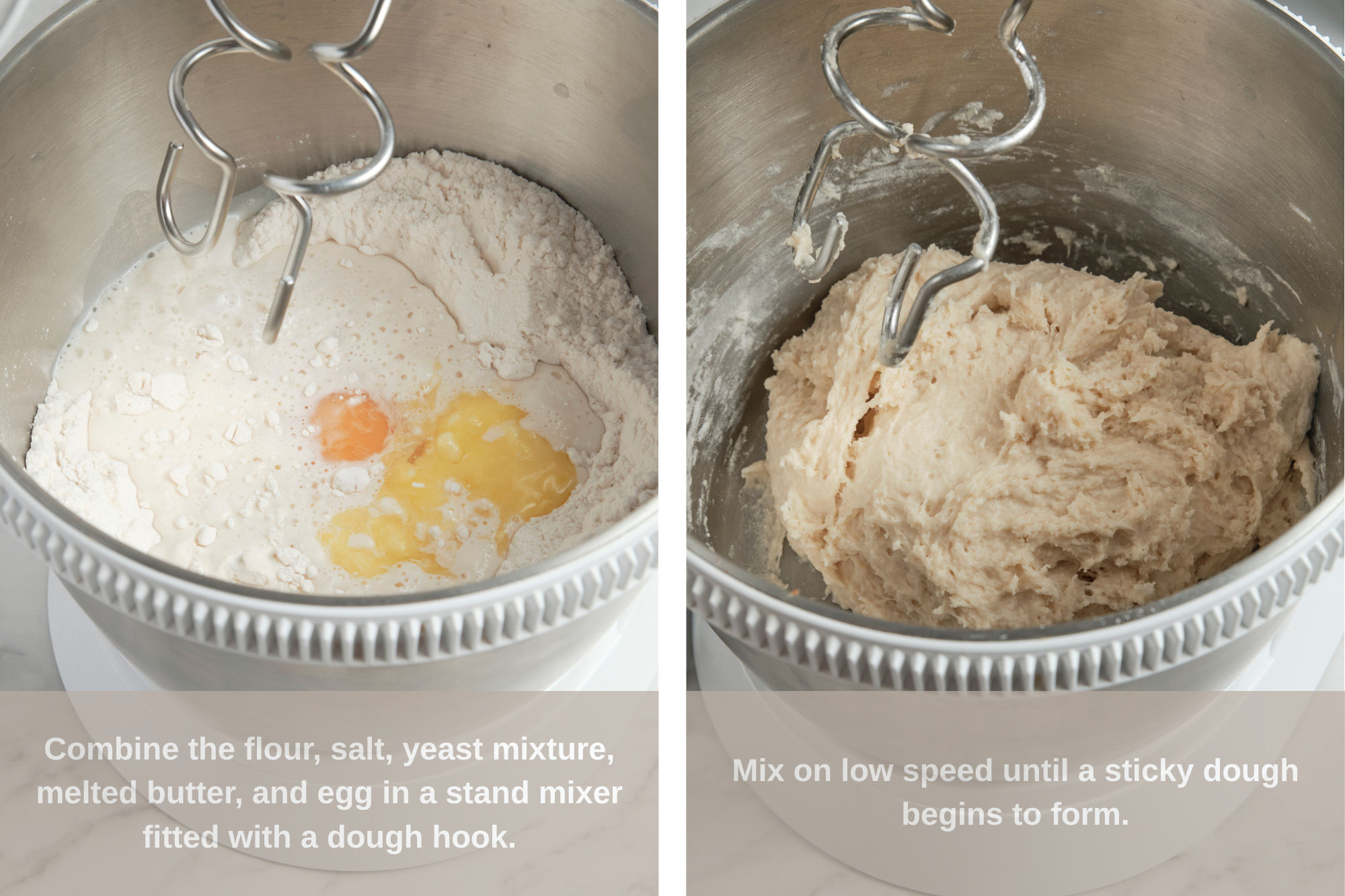
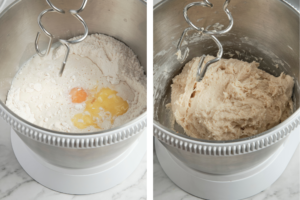
Make the dough. In the bowl of a stand mixer fitted with the dough hook attachment, combine the flour and salt. Add the yeast mixture, melted butter (not hot), and egg to the flour mixture.
Mix on low speed for 2–3 minutes, until the dough starts to come together. The dough will look quite sticky at first — this is completely normal. If needed, add just enough extra flour until the dough is no longer overly sticky. I usually end up adding about 2–3 tablespoons.
Increase the mixer speed to medium-low and knead the dough for another 5 minutes until smooth and elastic.
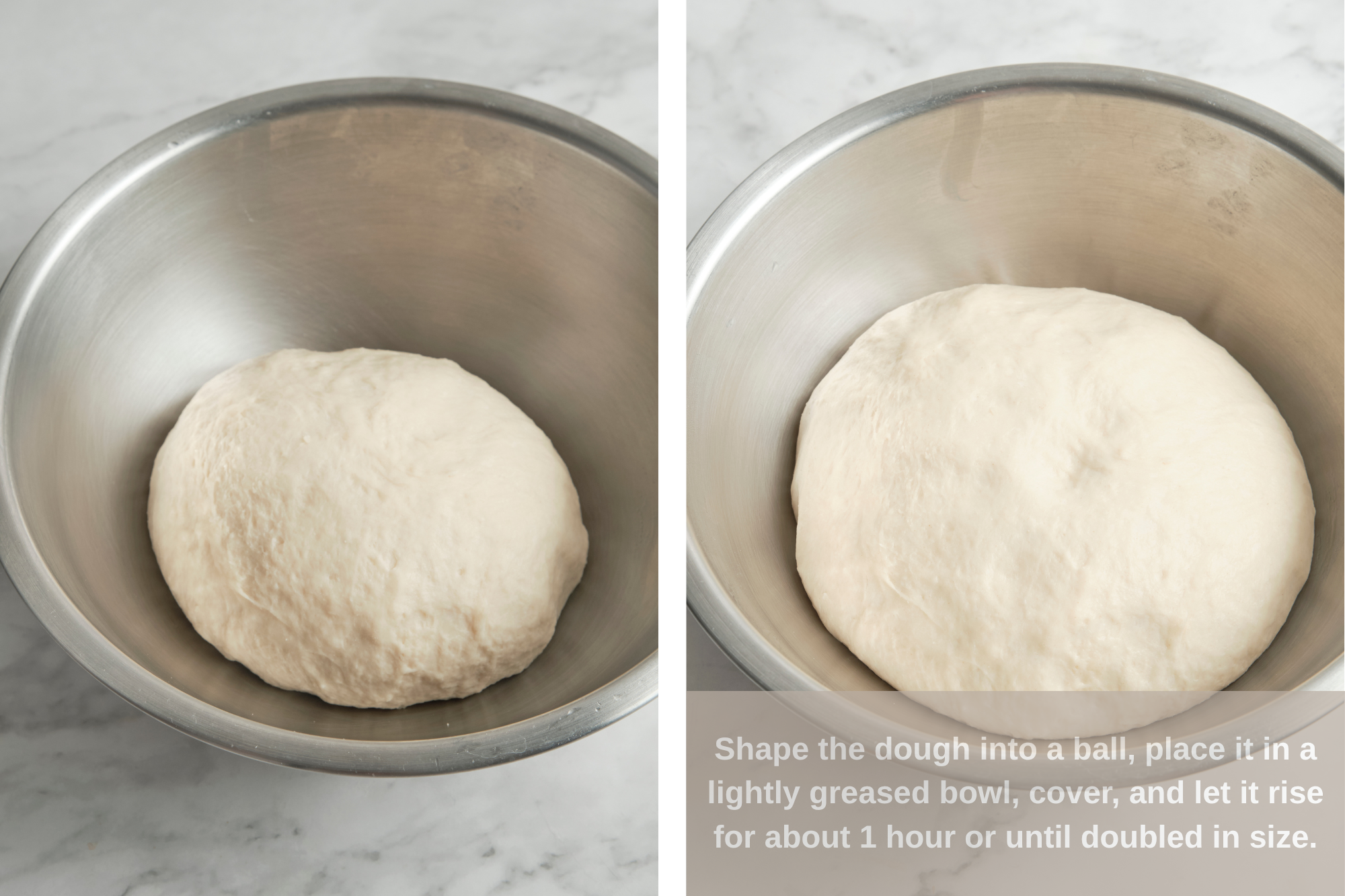
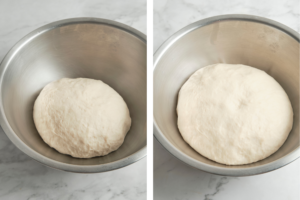
Let the dough rise. Shape the dough into a ball, place it in a lightly greased bowl, cover, and let it rise for about 1 hour or until doubled in size.
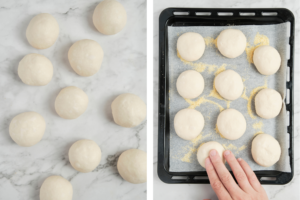
Form the dough into muffins. Transfer the dough to a lightly floured surface and divide it into 10 equal portions. Roll pieces lightly between your hands to make balls.
Lightly sprinkle 1 tablespoon of cornmeal over a parchment-lined baking sheet. Place the dough balls on top, then gently press them down with the palm of your hand until they are about 3/4-inch thick.
Carefully cover with a kitchen towel to let rest for 20 minutes.
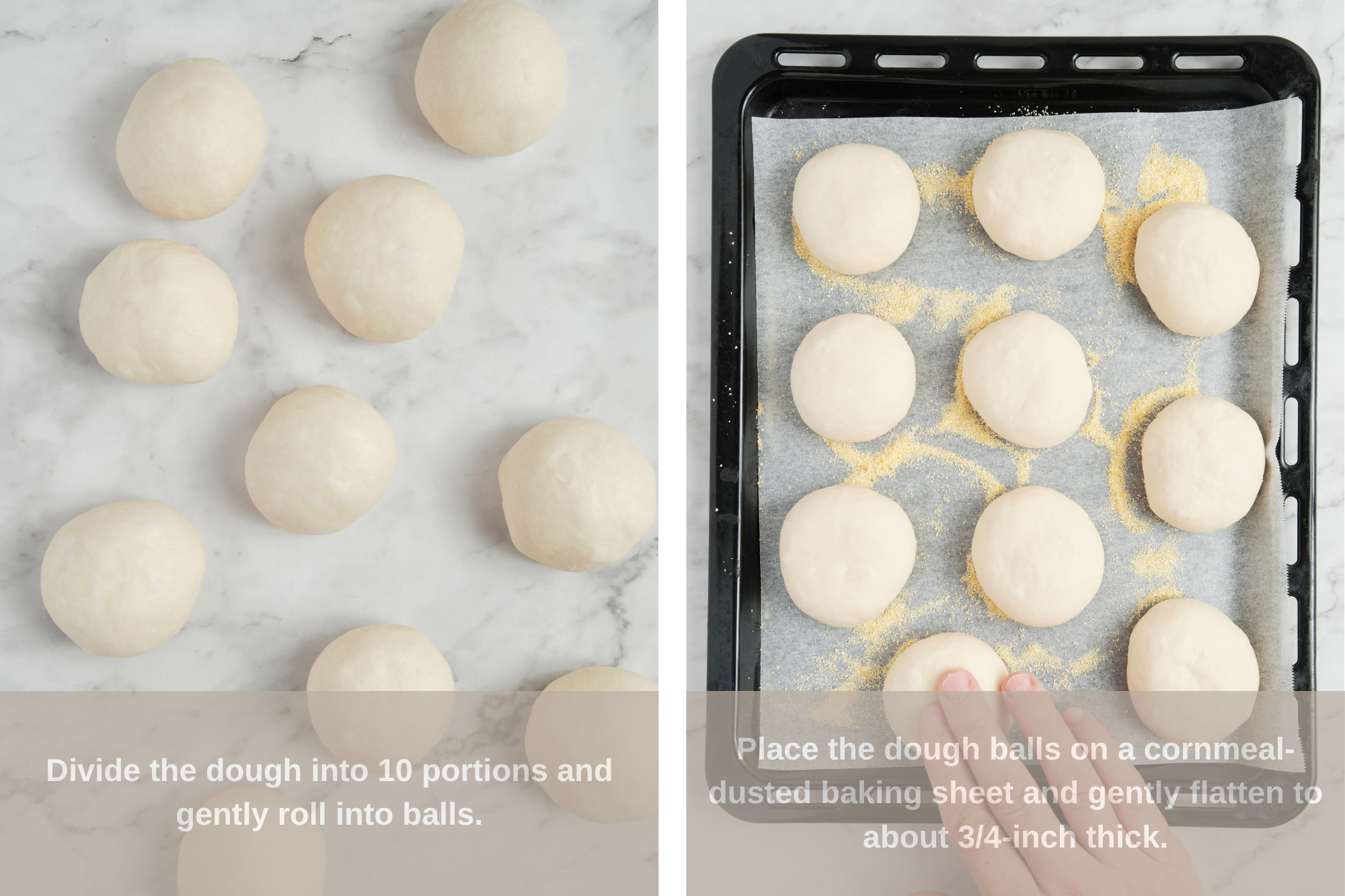
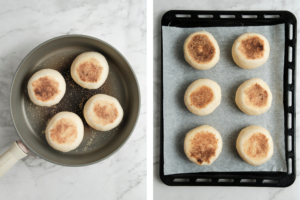
Cook the muffins. Heat a skillet over medium-low heat. Carefully place the muffins into the pan, leaving a little space between each one so they cook evenly. Depending on the size of your skillet, you may need to cook them in batches. Cover with a lid and cook for about 5 minutes per side, until lightly golden and toasted.
Transfer the muffins to a parchment-lined baking sheet and bake in the preheated oven for about 10 minutes, or until an instant-read thermometer inserted into the center reads 200°F (93°C).
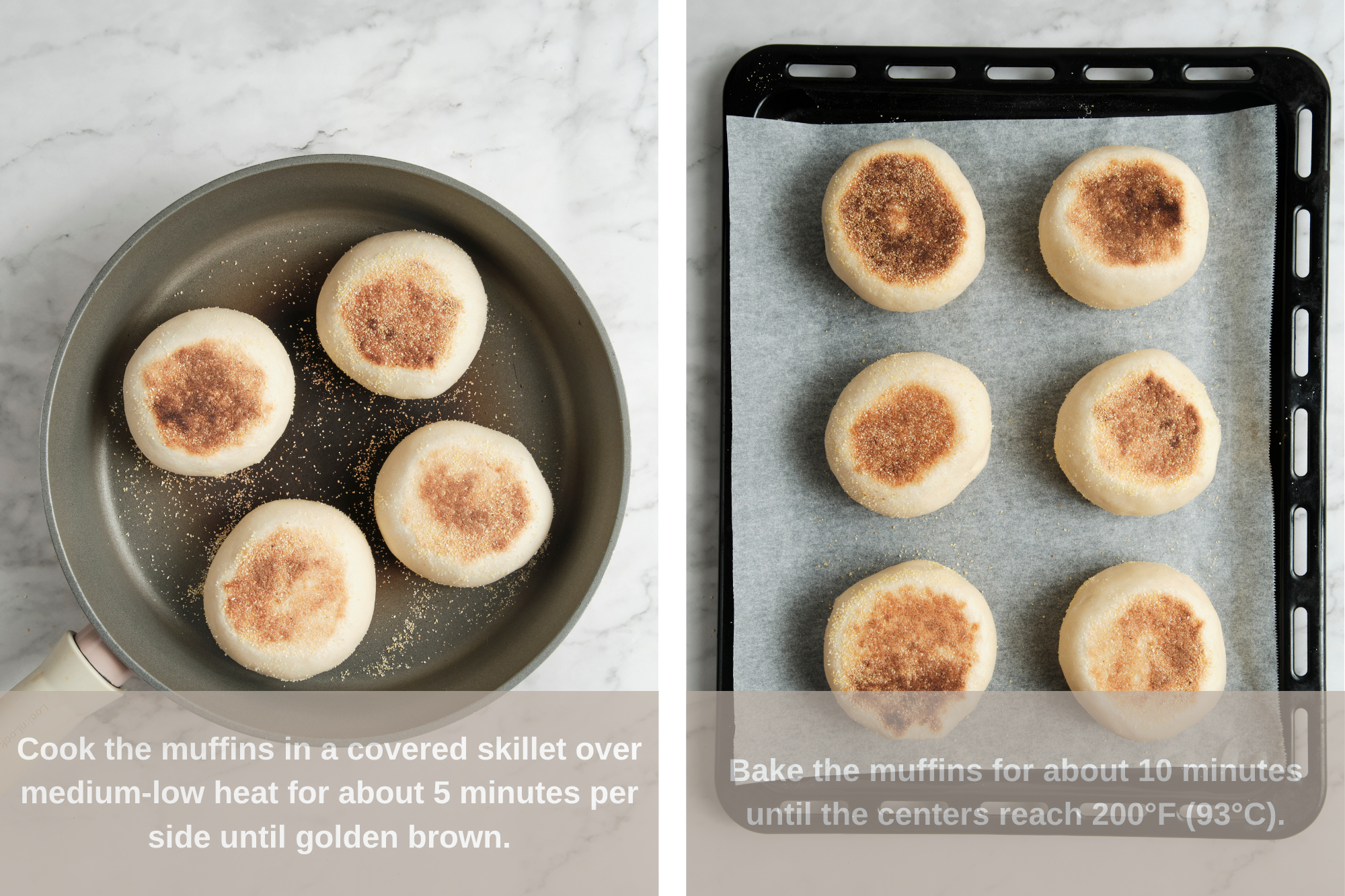
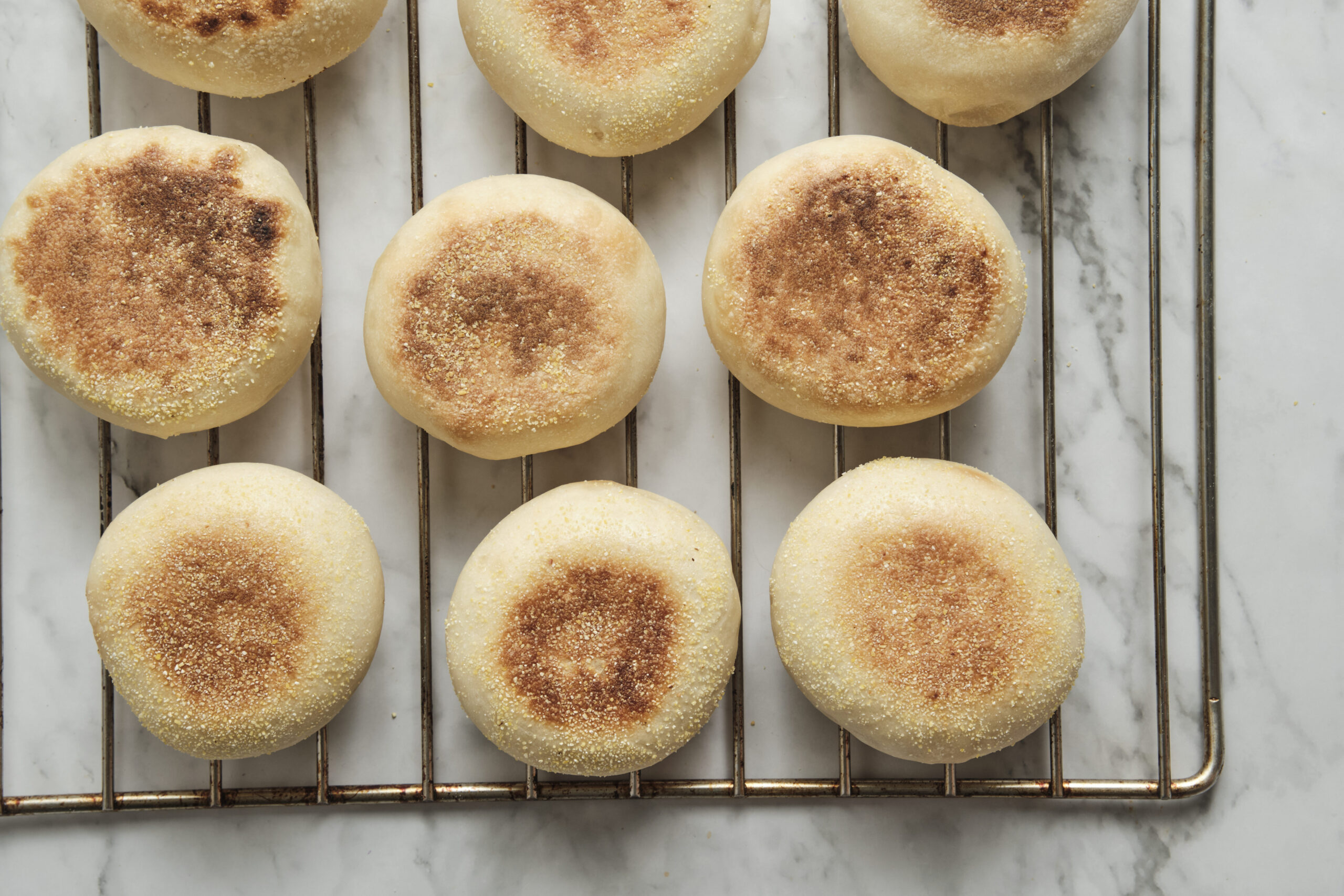
Cool the muffins. Remove from the oven and cool for 10 minutes on the baking sheet before slicing and handling.
From my Kitchen (Chef’s Tips)
Warm the Milk Properly – Heat the milk to about 100°F (38°C). Milk that is too hot can kill the yeast and stop the dough from rising.
Measure the Flour Carefully – Too much flour can make the muffins dense. I recommend using the spoon-and-level method or weighing the flour for best results.
Allow Enough Rising Time – Let the dough rise until doubled in size, then allow a second rise after shaping until slightly puffy.
Cook Low and Slow – Pan-frying the muffins over medium-low heat creates the classic golden crust and soft interior.
Use Cornmeal and a Nonstick Pan – This helps prevent sticking and gives the muffins their traditional texture.
Recipe FAQs
I don’t recommend cooking them entirely on the stovetop. Finishing the English muffins in the oven helps cook the centers through evenly, while the skillet creates the classic golden crust and flat shape.
Yes, Store the muffins in the freezer for up to 3 months. When ready to enjoy, thaw them at room temperature or warm them gently in the microwave. For the best flavor and texture, slice and toast before serving.
Other Bread Recipes to Try
If you love baking homemade bread for breakfast, these English muffins are such a fun recipe to add to your kitchen routine. I love serving them warm with butter, eggs, or jam alongside some of my other favorite bread recipes like easy plain bagels, crusty French baguette, or soft Italian ciabatta bread. There’s something incredibly comforting about starting the morning with freshly baked bread, and these homemade English muffins fit perfectly into that cozy breakfast spread.

English Muffin Recipe
Ingredients
Method
- Make the yeast mixture. Warm the milk to about 100°F (38°C). Stir in the honey and dry yeast, then cover and let it sit for 10 minutes until foamy.
- Make the dough. In the bowl of a stand mixer fitted with the dough hook attachment, combine the flour and salt. Add the yeast mixture, melted butter (not hot), and egg to the flour mixture.
- Mix on low speed for 2–3 minutes until the dough starts coming together. The dough will look quite sticky at first — this is completely normal. If needed, add just enough extra flour until the dough is no longer overly sticky. I usually end up adding about 2–3 tablespoons.
- Increase the mixer speed to medium-low and knead the dough for another 5 minutes until smooth and elastic.
- Let the dough rise. Shape the dough into a ball, place it in a lightly greased bowl, cover, and let it rise for about 1 hour or until doubled in size.
- Form the dough into muffins. Transfer the dough to a lightly floured surface and divide it into 10 equal portions. Roll pieces lightly between your hands to make balls.
- Lightly sprinkle 1 tablespoon of cornmeal over a parchment-lined baking sheet. Place the dough balls on top, then gently press them down with the palm of your hand until they are about 3/4-inch thick.
- Carefully cover with a kitchen towel to let rest for 20 minutes.
- Cook the muffins. Heat a skillet over medium-low heat. Carefully place the muffins into the pan, leaving a little space between each one so they cook evenly. Depending on the size of your skillet, you may need to cook them in batches. Cover with a lid and cook for about 5 minutes per side, until lightly golden and toasted.
- Preheat your oven to 350°F (177°C).
- Transfer the muffins to a parchment-lined baking sheet and bake in the preheated oven for about 10 minutes, or until an instant-read thermometer inserted into the center reads 200°F (93°C).
- Cool the muffins. Remove from the oven and cool for 10 minutes on the baking sheet before slicing and handling.