

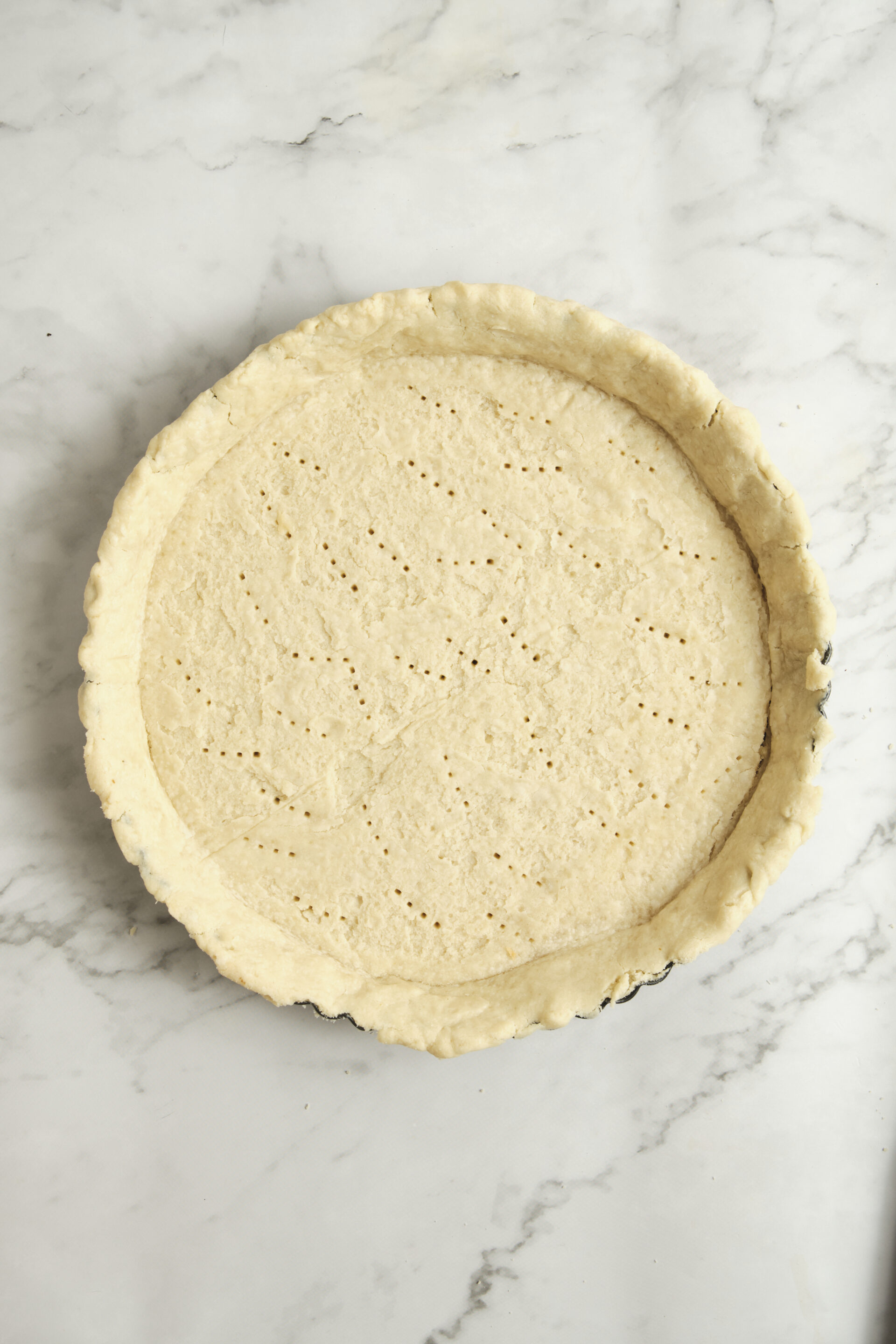
The Pie Crust I keep coming back to
This is the pie crust recipe I use whenever I want something reliable without overthinking it. I’ve tested different methods over the years, but I always come back to this one—it’s straightforward, consistent, and doesn’t require any special equipment. If you’re learning how to make pie crust from scratch, this is a good place to start. It also works well if you want to know how to make pie crust without a food processor, keeping everything simple and hands-on.
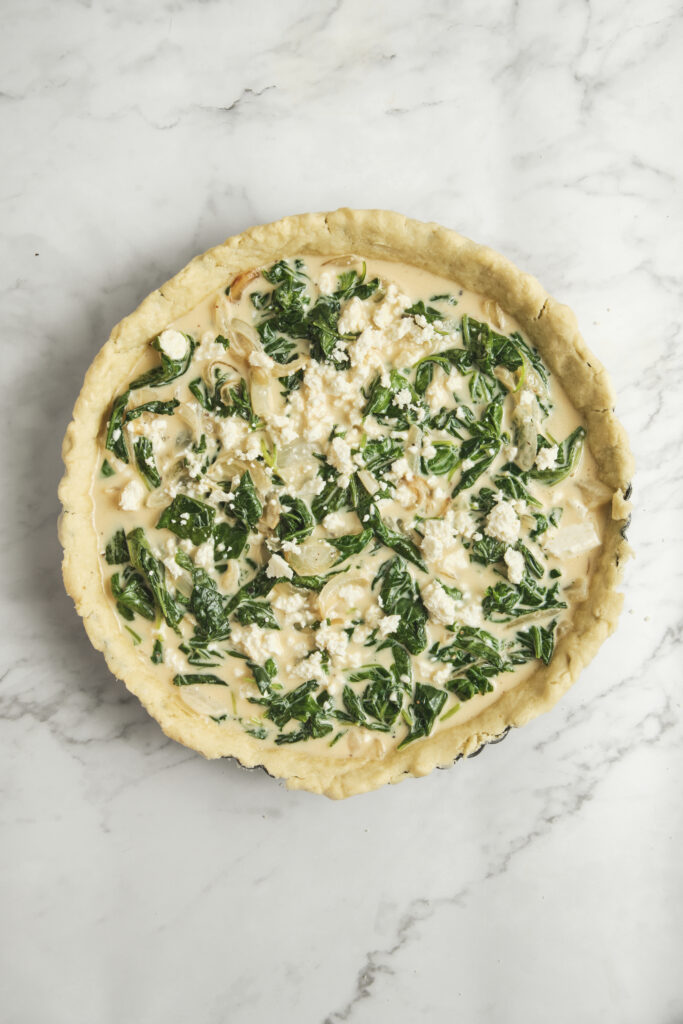
What I like most is how adaptable it is. It’s the same pie crust I use for recipes like my spinach feta quiche, where the base really matters. A good crust gives you that contrast—flaky, slightly crisp, and strong enough to hold a soft filling. Once you get comfortable with it, it becomes one of those things you don’t have to think about anymore, just a solid foundation you can rely on.
Why you’ll love this Pie Crust Recipe
It’s simple and approachable
You don’t need any special tools or techniques. This is a straightforward way to learn how to make pie crust from scratch without overcomplicating it.
It’s reliable every time
Once you understand the basics, this pie crust recipe just works. It holds its shape, bakes evenly, and gives you a consistent result.
It works for both sweet and savory
This is the kind of pie crust you can use across different recipes—from desserts to something like my spinach feta quiche. One base, multiple uses.
Key ingredients for Pie Crust
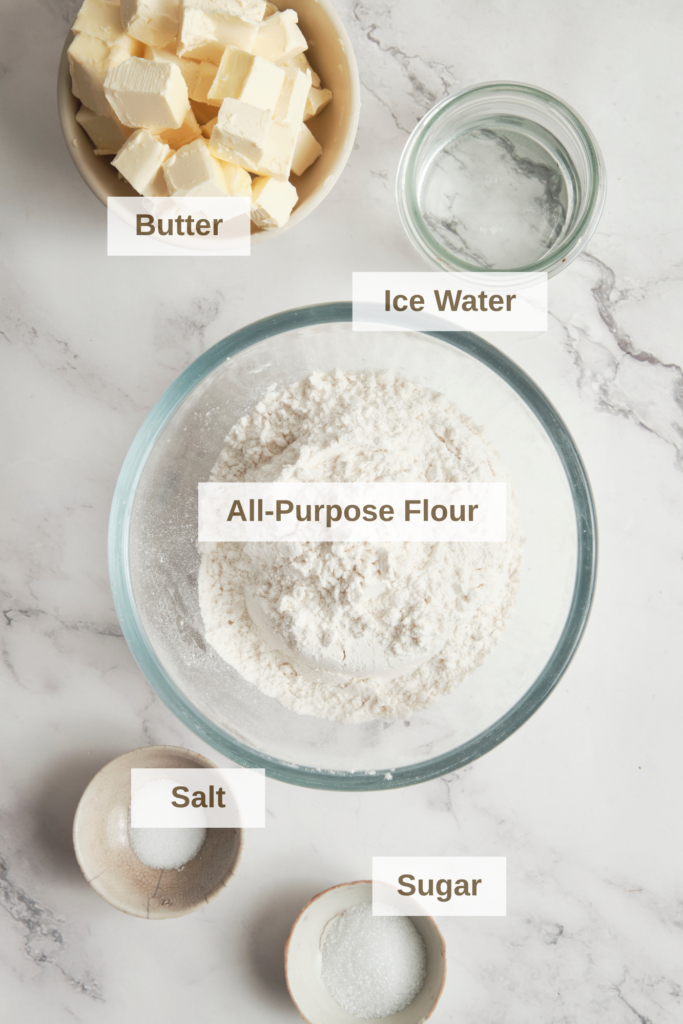
Flour
This is the base of the pie crust. It provides structure and determines the overall texture. The way it’s handled—especially how much it’s mixed—affects whether the crust turns out tender or tough.
Butter
Cold butter is what creates flakiness. As it melts in the oven, it forms small pockets in the dough, giving you that layered, crisp texture. Keeping it cold is key.
Salt
A small amount, but important. It enhances the flavor of the crust and keeps it from tasting flat, especially when used in savory recipes.
Sugar
Adds a subtle sweetness and helps with browning. Even in small amounts, it supports flavor and gives the crust a slightly more golden finish.
Ice water
Used to bring the dough together while keeping the butter cold. This is important—cold water helps prevent the butter from melting too early, which is what keeps the crust flaky instead of dense.
Is Pie Crust better with Butter or Shortening?
This is a question I get a lot, but in my kitchen I always go with butter only. It gives the crust a clean, rich flavor and that natural flaky texture I’m looking for—especially when I’m using it for something like my spinach feta quiche. For me, it just feels more honest and more connected to real ingredients.
Butter – for flavor and flakiness
Butter is what I always prefer in my pie crust because it brings real flavor and a natural flakiness. As the crust bakes, the water content in the butter turns into steam, which gently lifts the dough and creates those delicate layers. It also gives the crust a more rustic, handmade look—slightly uneven edges—but the taste is rich, clean, and hard to beat.
Shortening – for structure and stability
Shortening is mainly used when you want more control over shape and handling. Because it has a higher melting point than butter, the dough stays more stable while you roll and shape it. In the oven, it helps the crust hold its edges better and reduces shrinking. That’s why many bakers call it a kind of “insurance” for structure and a neat finish.
Some bakers like to combine both for balance—flavor from the butter, structure from the shortening. But I personally prefer sticking to an all-butter pie crust. With the right technique—keeping everything cold and not overworking the dough—you still get a crust that’s flaky, tender, and holds up well in recipes like quiche.
How to make Pie Crust
Start with cold ingredients
This is the foundation. Your butter should be cold and firm, and your ice water ready. Cold ingredients are what give you a flaky crust—once the butter melts too early, you lose that texture.
Work directly on your surface (or use a bowl)
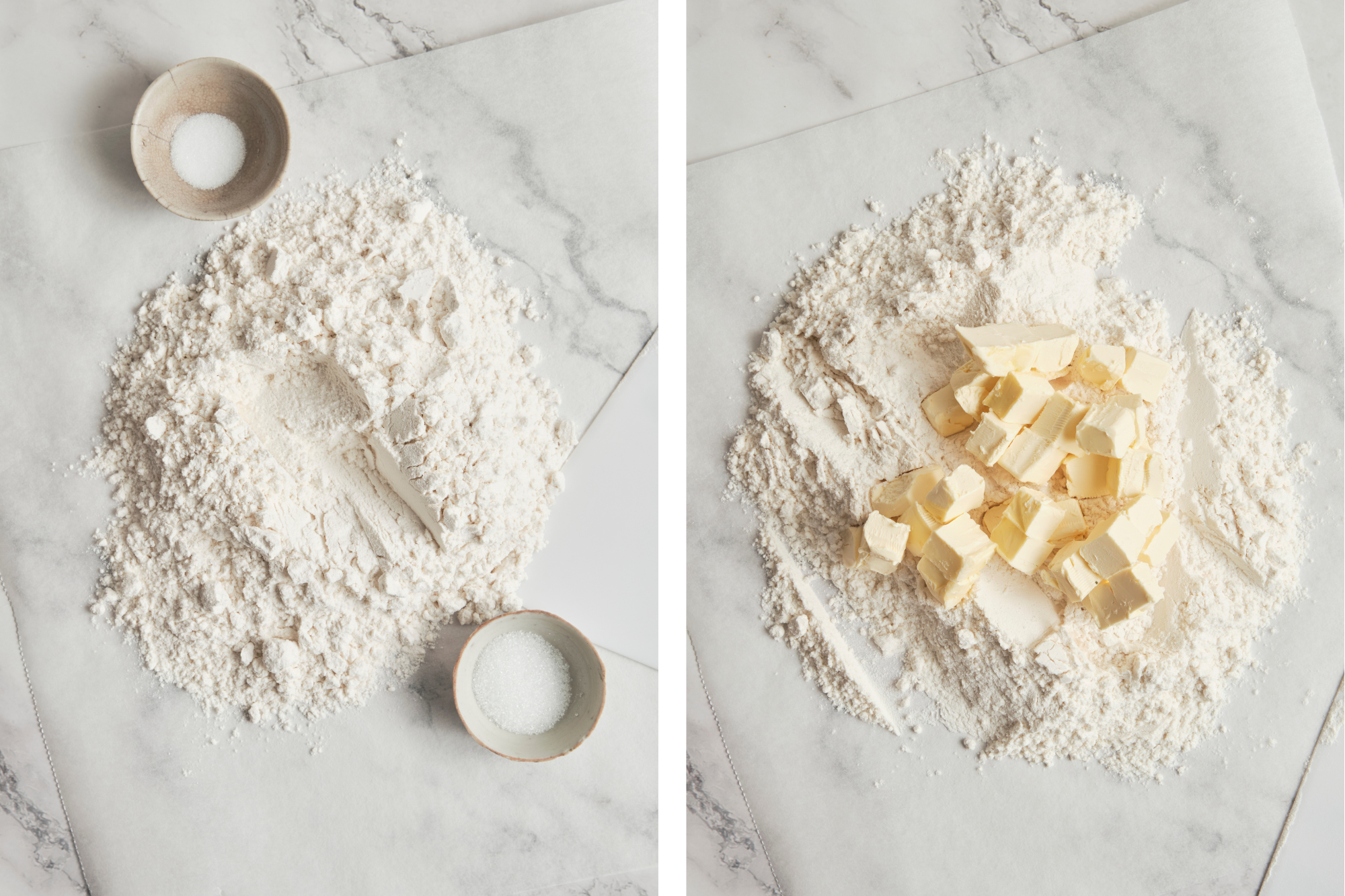
You can do this whole process in a bowl, but I often make it directly on a clean work surface. It gives you more control and keeps things simple. Just place the flour, sugar, and salt straight onto the surface and mix them lightly.
Work in the butter
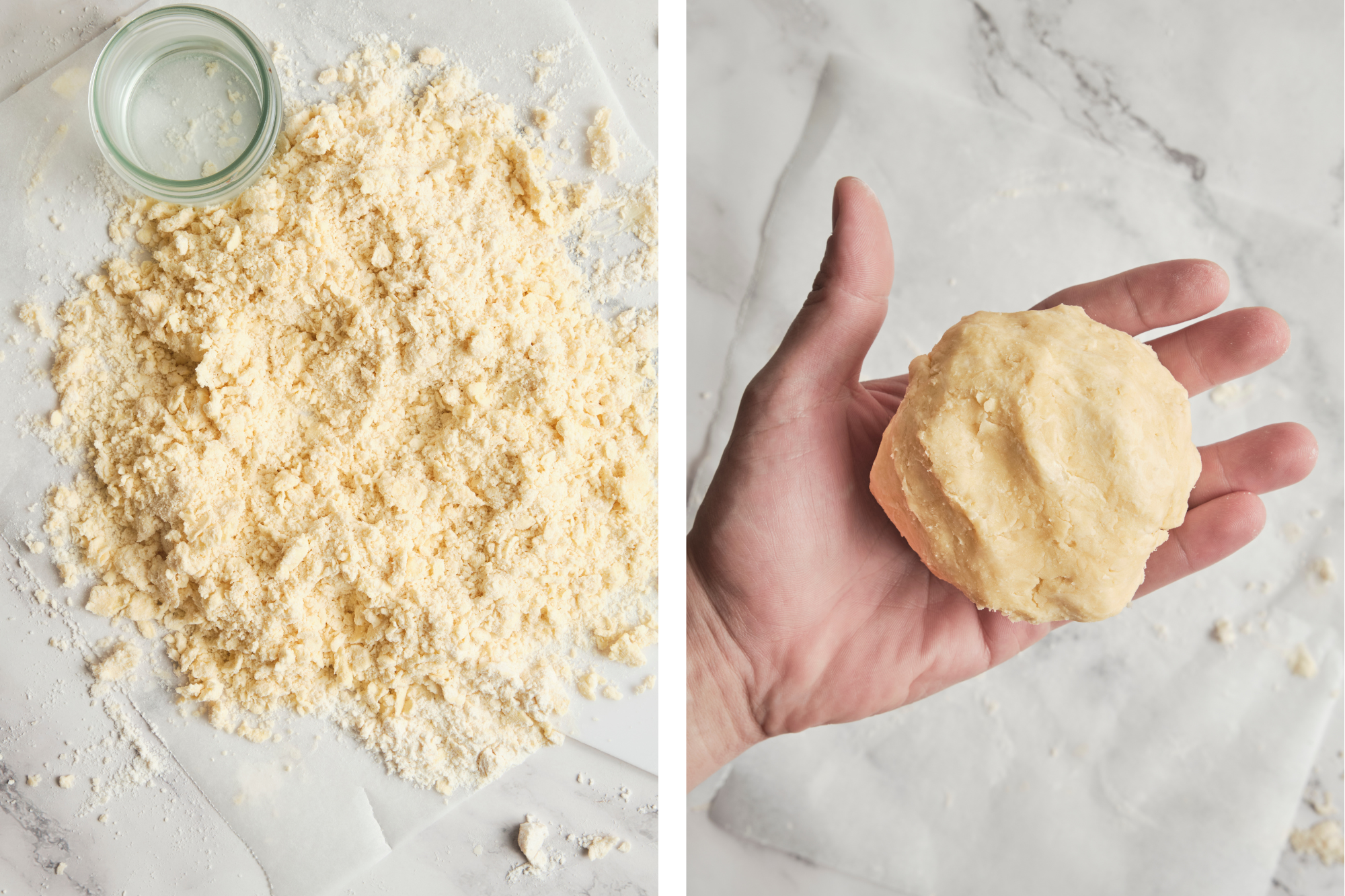
Add the cold butter, cut into small cubes. Using your fingertips, rub the butter into the flour until you get a mixture that looks like coarse crumbs with some slightly larger pieces still visible. Don’t overwork it—those small butter pieces are what create layers later.
Add ice water gradually
Gather the mixture slightly and start adding ice water one tablespoon at a time. Mix gently after each addition until the dough just starts to come together. It shouldn’t feel wet or sticky—just enough to hold when pressed.
Bring the dough together
Gently press everything into a dough. Don’t knead it like bread—just bring it together. Flatten it into a disc, wrap it, and chill for at least 30 minutes. This allows the gluten to relax and the butter to firm up again.
Roll it out properly
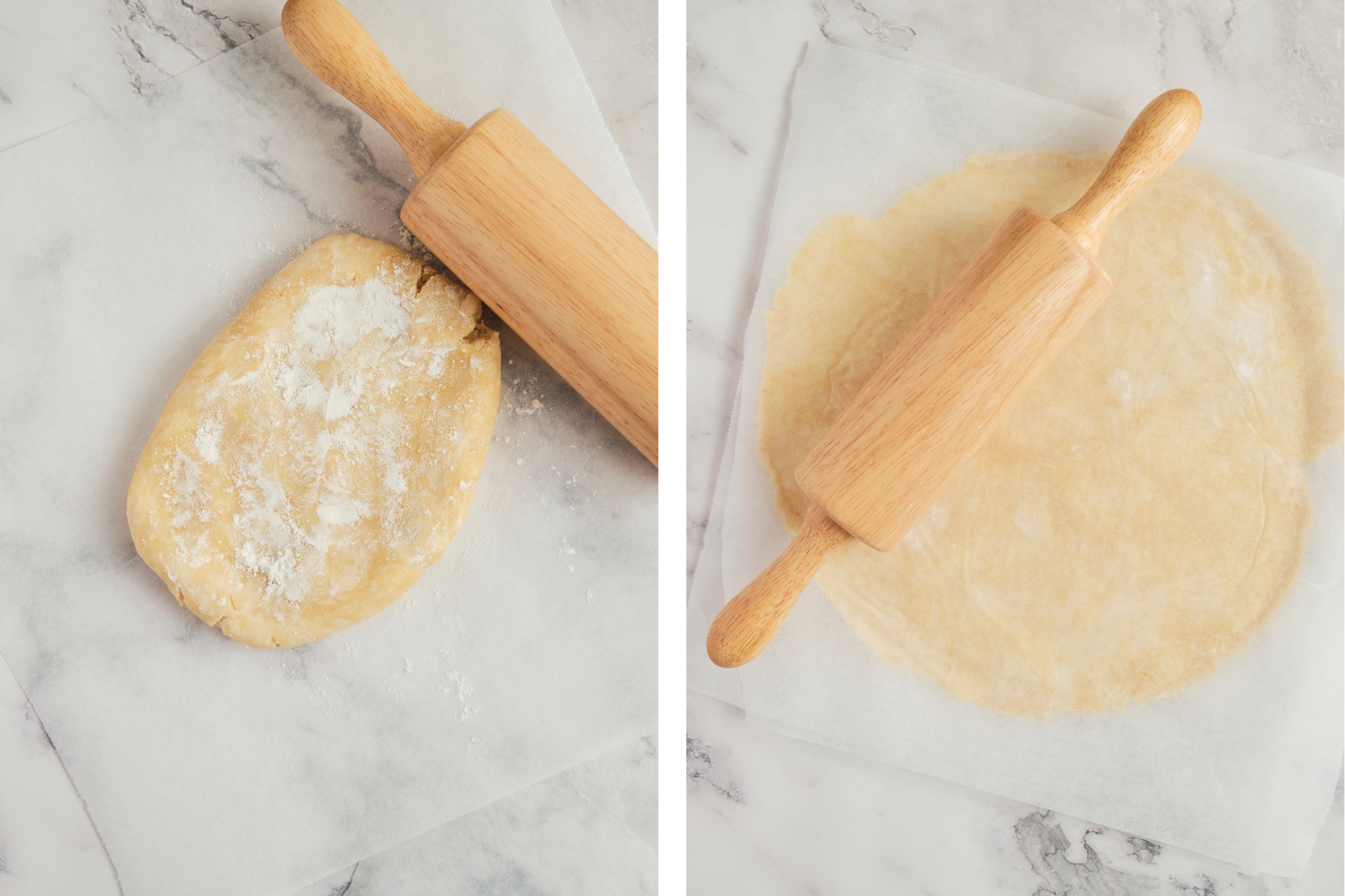
Lightly flour your surface and roll the dough from the center outward, turning it occasionally to keep it even. You’re aiming for a thin, even layer without overworking it.
Transfer and shape
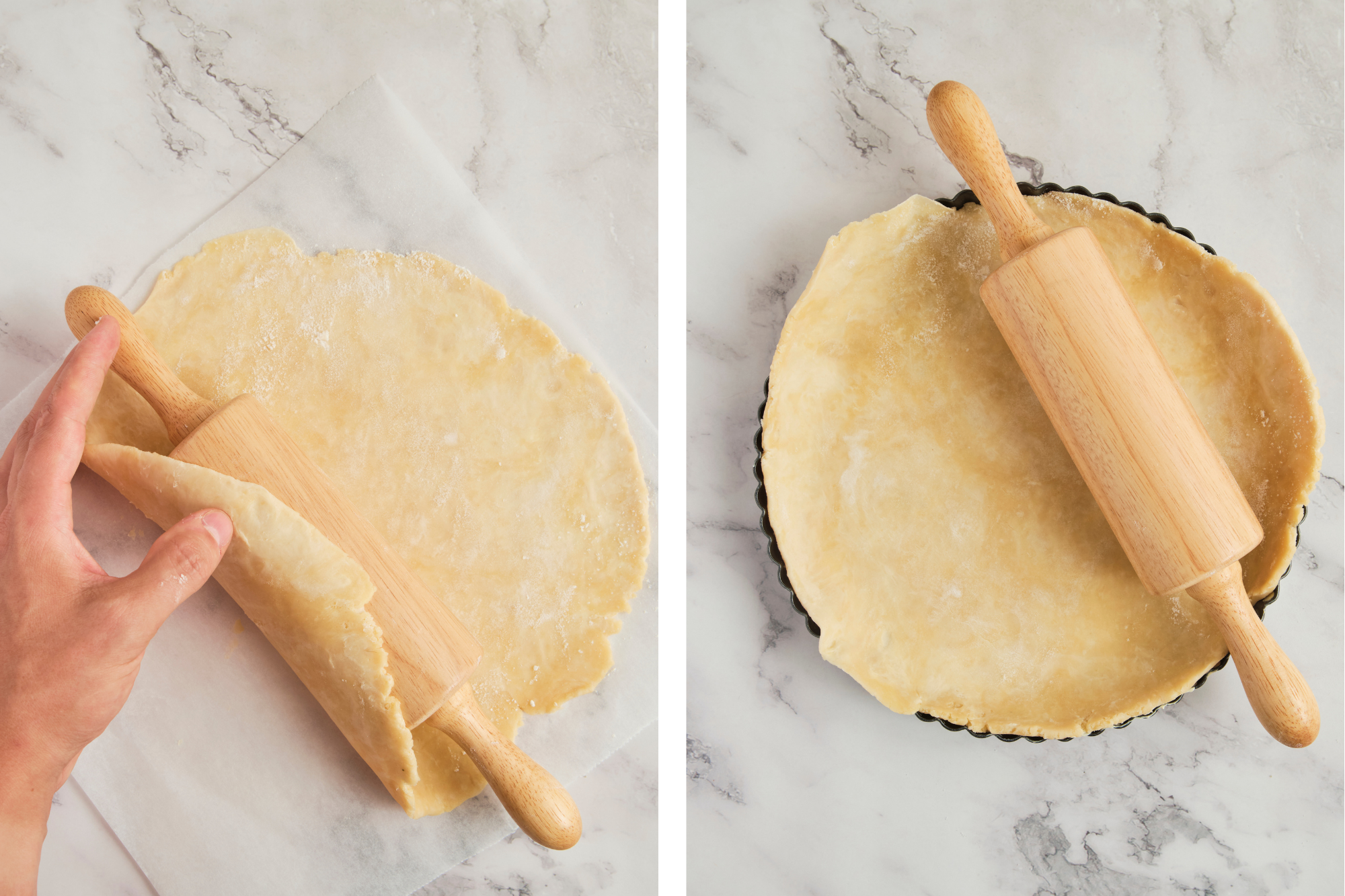
Carefully place the dough into your pan, pressing it into the edges without stretching it. Trim any excess and chill again before baking—this helps it hold its shape.
Bake as needed
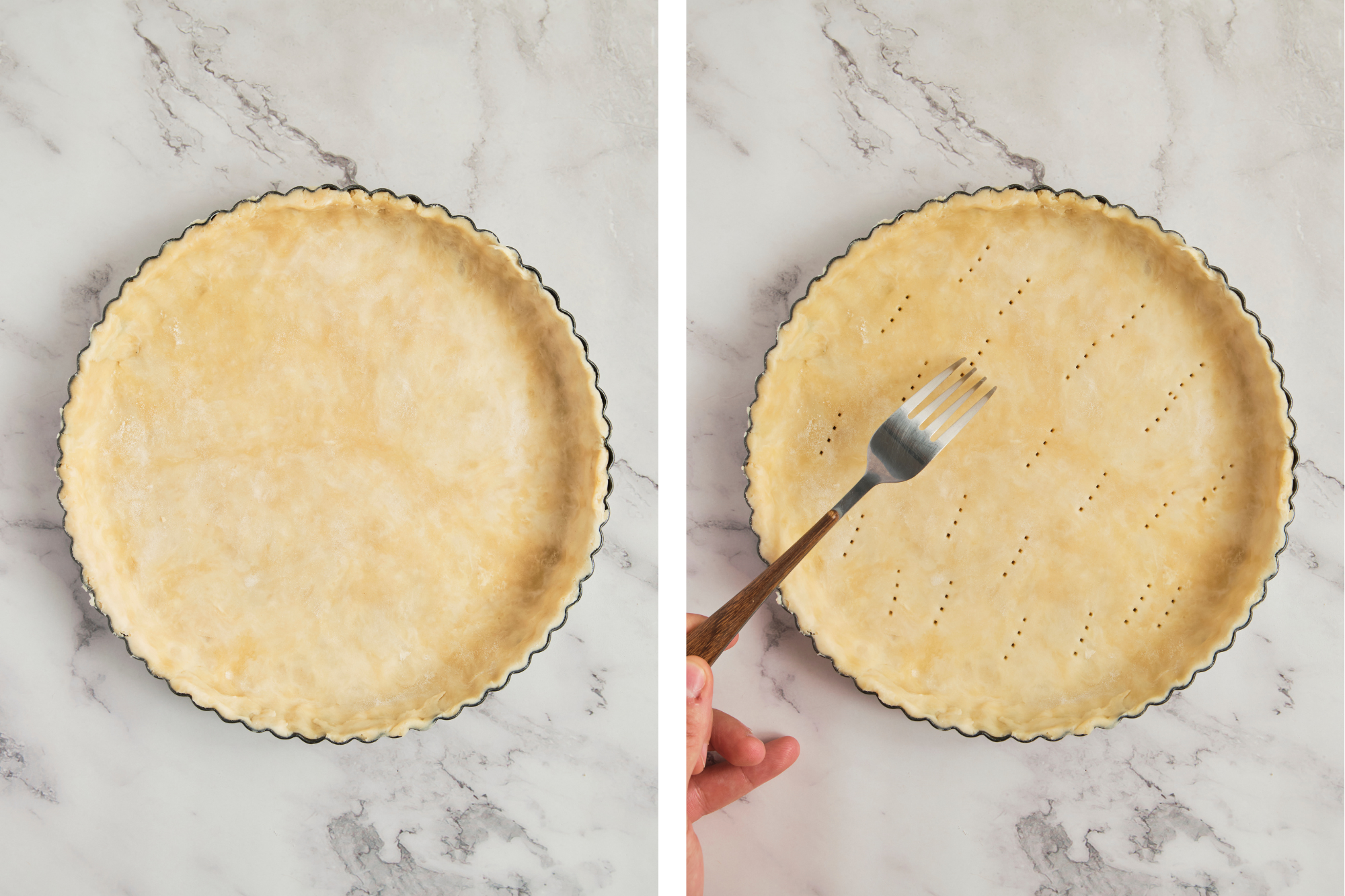
For recipes like quiche, prick the base with a fork and blind bake before adding the filling. This keeps the crust crisp and properly set.
FAQ
How do you make an easy pie crust from scratch?
An easy pie crust is all about keeping things simple and controlled. You mix flour, a little sugar and salt, then work in cold butter until you get a crumbly texture. Add ice water gradually until the dough just comes together, then chill it before rolling. This basic method is the foundation of how to make pie crust from scratch without needing any special equipment.
Why is my homemade pie crust not flaky?
The most common reason is that the butter got too warm or was overmixed into the flour. For a flaky result, you want visible pieces of cold butter in the dough—these create steam in the oven, which forms layers. Overworking the dough or skipping chilling will also reduce flakiness and make the crust more dense.
Can you make pie crust without a food processor?
Yes, and I actually prefer it that way. You can easily make pie crust without a food processor using just your hands or a simple pastry cutter. Working by hand gives you more control over the texture, so you can stop mixing at exactly the right point and keep those small butter pieces that create a better, flakier crust.
Chef’s insight: The secret to perfect pie crust is COLD
If there’s one rule I never break when making pie crust, it’s this—keep everything cold. Cold butter, cold water, even a cold work surface if you can manage it. The reason is simple: once the butter starts to soften, you lose control of the texture.
When cold butter goes into the oven, it doesn’t melt immediately. Instead, it releases steam slowly, and that steam is what creates those flaky layers everyone is after. If the butter is too warm before baking, it blends into the flour instead of forming pockets, and the crust turns dense instead of light.
From my Kitchen (Chef’s Tips)
Keep everything cold
This is the most important part of a good pie crust. If the butter gets too soft while working the dough, you lose that flaky texture. Work quickly and chill the dough whenever it starts to feel warm.
Don’t overwork the dough
It’s tempting to keep mixing until it looks perfect, but that’s what makes the crust tough. Bring it together just enough so it holds—slightly rough is exactly what you want.
This is the pie crust I find myself coming back to in real kitchen situations, especially when I want something reliable without thinking too much about it. Over time, learning how to make pie crust from scratch like this has just become second nature—nothing complicated, just paying attention to temperature and not rushing the process.
I use this same base for recipes like my spinach feta quiche, where the crust really needs to hold up against a soft, custardy filling. Once you’ve made it a few times, you stop worrying about how to make pie crust without a food processor and it just becomes one of those simple, solid techniques you can trust every time.
Easy Pie Crust Recipe
Ingredients
- 2 1/2 cup all-purpose flour , spooned and leveled
- 3/4 tsp sea salt
- 2 tsp granulated sugar
- 16 tbsp unsalted butter , chilled and cut into cubes
- 1/2 cup ice water , plus more as needed
Instructions
- Start by combining the flour, sugar, and salt. Do this thoroughly so everything is evenly distributed—this is your base, and proper mixing here ensures the crust seasons evenly all the way through.
- Add the cold butter cut into small cubes. Work quickly with your fingertips, rubbing the butter into the flour until you get a coarse, sandy texture. You should still see small, pea-sized pieces of butter—this is important. These little pockets are what create flakiness when the crust bakes, so don’t aim for a uniform mixture.
- Start adding ice water one tablespoon at a time. Gently mix after each addition. The goal is not to “make dough” immediately, but to hydrate the flour just enough so it starts clumping together. Stop as soon as the dough holds when pressed between your fingers—too much water will make it sticky and tough later.
- Turn everything onto a clean surface and gently press it together into a rough dough. Don’t knead it like bread—this is a common mistake. You’re not developing gluten here, you’re just forming a cohesive mass. Once it comes together, flatten it into a disc. This shape helps it chill evenly and roll out more easily later.
- Wrap the dough and let it rest in the fridge for at least 30 minutes. This step relaxes the gluten and firms up the butter again. Skipping this often leads to shrinking or uneven texture when baking.
- Lightly flour your surface and roll the dough from the center outward. Turn it slightly as you go to maintain an even thickness. If it starts to stick or soften too much, pause and chill it again—working with cool dough is key.
- Carefully lift the dough into your pie or tart pan. Don’t stretch it—this is important. Stretching causes it to shrink during baking. Instead, gently press it into the edges and corners so it fits naturally. Trim any excess dough cleanly.
- Before baking, chill the lined pan again. This second chill helps the crust hold its shape and prevents sliding or shrinking in the oven.
- Prick the base all over with a fork—this stops steam from puffing it up. Line it with parchment paper and fill with baking weights or dried beans. Bake until the edges are lightly golden, then remove weights and finish baking until the base is set and dry. This step is what keeps the crust crisp even with a wet filling like spinach feta quiche.
Notes
- Keep everything cold
Cold butter and ice water are key for a flaky crust—warm ingredients will make the dough dense instead of light. - Don’t overwork the dough
Mix just until it comes together. Overworking develops gluten and makes the crust tough instead of tender. - Chill before baking
Resting the dough helps it relax and keeps the shape stable in the oven, especially for quiches like spinach feta quiche.