

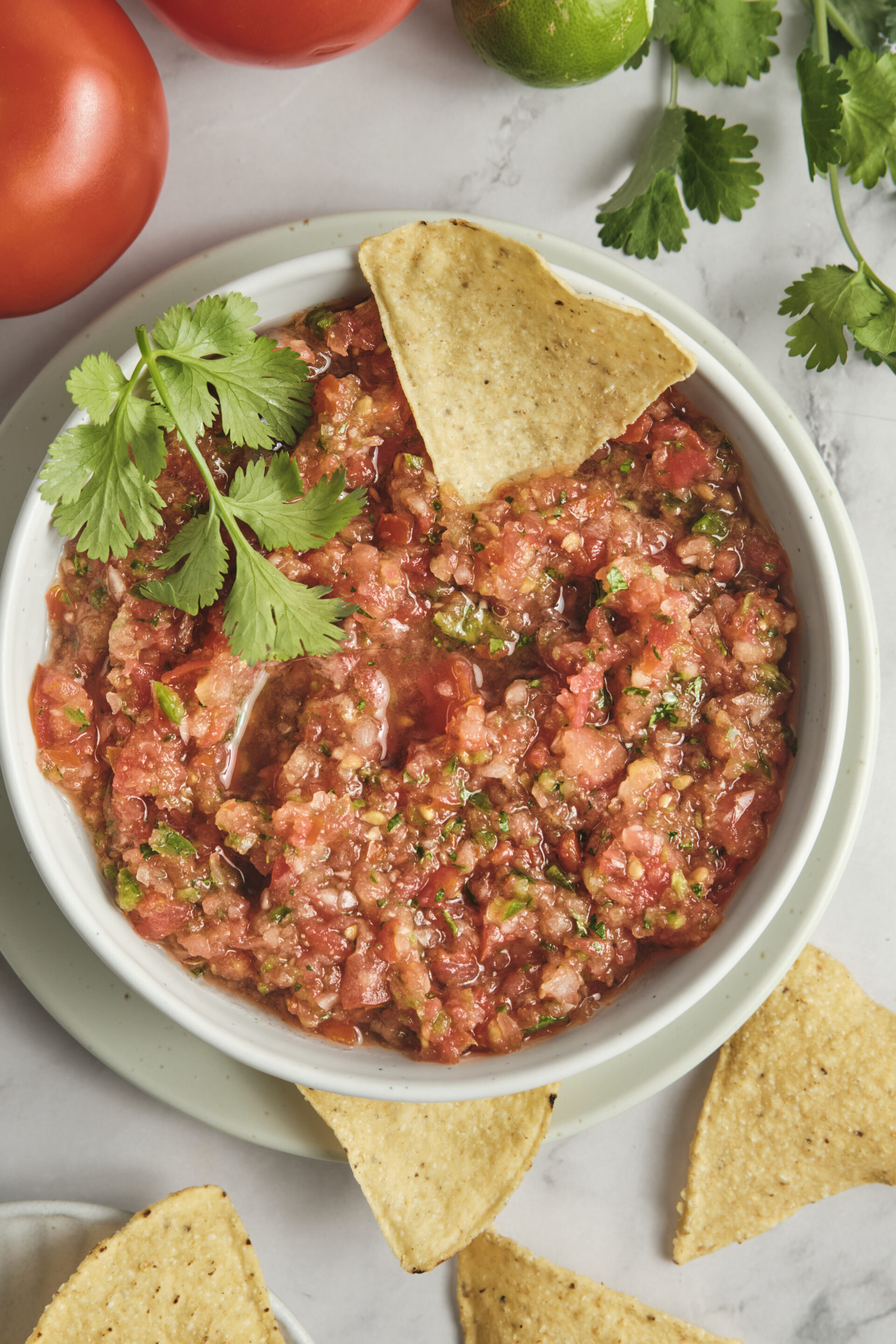
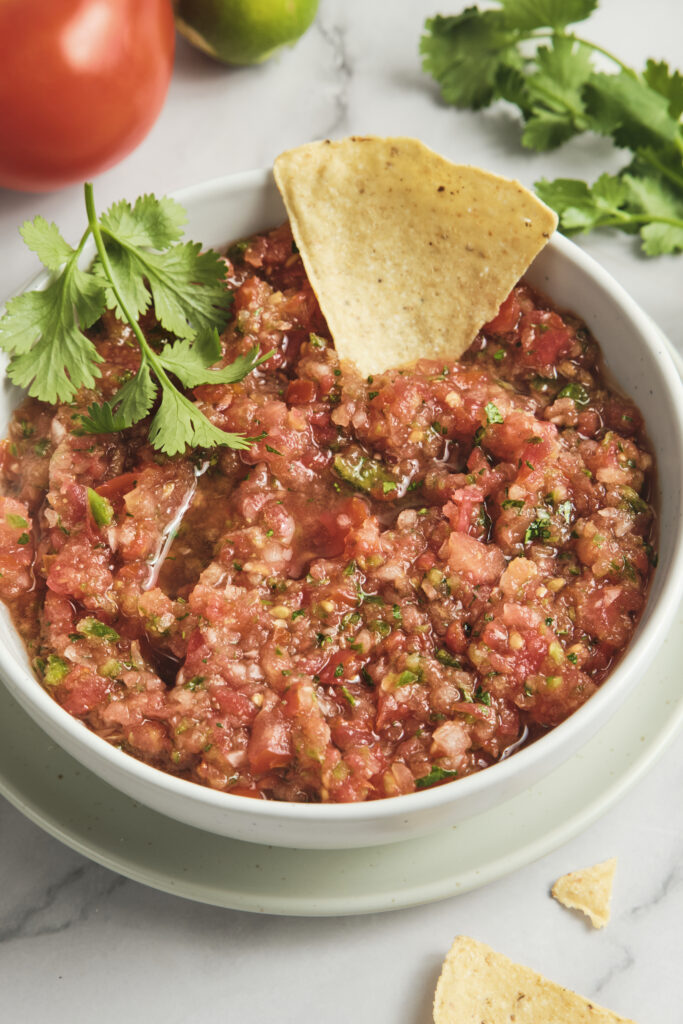
How I Make a Simple, Balanced Tomato Salsa
Homemade Salsa is one of those things I don’t really follow a strict recipe for—but over time, this fresh tomato salsa has become the version I come back to. It started simply, using whatever tomatoes I had on hand, adjusting as I went, tasting and balancing until it felt right.
As a chef, this is exactly the kind of recipe I like to teach because it’s less about precision and more about understanding ingredients. A good tomato salsa recipe depends on the quality of your tomatoes, how you balance acidity with lime, and how much you let everything come together. When you’re working with fresh tomatoes, you don’t need much—just a few ingredients and a bit of attention.
This homemade salsa with fresh tomatoes is something I make often, especially when tomatoes are at their best. It’s simple, clean, and versatile—perfect for tacos, but just as good spooned over grilled dishes or served on the side. Once you make it a few times, it becomes one of those recipes you don’t have to think about anymore.
Why you’ll love this Salsa Recipe
It’s simple and ingredient-driven
This fresh tomato salsa doesn’t rely on complicated steps. With good tomatoes, a bit of lime, and a few fresh ingredients, you get a clean, balanced salsa that really lets the flavors come through.
It works with what you have
Whether you’re using the best tomatoes for salsa at peak season or just good everyday ones, this tomato salsa recipe adapts easily. It’s one of those recipes you can adjust as you go.
It fits into everything
This homemade salsa with fresh tomatoes works just as well for tacos and nachos as it does served on the side. A reliable salsa recipe you can use across different dishes without overthinking it.
Key Ingredients for Homemade Salsa Recipe
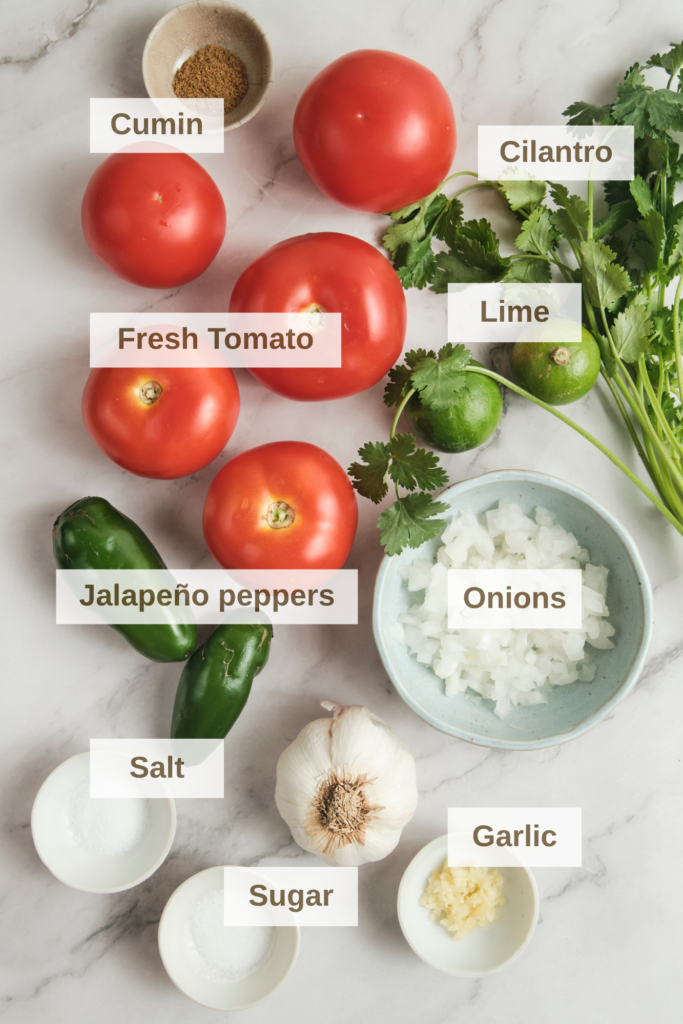
Fresh tomatoes
This is the base of your salsa. The quality of the tomatoes makes all the difference—ripe, flavorful tomatoes give you a naturally sweet and balanced foundation. They also determine the texture, whether slightly chunky or more fluid.
Jalapeño peppers
They bring heat, but more importantly, a fresh, green sharpness. You can adjust the amount depending on how spicy you like it, but even a small amount lifts the whole salsa.
Lime juice
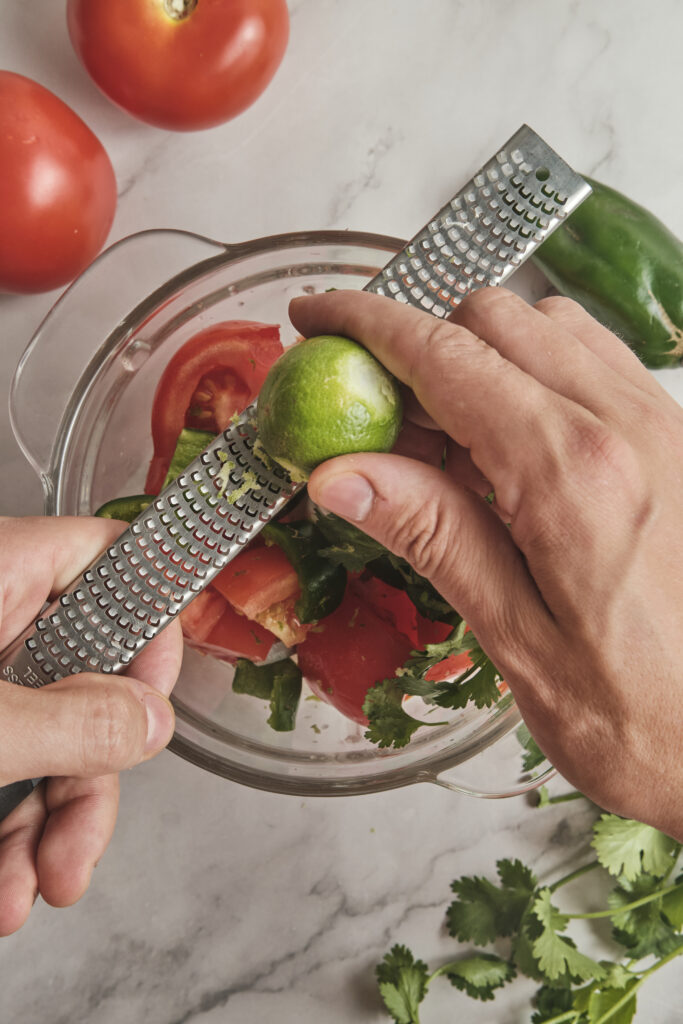
Lime adds acidity and brightness. It balances the sweetness of the tomatoes and helps tie everything together, giving the salsa that fresh, clean finish.
Salt
Essential for bringing out all the flavors. Salt draws moisture from the tomatoes and enhances every other ingredient, making the salsa taste more defined.
Sugar
Used in small amounts, it helps balance acidity—especially if the tomatoes aren’t perfectly ripe. It shouldn’t make the salsa sweet, just more rounded.
Cilantro
Adds freshness and a slightly citrusy, herbal note. It lifts the salsa and gives it that classic, recognizable flavor.
Garlic
Brings depth and a bit of sharpness. Used raw, it adds a subtle kick that builds flavor in the background.
Onions
They add crunch and a mild bite. Finely chopped onions give structure and a bit of sharpness that contrasts nicely with the soft tomatoes.
Cumin
A small amount goes a long way. It adds warmth and a slightly earthy note, giving the salsa a deeper, more rounded flavor.
Variations & Substitutes
- Swap herbs or add depth
If you’re not a fan of cilantro, you can leave it out or replace it with a bit of parsley for freshness. You can also add a touch of smoked paprika instead of cumin for a slightly different, deeper flavor profile. - Make it milder or spicier
Adjust the heat by changing the amount of jalapeño. For a milder salsa, remove the seeds or skip it altogether. For more heat, add extra jalapeño or swap in a hotter chili like serrano.
Why this Homemade Salsa works
It’s all about balance
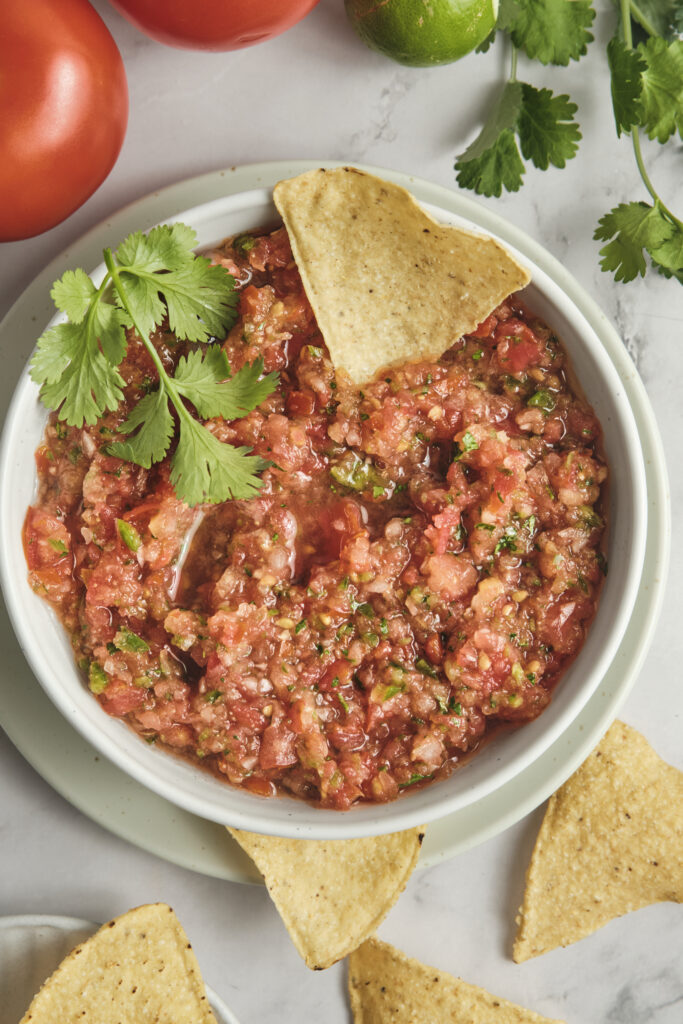
A good salsa comes down to how the flavors work together. The sweetness from the tomatoes, the acidity from the lime, the heat from the jalapeño, and the salt all balance each other so nothing stands out too much.
It builds flavor in layers
Each ingredient has a role. The onions and garlic add sharpness, the cilantro brings freshness, and the cumin adds depth. Together, they create a salsa that feels complete, not one-dimensional.
It lets the ingredients speak
This is a fresh tomato salsa, so the focus stays on the tomatoes. There’s no overcomplicating—just enough added to support the natural flavor, which is what makes it work every time.
How to make Fresh Homemade Salsa Recipe
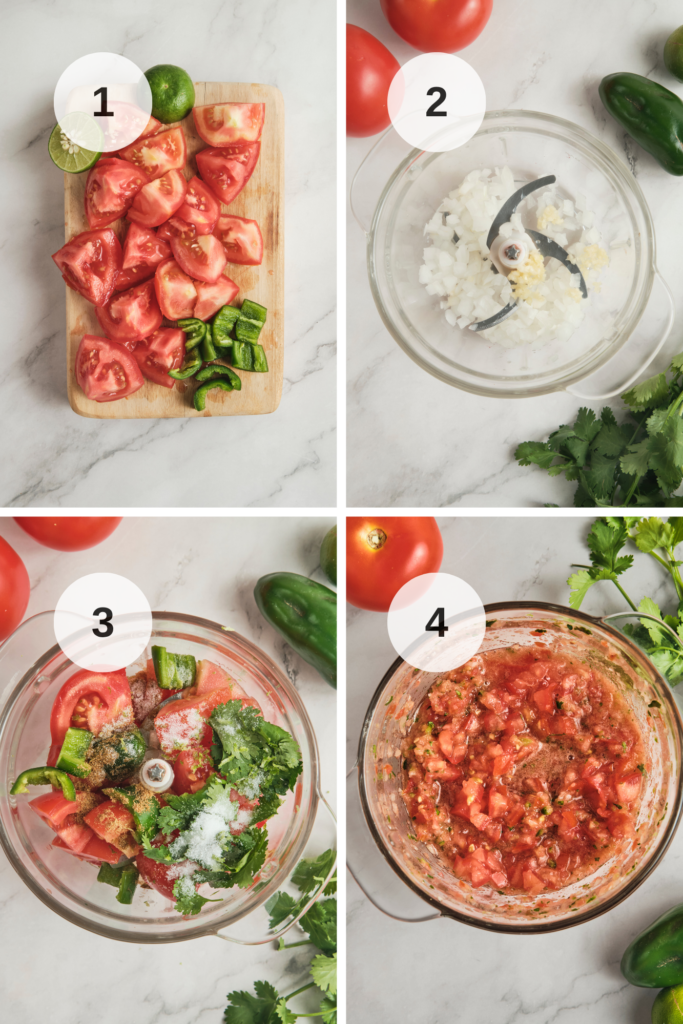
Take a look at the step-by-step photos below for a visual guide to the process. You’ll find the complete written recipe along with helpful tips in the recipe card further down the page.
Prep the ingredients
Cut the tomatoes and jalapeño into rough chunks so they process evenly. Chop the cilantro, and finely chop the onion and mince the garlic (Photo 1).
Start with the base
Add the chopped onion and minced garlic to the food processor first. Pulse a few times until they’re finely broken down—this helps distribute their flavor evenly (Photo 2).
Add the remaining ingredients
Add the tomatoes, jalapeño, cilantro, lime juice, salt, sugar, and cumin (Photo 3).
Pulse, don’t blend
Pulse the mixture in short bursts until you reach a chunky consistency. Stop before it turns into a puree—you want texture and small pieces, not a smooth sauce (Photo 4).
Taste and adjust
Check the seasoning and adjust if needed. Let the salsa sit for a few minutes before serving so the flavors come together.
From my Kitchen (Chef’s Tips)
Use the best tomatoes you can find
This makes the biggest difference. If your tomatoes are ripe and full of flavor, the salsa will naturally taste better. If they’re a bit flat, you’ll need to adjust more with lime and seasoning.
Cut everything evenly
Try to keep your ingredients similar in size. It might seem like a small detail, but it helps the salsa feel more balanced in every bite instead of having one ingredient stand out too much.
Season and let it sit
Always taste and adjust, then give it a few minutes to rest. The salt will draw out the juices and bring everything together—it’s often better after 10–15 minutes than right after mixing.
How to Serve & Store
How to serve
Serve the salsa fresh, either slightly chilled or at room temperature. It works naturally with tacos, nachos, grilled meats, or simply as a dip—something bright and fresh on the side.
How to store
Store any leftovers in an airtight container in the fridge for up to 2–3 days. The flavors will continue to develop, but the texture is best on the first day, so give it a quick stir before serving again.
FAQ
You want tomatoes that are ripe, flavorful, and not too watery. Roma tomatoes are a classic choice because they have a firmer flesh and less juice, which helps keep the salsa from becoming too liquid. But honestly, the best tomatoes for salsa are the ones that taste good on their own—if they’re sweet, slightly acidic, and full of flavor, your salsa will naturally turn out better.
This usually comes down to the tomatoes. If they’re very juicy, you can remove some of the seeds and excess liquid before chopping. Also, avoid overmixing—especially in a food processor—as that breaks down the structure and releases more liquid. A good salsa should hold some texture, not feel like a sauce.
Yes, but timing matters. You can prepare it a few hours in advance and keep it in the fridge, which actually helps the flavors come together. Just keep in mind that the longer it sits, the more liquid the tomatoes will release. Before serving, give it a stir and taste again—you might want to adjust the seasoning.
This fresh tomato salsa is one of those recipes that has stayed with me over time because of how simple and adaptable it is. I’ve made it in different kitchens, with different tomatoes, sometimes adjusting the heat with jalapeño or the balance with a bit more lime juice—but the base always stays the same. Fresh tomatoes, onion, garlic, cilantro, and that small touch of cumin come together in a way that just works.
What I like most is that it’s not a fixed recipe. It’s something you taste, adjust, and make your own depending on what you have in front of you. Over time, it becomes less about following steps and more about understanding how these ingredients come together—and that’s really where this salsa starts to feel natural.
More Dips to try
If you’re looking for more fresh dips, my homemade gremolata is a simple, bright option with herbs, garlic, and citrus, while the mint chimichurri brings a deeper, more vibrant flavor—both easy to make and perfect alongside this salsa.
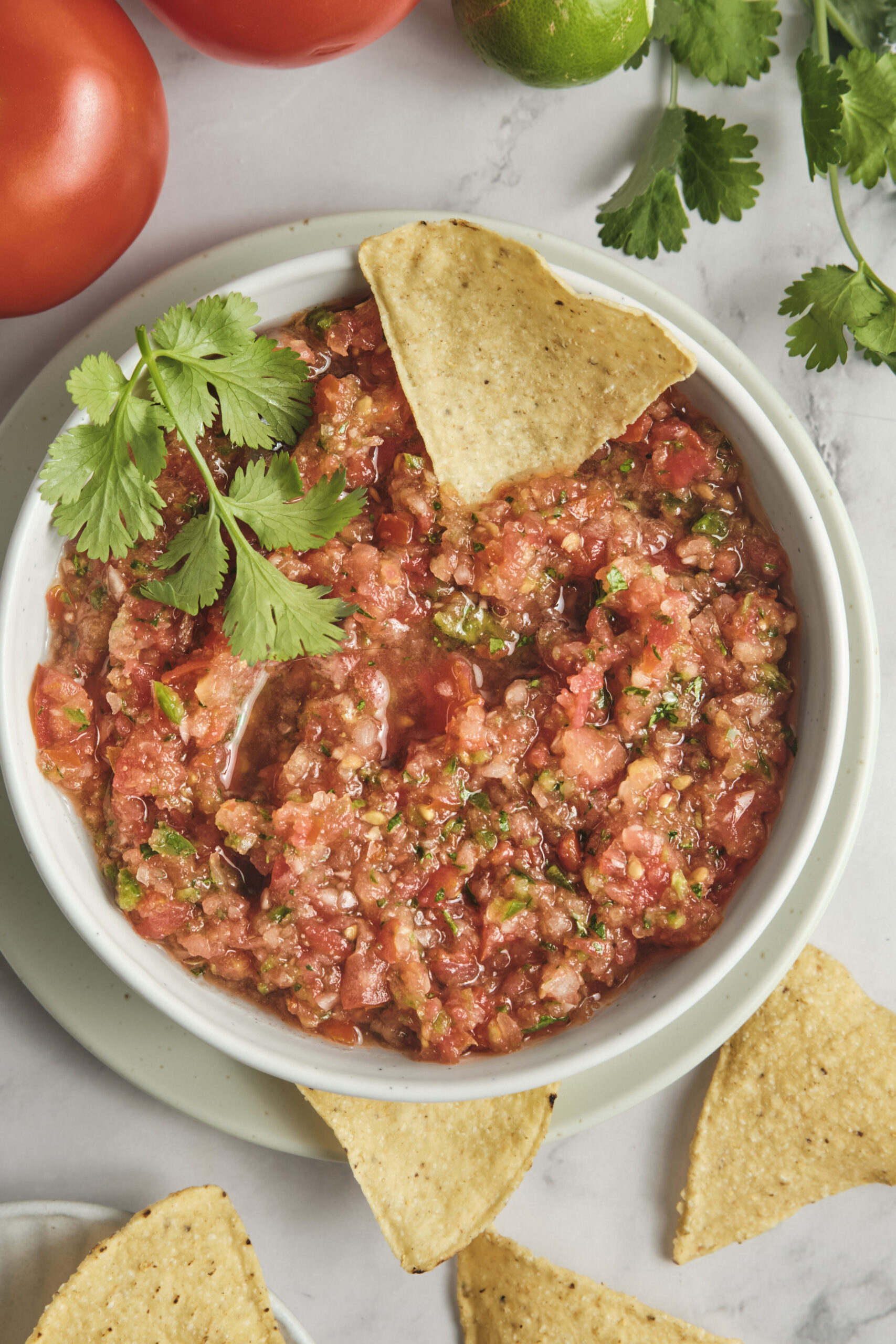
Fresh Homemade Salsa
Ingredients
Method
- Chop the fresh tomatoes into small pieces and set aside. If they are very juicy, remove a bit of the excess liquid.
- Add the chopped onion and minced garlic to a food processor and pulse until finely broken down.
- Add the tomatoes, jalapeño, cilantro, lime juice, salt, sugar, and cumin.
- Pulse everything in short bursts until you reach a chunky consistency—do not overblend.
- Taste and adjust seasoning with more lime juice, salt, or sugar if needed.
- Let the salsa sit for 10–15 minutes before serving so the flavors can come together.
Notes
- Choose the right tomatoes
Use ripe, flavorful tomatoes for the best result—they are the base of the salsa. - Control the texture
Avoid overmixing, especially if using a food processor, to keep a fresh, chunky consistency. - Balance before serving
Always taste at the end—small adjustments make a big difference in the final flavor.