

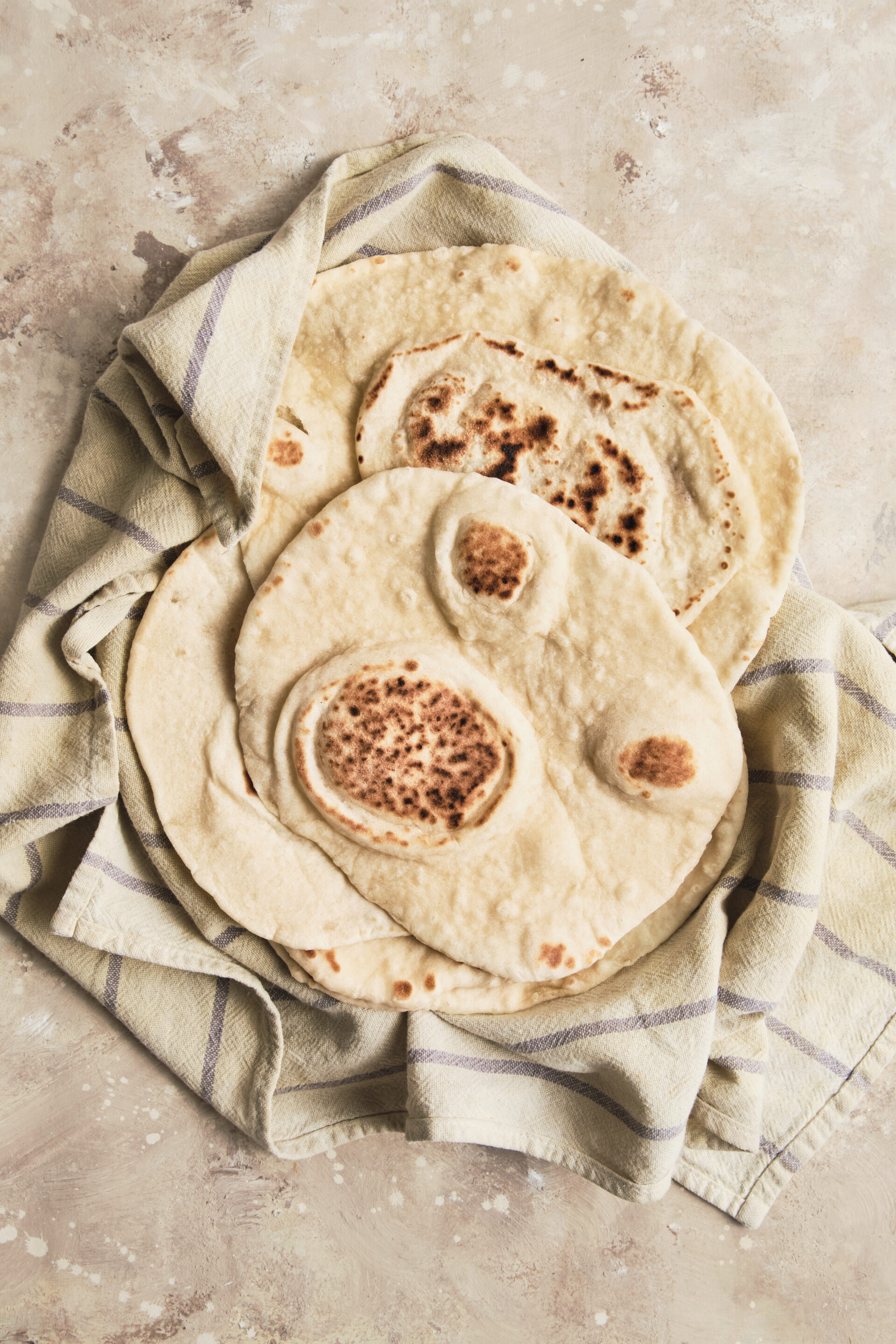
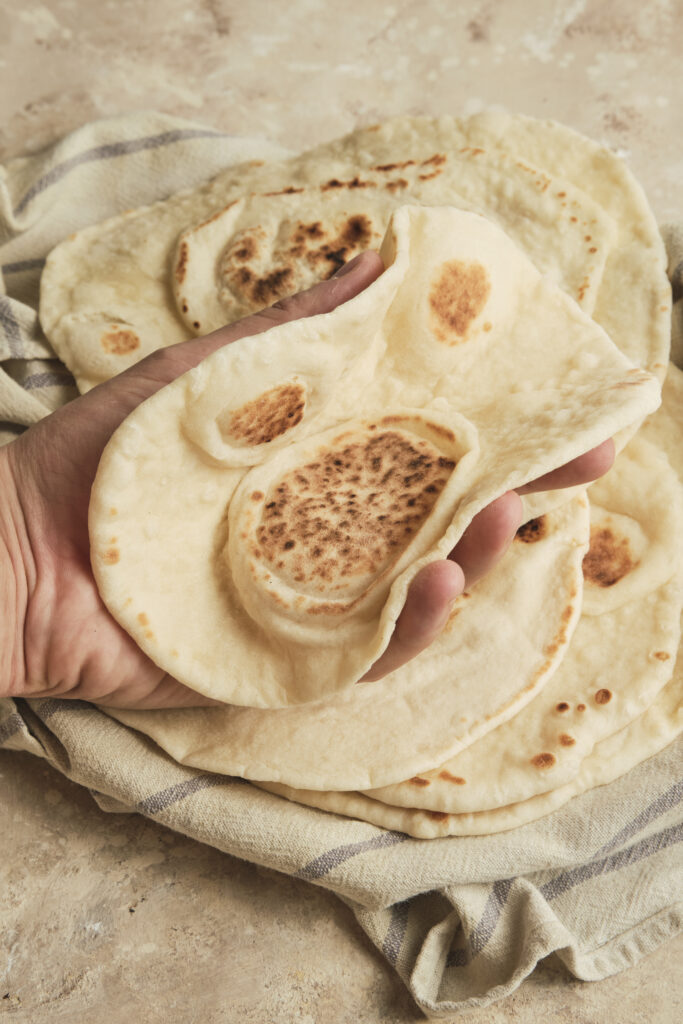
What is Lavash?
Lavash is a traditional soft and thin flatbread popular across Armenia, Turkey, the Middle East, and Central Asia. Made with simple ingredients like flour, water, yeast, and salt, it’s known for its flexible texture, making it perfect for wraps, sandwiches, or serving alongside dips and salads. Unlike pita or flour tortillas, lavash is lighter, softer, and less chewy.
Why You’ll Love this Lavash Recipe
Soft and Flexible – This homemade lavash bread turns out soft, thin, and perfectly pliable for wraps, sandwiches, or dipping.
Simple Ingredients – Made with basic pantry staples, this is an easy flatbread recipe that feels impressive without being complicated.
Versatile Flatbread – Serve it with dips, grilled meats, salads, or use it as a wrap for endless meal ideas.
Key Ingredients for Lavash Bread
Lavash is one of those easy homemade bread recipes that’s always good to have on hand. It comes together with simple pantry staples you probably already have in your kitchen:
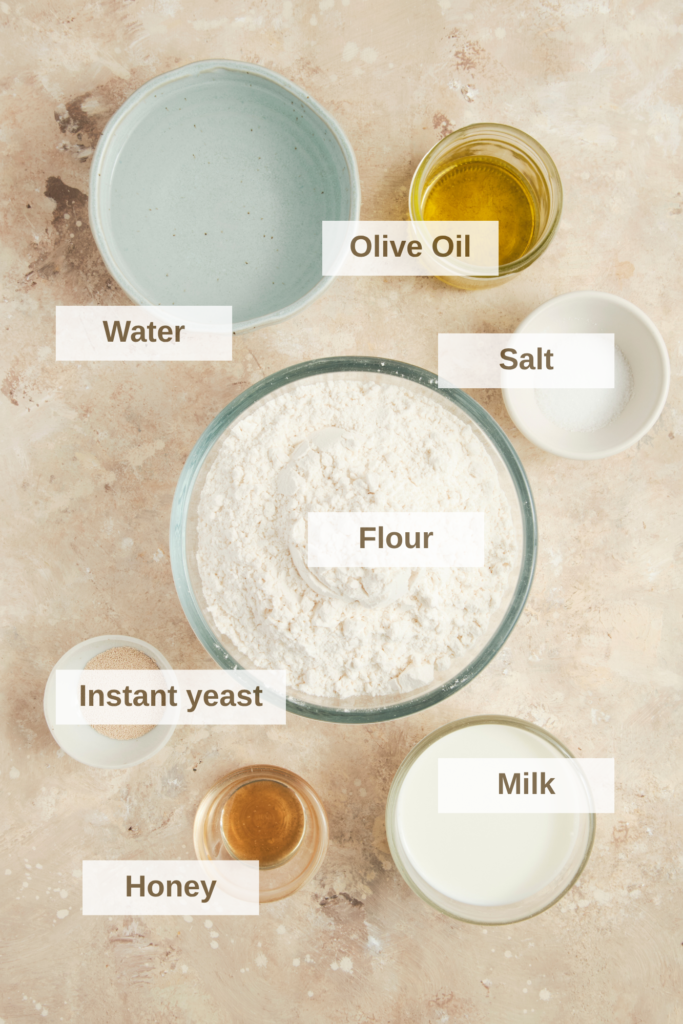
All-Purpose Flour – I make this lavash bread recipe with all-purpose flour, which creates a soft and flexible flatbread that’s perfect for wraps and kebabs. If you prefer a slightly chewier and sturdier texture, you can use bread flour instead.
Water – Always use lukewarm water to activate the yeast. If the water is too cold, the yeast will not activate, and the dough will not rise.
Milk – The addition of milk makes the dough softer and adds a richer texture. Make sure that the milk is at room temperature, to activate the yeast.
Instant Yeast – I always use instant yeast for this recipe, but active dry yeast will work too. Just make sure that your water is warm, to help create a better rise.
Honey – I use a high-quality honey, that’s not too thick. Honey or sugar helps feed the yeast and supports the rising process.
Olive Oil – Olive oil adds richness to the dough and keeps the lavash bread soft.
How to make Lavash Bread
Take a look at the step-by-step photos below for a visual guide to the process. You’ll find the complete written recipe along with helpful tips in the recipe card further down the page.
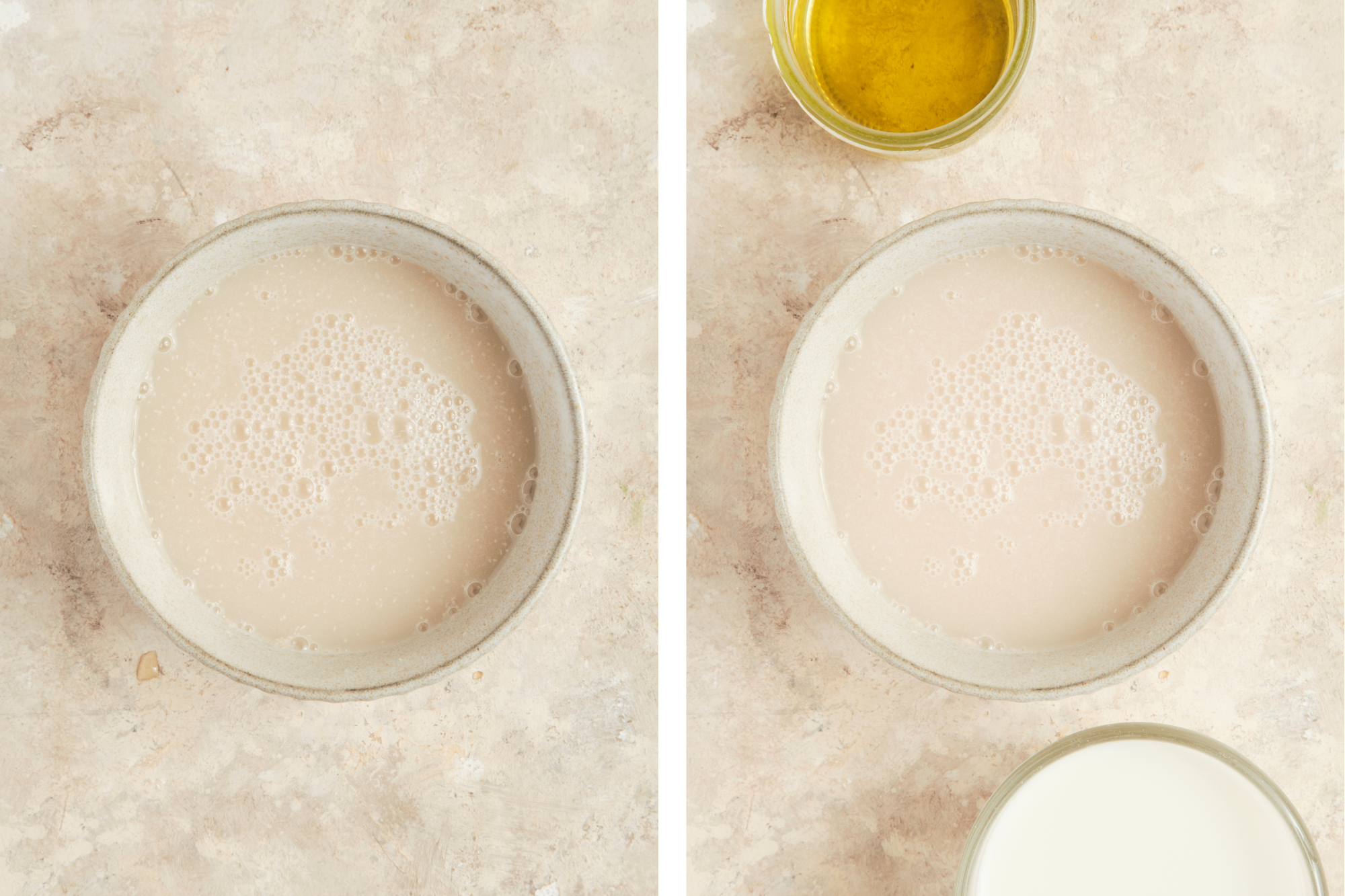
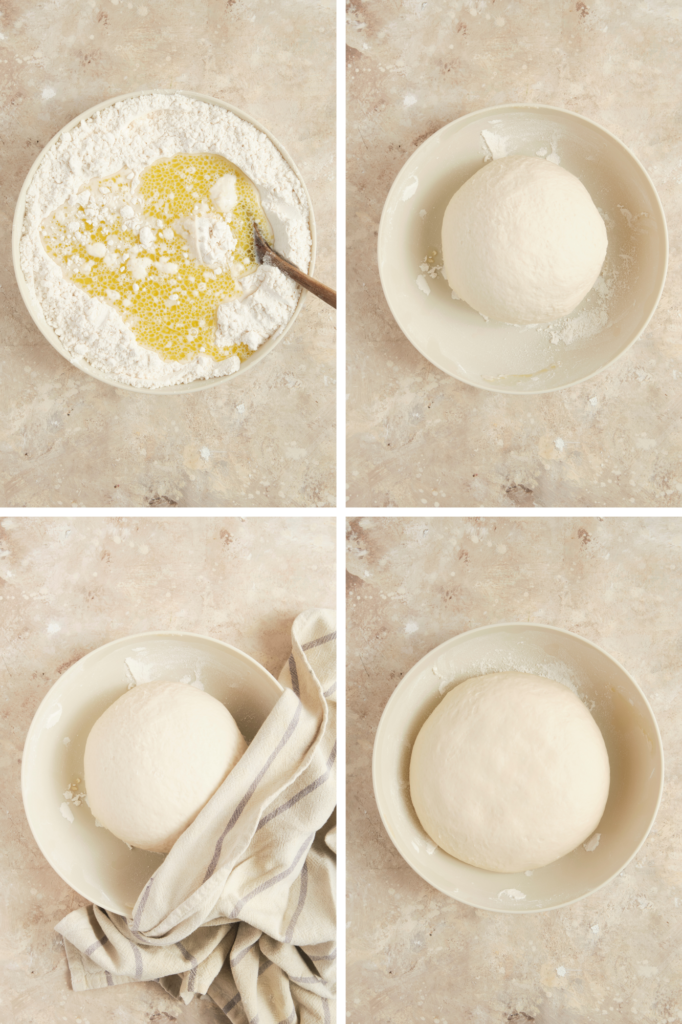
Activate the Yeast – Add the lukewarm water and honey to a small bowl and stir until dissolved. Sprinkle in the yeast and let it rest for about 5 minutes, until the mixture becomes foamy and bubbly on top. Then mix in the olive oil and milk until well combined.
Combine with Flour – In a large bowl, mix together the flour and salt. Pour in the yeast mixture and knead with your hands for about 5 minutes, until a soft dough forms and all the flour is fully incorporated. The dough will feel quite sticky at first, and that’s completely normal.
Rest the dough – Turn the dough into a ball and place it in a bowl. Cover the dough and let it rest in a warm spot for about 30- 45 minutes. After resting, the dough should feel smoother, softer, and slightly risen.
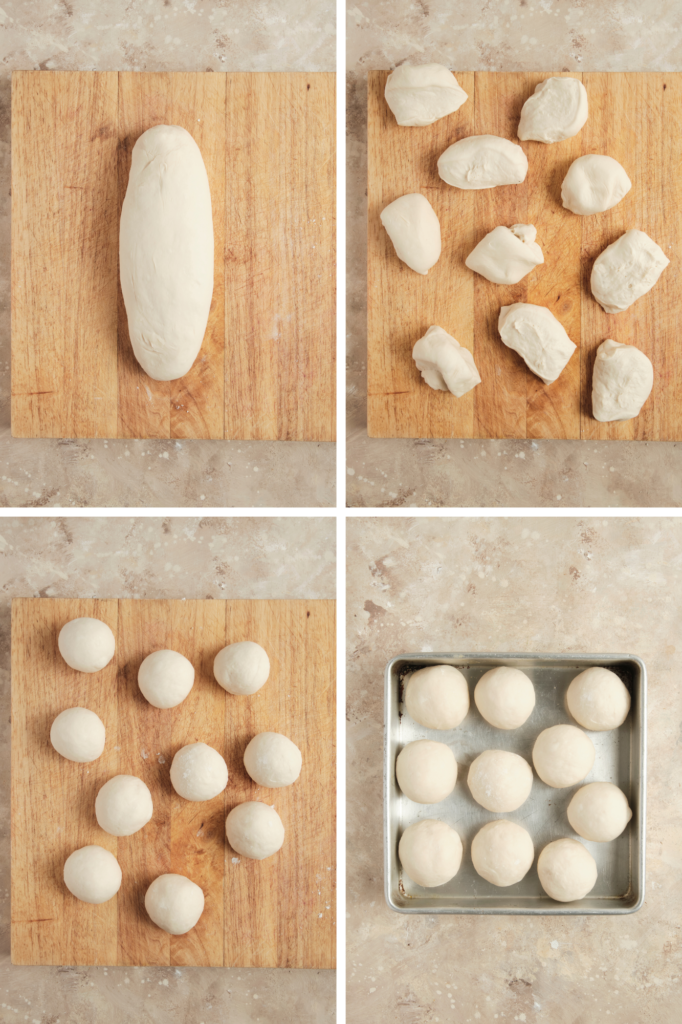
Divide the dough – Shape the dough into a long log and cut it into 10 equal pieces. Roll each piece into a smooth ball.
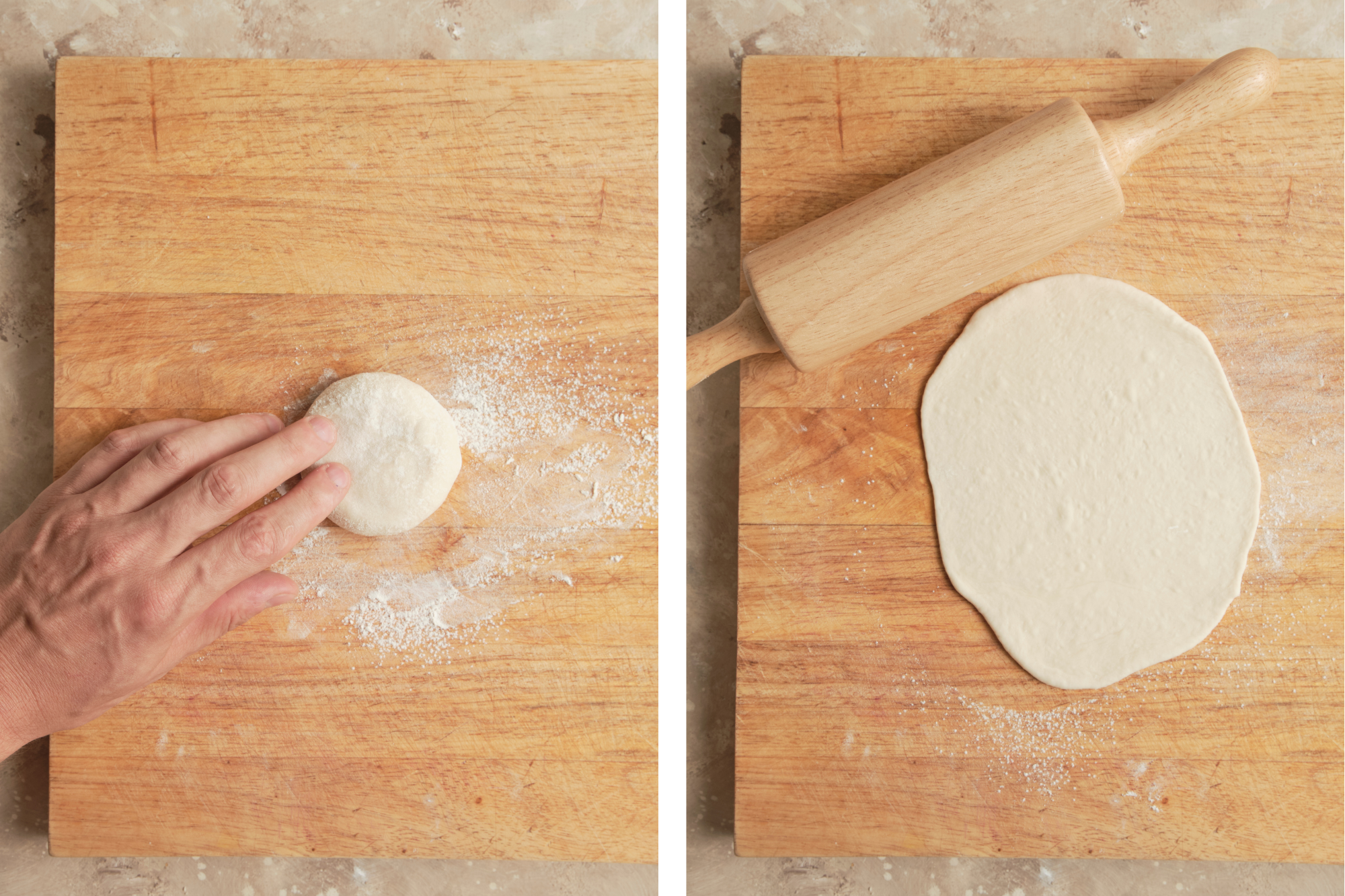
Heat the Pan & Roll the Dough – Before cooking, heat a large nonstick or cast-iron skillet over high heat until very hot. This is important, as the dough can stick if the pan isn’t properly heated. A few drops of water should instantly sizzle and evaporate when the skillet is ready. While the pan heats, roll one dough ball at a time into a thin 9- to 10-inch round.
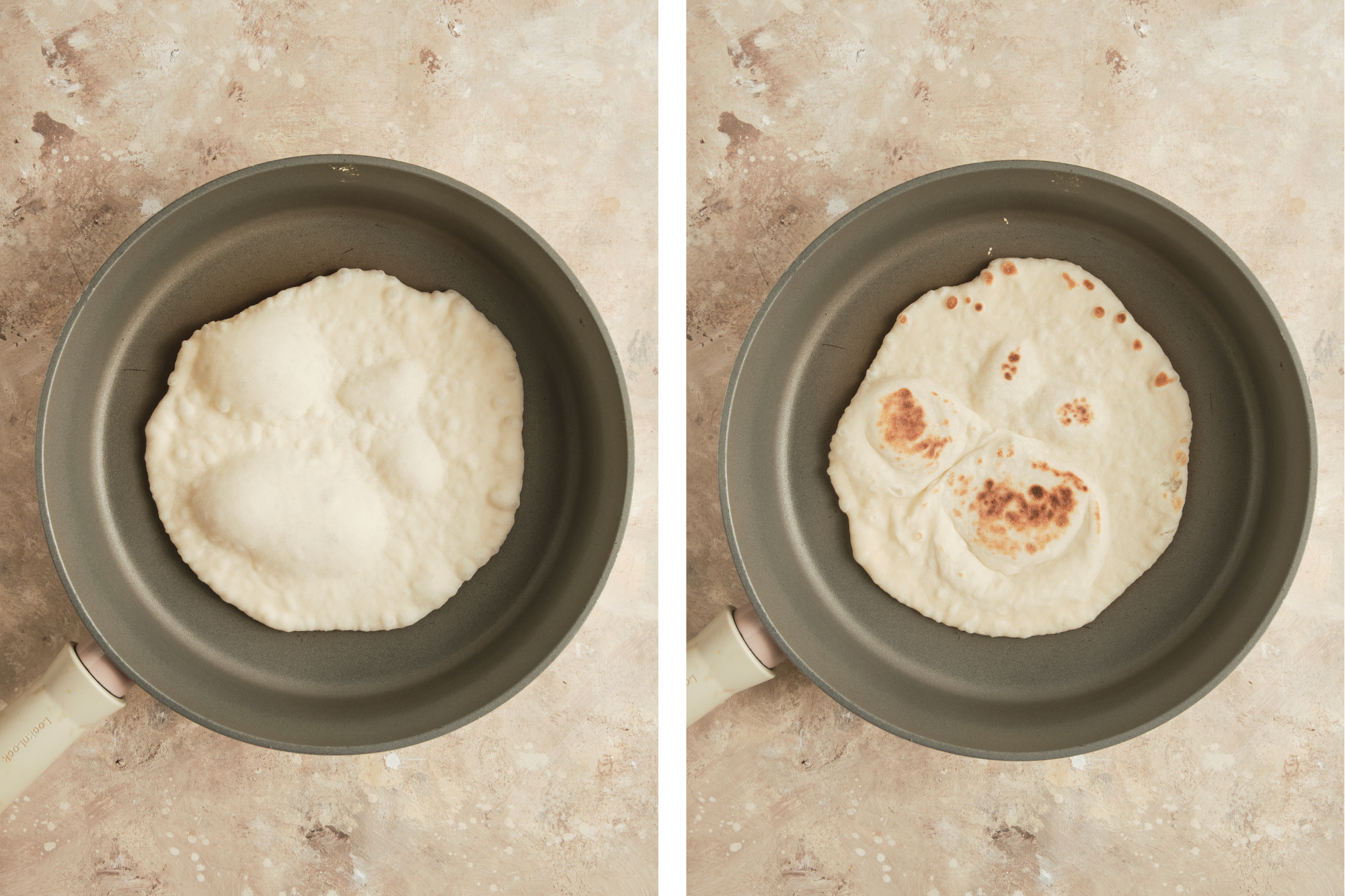
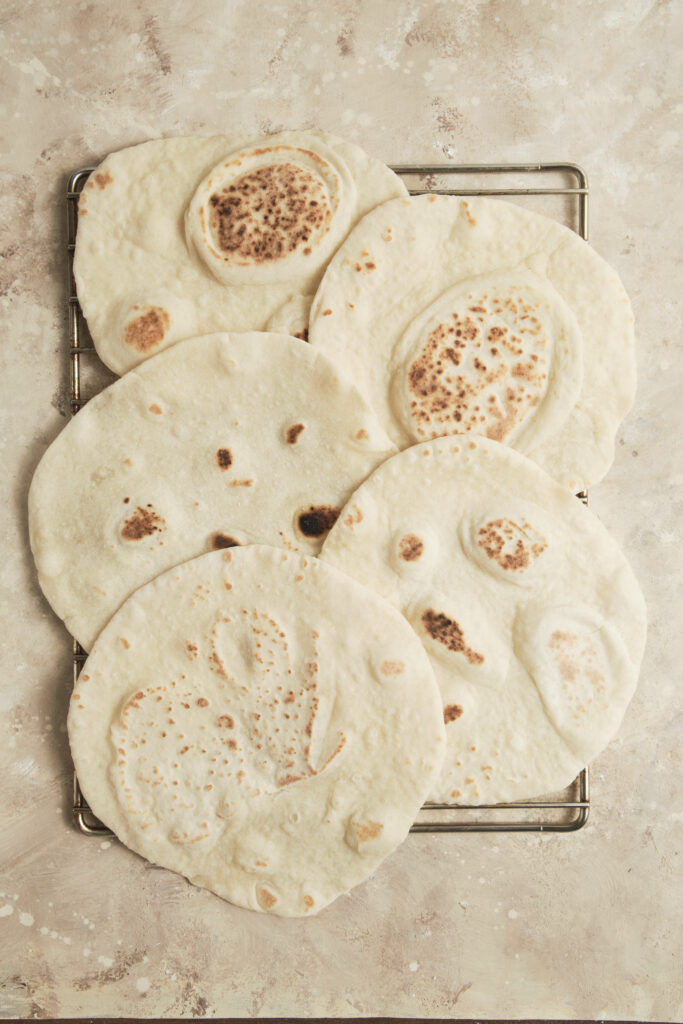
Cook the Lavash – Carefully place the rolled dough into the hot skillet and cook, flipping every 10–15 seconds, until puffed with golden brown spots on both sides. The lavash should be fully cooked after about 40–50 seconds total.
Keep Warm & Continue – Transfer each cooked lavash to a tray or plate and cover with a clean towel to keep the bread soft and pliable. Repeat with the remaining dough, then serve warm or store for later.
Troubleshooting (Common Issues while making Lavash Bread)
Yeast didn’t activate properly – After the first 20-minute rest, the dough should look slightly puffed and less sticky. If nothing changes, the yeast likely didn’t activate, usually because the water was too hot or too cold. If your yeast never turned foamy during blooming, it’s best to discard it and start again with fresh yeast.
No bubbles while cooking – If the lavash isn’t bubbling in the pan, the skillet likely isn’t hot enough or the dough is rolled too thick. A very hot pan and thin dough are key for the right texture.
Lavash turns out dry or stiff – If the bread isn’t soft and flexible, it was likely cooked too long or at too low heat. Cook quickly on high heat to keep it tender and pliable.
From my Kitchen (Chef’s Tips)
Give the Dough Time to Rise – Don’t rush the rising time. If the dough hasn’t properly risen, the lavash can turn out dense and stiff instead of soft and flexible.
Check your Yeast – Always check that your yeast is fresh and not expired. Old yeast may not activate properly, which can prevent the dough from rising.
Boost the Flavor – For extra taste, lightly brush the uncooked lavash with olive oil, then sprinkle each piece with finely chopped garlic and parsley on both sides before cooking. Continue cooking as usual for a fragrant, flavorful finish.
Roll it thin – The secret to soft, flexible lavash is rolling the dough as thin as possible. Don’t stress too much about getting a perfect circle—thinness is what really makes the difference, and even an uneven shape will still taste amazing.
How to serve Lavash Bread
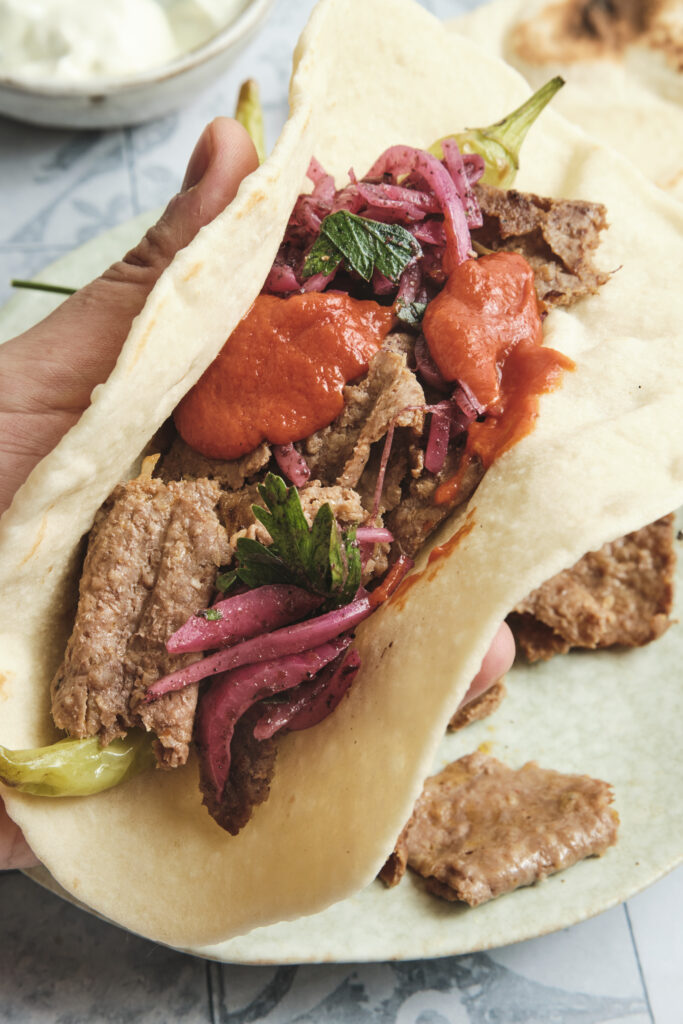
Kebabs – Lavash is perfect wrapped around juicy grilled meats. I especially love it with my homemade doner kebab recipe, where the soft flatbread soaks up all those rich, spiced juices.
Shawarma – Use it as a wrap for my chicken shawarma bowl or classic shawarma fillings. The thin, pliable texture makes it ideal for rolling everything together into a handheld meal.
Dips – Tear it and serve it with your favorite sauces and spreads. It pairs beautifully with my homemade ranchero sauce, hummus, or any creamy, smoky dip you love.
Recipe FAQs
Dough usually doesn’t rise because the yeast is inactive or expired, the water temperature was too hot or too cold, or the dough wasn’t kept in a warm enough place. If the yeast doesn’t foam during blooming, it’s best to start again with fresh yeast.
Lavash bread will stay fresh at room temperature for about 1–2 days if kept in an airtight container or well wrapped. After that, it will start to dry out and lose its soft texture. For longer storage, it’s best to refrigerate or freeze it and reheat when needed.
Yes, you can make lavash in the oven instead of a skillet. Preheat the oven very hot (around 250°C / 480°F) with a baking tray or baking steel inside, then bake the thinly rolled dough for 1–2 minutes until it puffs and gets light golden spots. It won’t be exactly the same as pan-cooked lavash, but it still turns out soft and delicious.
More Homemade Bread Recipes to Try
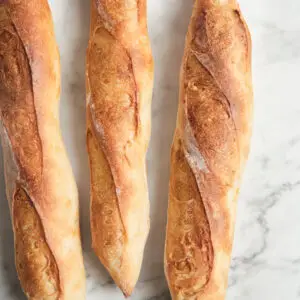
If you love baking bread at home, you should also try my pita bread recipe, homemade French baguette, and Italian ciabatta bread. Each one has its own texture and character, from soft and pocketed to crisp and airy, and they’re all simple, rewarding recipes to make from scratch.
Lavash Bread (Middle Eastern Flatbread)
Ingredients
Method
- Place 3/4 cup of warm water and 1 tsp of honey in a small bowl and stir until the honey is melted. Add the yeast and let it sit for 5 minutes. Then stir in the olive oil and milk until well combined.
- In a large mixing bowl, combine the flour and salt.
- Add the yeast mixture and knead the dough by hand for about 5 minutes until no flour remains and the dough is smooth. If it’s too sticky to work with, sprinkle in a bit more flour, 1 tablespoon at a time.
- Turn the dough into a ball and place in a bowl.
- Cover the dough with a kitchen towel and let it rise for 30- 45 minutes or until doubled in size.
- Transfer the rested dough onto a lightly floured surface.Shape the dough into a log and divide into 10 equal sized portions.
- Roll each piece into a small ball, dust it with flour, and transfer it onto a baking sheet. Cover with a kitchen towel and let it rest for 20 minutes.
- Heat a large (10- or 12-inch) nonstick or cast-iron skillet over high heat until it is really hot. To test the right temperature, add a few drops of water to the skillet. If they sizzle and disappear right away, your skillet is ready.
- Roll one piece of dough into a thin 10-inch round, adding a little extra flour as needed to prevent sticking. Don’t worry if the shape isn’t perfectly round- rustic flatbreads are meant to look homemade.
- Carefully place the rolled dough into the hot skillet. Cook briefly until bubbles begin to appear, then flip. Continue flipping every few seconds until the lavash is fully cooked with light golden spots and a soft, flexible texture.
- Transfer the cooked lavash to a tray or plate and cover with a clean kitchen towel to keep the bread soft and pliable. Continue with the remaining dough until all the flatbreads are cooked, then serve warm or store for later.
Notes
- Let the Dough Rise Properly – Giving the dough enough time to rise is important for soft and flexible lavash. If the dough hasn’t risen enough, the bread can turn out stiff. Keep the dough balls covered while rolling to prevent them from drying out.
- Keep the Lavash Soft – As each flatbread finishes cooking, transfer it to a plate or tray and cover with a clean kitchen towel to keep it warm and soft while you cook the remaining dough.
- Add Extra Flavor – For more flavor, lightly brush the uncooked lavash with olive oil and sprinkle with minced garlic and fresh parsley before cooking.
- Storage – Once the lavash has cooled completely, store it in an airtight container or sealed bag at room temperature for up to 4 days.
- Reheating – To warm the bread, heat it in a low oven at 325°F (160°C) for about 8–10 minutes until soft and warmed through. You can also wrap it in a slightly damp paper towel and microwave for about 30 seconds.